
HMYOI Werrington
Report on an independent review of progress at HMYOI Werrington by HM Chief Inspector of Prisons, 24 August - 8 September 2026
Section 1: Chief Inspector’s summary (Back to top)
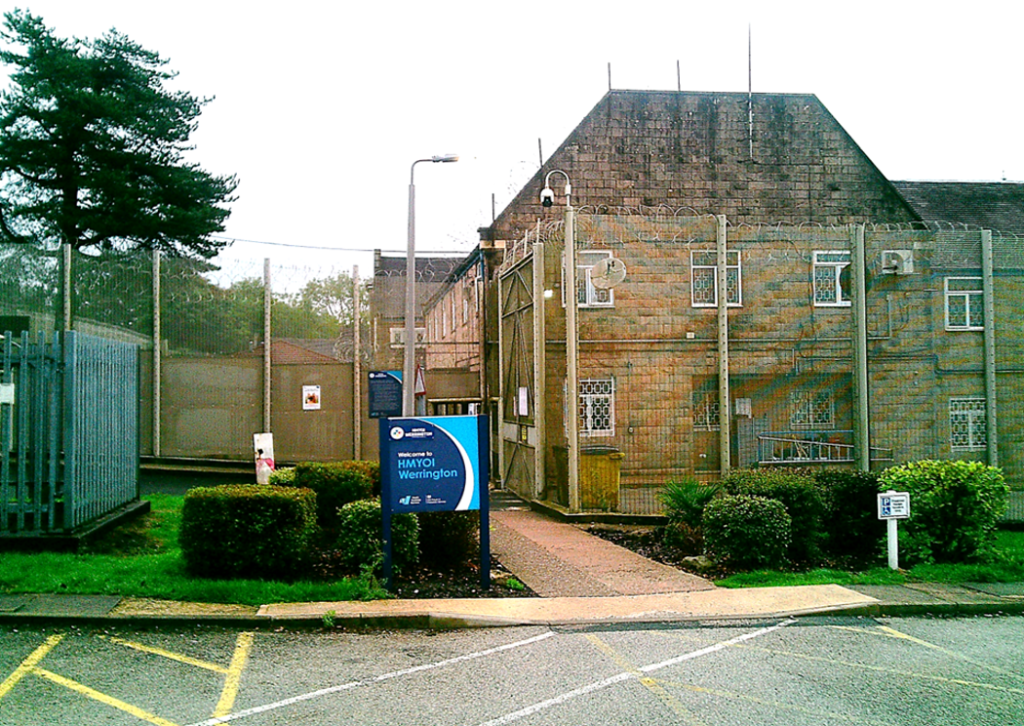
Werrington is a young offender institution (YOI) near Stoke-on-Trent, which at the time of this independent review of progress (IRP) held 93 boys aged between 15 and 18. As a result of the high level of risk managed within YOIs, recent poor performance and the particular vulnerabilities associated with the children held, we inspect YOIs more frequently than adult prisons.
This review visit followed up on the concerns we raised at our last inspection of HMYOI Werrington in 2025.
What we found at our last inspection
At our previous inspections of HMYOI Werrington in 2023 and 2025, we made the following judgements about outcomes for children.
Figure 1: HMYOI Werrington healthy prison outcomes in 2023 and 2025
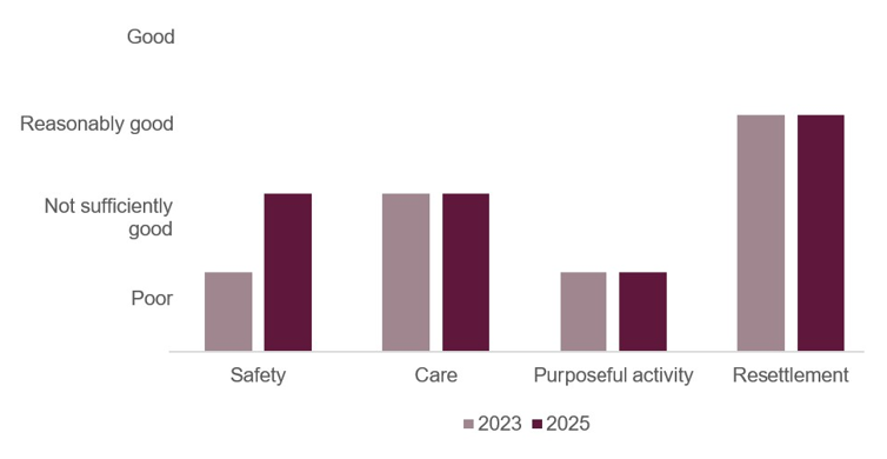
At our last inspection, we found serious failures in our test of Purposeful activity, where outcomes for children were ‘poor’. Outcomes in Safety and Care were ‘not sufficiently good’ and in Resettlement were ‘reasonably good’.
What we found during this review visit
At this IRP, we reviewed eight concerns and found that progress was reasonable or better in three areas and insufficient or worse in five.
Leaders had worked successfully on improving relationships between children and staff. This was underpinned by more consistent interaction through weekly welfare checks and improving the response to everyday requests. This gave children more trust in the institution as well as enabling staff to contribute more meaningfully to multidisciplinary meetings, such as separation reviews.
The improved relationships had also helped staff to manage behaviour more successfully. As a result, levels of violence, including serious violence, had started to reduce.
However, this progress was not seen in purposeful activity, where leaders had made reasonable progress in only one of five concerns. A new head of education had been appointed, one of five since the start of the current education contract. This instability of leadership, combined with staffing shortfalls, had resulted in classes often being cancelled, limiting the progress that children could make.
The new ‘parallel curriculum’, which involved enrichment activities delivered by residential staff, started during this IRP. These activities made up nearly half of the core day but were unstructured, and we observed both staff and children confused about what they were meant to be doing at any one time.
There had been no meaningful progress in the area of Resettlement. Accommodation was not confirmed early enough before release to enable planning for education or work in the community. As a result, most children left the YOI with nothing in place to occupy their time.
It was positive that the governor and her team had started to make the establishment safer. However, leaders need to use the opportunity created by greater stability to improve the poor quality of education at the site.
Charlie Taylor, HM Chief Inspector of Prisons, September 2026
Section 2: Key findings (Back to top)
At this IRP visit, we followed up four concerns from our most recent inspection in May 2025 and Ofsted followed up four themes based on their latest inspection.
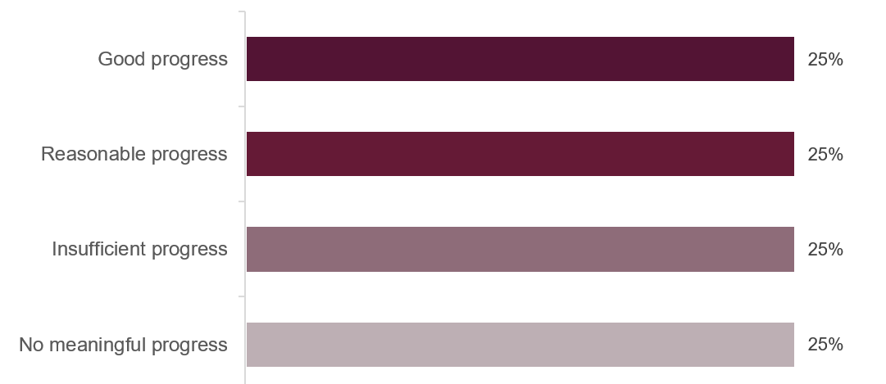
HMI Prisons judged that there was good progress in one concern, reasonable progress in one concern, insufficient progress in one concern and no meaningful progress in one concern.
Figure 2: Progress on HMI Prisons concerns from May 2025 inspection
This bar chart excludes any concerns that were followed up as part of a theme within Ofsted’s concurrent prison monitoring visit.
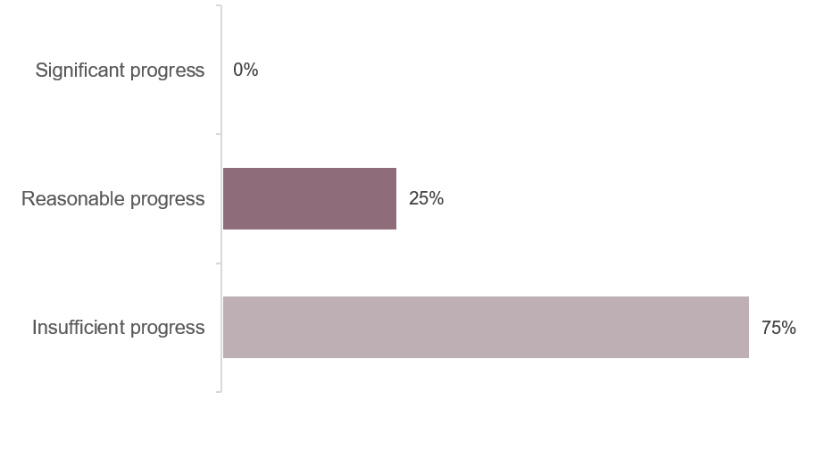
Ofsted judged that there was reasonable progress in one theme and insufficient progress in three themes.
Figure 3: Progress on Ofsted themes from May 2025 inspection
Notable positive practice
We define notable positive practice as:
Evidence of our expectations being met to deliver particularly good outcomes for prisoners, and/or particularly original or creative approaches to problem-solving.
Inspectors found one example of notable positive practice during this IRP visit, which other YOIs may be able to learn from or replicate. Unless otherwise specified, these examples are not formally evaluated, are a snapshot in time and may not be suitable for other establishments. They show some of the ways our expectations might be met, but are by no means the only way.
| 1. | A new ‘resolving disagreements’ process enabled conflict resolution to be conducted more efficiently and to the benefit of the children (see Behaviour management). |
Section 3: Progress against our concerns and Ofsted themes (Back to top)
The following provides a brief description of our findings in relation to each concern followed up from the full inspection in 2025.
Behaviour management
Concern: Children were not motivated to behave well and engage in activities, including education, work or offending behaviour programmes. The incentives schemes were inconsistently applied, and rewards, including additional time out of cell, were rarely delivered.
Children’s perceptions of safety had improved considerably since the inspection. At that time, 20% of children who responded to our survey reported feeling unsafe currently. At this review of progress, this figure had fallen to 6%.
Levels of violence had also reduced. At the time of the inspection, the rate of assaults was 32 incidents per 100 children per month; this figure had fallen to 25 at the time of this review. Serious violence had decreased, and the number of children needing hospital treatment following incidents had halved.
Challenge, support and intervention plans (CSIPs; see Glossary) were being used effectively to support children who were involved in violence, displayed persistent challenging behaviour or who had been victims. Staff demonstrated a good understanding of the process, and plans were generally used appropriately to manage risk and provide support.
More children were attending purposeful activities, including education, gym sessions and the library, and the use of alternatives, such as wing-based education, had reduced. However, this progress remained fragile. Frequent recent cancellations of education sessions risked undermining the gains that had been made in improving children’s engagement and attendance.
Leaders had undertaken several reviews of the rewards and sanctions policy and had consulted children effectively to develop a range of meaningful incentives designed to encourage positive behaviour.
Several additional initiatives, including group assault and weapons reduction schemes, had also been introduced. These appeared to be contributing to reductions in violence. However, the overall behaviour management framework had become too complex, and staff did not always apply the various policies consistently. The effectiveness of these initiatives was further weakened by the frequent curtailment of children’s activities, particularly during the evenings.
New activities had been introduced shortly before this review. While these offered the potential to enhance the regime, staff needed further support and guidance to make sure that they were delivered consistently and effectively.
We considered that the YOI had made reasonable progress in this area.
Concern: Only 34% of children surveyed said they felt cared for by staff. The limited time out of cell and culture of separation and control inhibited engagement with children.
Leaders had focused on improving relationships between staff and children. This was reflected in our survey findings, where 57% of respondents said that staff cared about them, compared with 34% at the time of the inspection.
Staff and children engaged more meaningfully with one another. Staff completed a multidisciplinary child plan for each individual, which set out specific, measurable, achievable, relevant and time-bound (SMART) objectives and provided staff with relevant information about the child. Identified officers conducted weekly well-being checks, which promoted meaningful and reflective discussions with children.
Quality assurance of Wellbeing checks was effective, with monthly summary reports providing a comprehensive assessment of practice, identifying areas for improvement and capturing the views of children.
Leaders had introduced a ‘resolving disagreements’ process, which improved conflict resolution through earlier engagement between children. Since March 2026, children and staff had successfully resolved 105 incidents through mutual mediation and only four disagreements had reoccurred.
The establishment recorded the lowest number and rate of separations across all YOIs. In our survey, only 29% of respondents said that staff had separated them and prevented them from mixing with other children as a punishment.
Although the average duration of separation had increased to 24 days, staff implemented purposeful reintegration plans that focused on addressing children’s behaviour and supporting their return to mainstream activities.
Leaders had improved oversight of the use of separation through regular scrutiny by the separation monitoring and review group. This group conducted comprehensive reviews, and leaders and relevant staff attended consistently.
We considered that the YOI had made good progress in this area.
Time out of cell
Concern: Children spent far too long locked in their cells. Some, often those who were most vulnerable or fearful, did not come out at all for days at a time.
Time out of cell (see Glossary) had improved marginally since the inspection. At that time, children had spent an average of three-and-a-half hours unlocked each day. This had increased to approximately four hours and 15 minutes a day. While this represented some improvement, it remained substantially below our expectation that children should receive at least 10 hours out of their cell each day.
The daily regime remained inconsistent, particularly during the evenings. Opportunities for children to associate with their peers were often curtailed because of staff shortages. This limited their access to purposeful activity and reduced opportunities to develop positive social relationships.
Data indicated that more children than at the time of the inspection were attending education classes, and staff reported improvements in classroom behaviour. Nevertheless, these developments remained vulnerable to reversal. Education sessions had recently been cancelled on a frequent basis, and children expressed concerns that the newly introduced curriculum would be less engaging than the previous offer.
The number of children choosing not to mix with others and remaining isolated in their cells had increased. Leaders attributed this, in part, to a greater proportion of those arriving from further afield who were reluctant to associate with their peers from the local area.
Work to support the reintegration of these children had improved. As a result, the average period that they spent self-isolating had reduced since the inspection, from 23 days to 16 days. Despite these improvements, they continued to spend excessive periods locked in their cells. Their access to time outside, social engagement and education classes remained insufficient, and outcomes for this group were still poor.
We considered that the YOI had made insufficient progress in this area.
Education, skills and work

This part of the report is written by Ofsted inspectors. Ofsted’s thematic approach reflects the monitoring visit methodology used for further education and skills providers. The themes set out the main areas for improvement in the YOI’s previous inspection report or progress monitoring visit letter.
Theme 1: What progress had leaders and managers made to ensure that children received their full entitlement to at least 15 hours of education per week and what had children achieved during that time?
Too much of the education provided to children was of poor quality. In the last six months, around a third of classes had been cancelled which also impacted negatively on children’s learning.
Achievement had declined and was worse now than at the last inspection when children received half of their education entitlement. Fewer than half of the children who started a qualification went on to achieve it, despite there being sufficient time for them to do so.
Too many children made slow progress and they were not supported well enough to complete their study in the planned timescale. Often, children studied qualifications, such as functional skills in English and mathematics, far beyond the time needed to achieve them. The proportion of children who completed a full qualification was too low.
When lessons needed to be covered, such as due to annual leave or staff sickness, this was rarely by a subject expert. Leaders had not ensured that lesson plans or subject information was shared with those staff. In those instances, children too often had a very poor experience.
Leaders had made sure that children now had access to at least 15 hours of education. They had also organised the morning and afternoon sessions to include different subjects. This provided children with more variety, without overloading them by studying a single subject for a whole morning or afternoon.
Leaders used their outreach provision to successfully reintegrate or engage children with education. Staff took time to understand the reasons why children were reluctant to engage in academic study and introduced them to short, interesting, tailored learning packages. This had resulted in a marked reduction in the number of children self-isolating or refusing education.
Ofsted considered that the YOI had made insufficient progress against this theme.
Theme 2: What progress had leaders and managers made to ensure that children’s behaviour improved during education including the training for staff they needed to be able to effectively manage poor and disruptive behaviours?
Although leaders had provided training for staff on subjects such as trauma-informed practice, children’s behaviour observed during our visit was poor. Several children were rude to staff, inspectors and each other. Most learning environments were not calm, purposeful or productive. This was exacerbated by the poor quality of education experienced by too many children.
Staff expectations of children’s behaviour were too low and staff did not consistently challenge the inappropriate language used by children. For example, during an interactive media session, children routinely insulted each other and staff. This was passed off by the teacher as banter and light-hearted humour rather than making clear to children it was not appropriate to speak in such a manner. In other classes, children made rude, offensive gestures and swore at passers-by.
In too many instances, staff did not use a co-ordinated approach to manage children’s behaviour. Staff were highly inconsistent in their interpretation of what constituted poor behaviour and how to manage it successfully. Some staff took an overly punitive approach to minor behaviour issues whilst others let more serious, offensive behaviours go unchallenged. Many learning activities were disrupted, affecting other children’s experience in lessons, particularly those who were trying to focus on their work.
Ofsted considered that the YOI had made insufficient progress against this theme.
Theme 3: What progress had leaders and managers made to ensure that the education, skills and work provision was academically challenging for children and helped them develop their social and emotional needs as well as readiness for their next steps?
Although leaders had plans to improve the core English and mathematics curriculum, this remained fundamentally weak provision. This was compounded further by staff vacancies in those subjects as well as several changes in the education manager role.
Too many sessions lacked a clear focus, were poorly planned and did not sufficiently take account of children’s individual needs. Although staff did record children’s starting points accurately, these were rarely used to plan individualised learning that challenged their academic ability. Too many children worked towards generic targets and, in a few instances, children completed exactly the same course again.
In the current population, a high proportion of children had achieved qualifications such as GCSEs with grades at or above grade 4. For those children, the curriculum was not ambitious enough and the variety of education, training and work opportunities available did not meet their individual needs, interests or aspirations.
The newly introduced ‘parallel curriculum’ that had been implemented to help develop children’s wider social and emotional skills, such as teamworking and overcoming conflict, was not successful. In too many instances, activities were unplanned and resulted in children playing games or sitting idly rather than doing any purposeful activity.
Children generally produced written work of a poor standard. Too often, written work was littered with uncorrected spelling mistakes including in English sessions designed to improve such skills.
In a few subjects, such as catering and multi-skills construction, children benefitted from a better, more structured learning experience. In those subjects, teaching was more purposeful and focused clearly on skills development. For example, in catering, teachers successfully embedded mathematical content related to ingredient weights, ratios and portion sizes.
A few children accessed internal employment opportunities. These included working alongside staff in horticulture, painting and decorating around the YOI estate and helping waste management teams. These activities were useful in developing children’s employability skills.
Ofsted considered that the YOI had made insufficient progress against this theme.
Theme 4: What progress had leaders and managers made to ensure that children with poor reading skills improved their ability to read and access wider opportunities as a result?
During induction, all children completed a phonics assessment to identify how well they could read. Those who required additional support to improve their reading received frequent, one-to-one reading support sessions. These children generally made sustained progress from their starting points.
Staff had invested in a wide range of easy read books, engaging short-chapter stories and poetry on the wings to help children to improve their reading ability. However, the promotion and encouragement for reading was inconsistent across the establishment.
In a few subjects, such as catering and hospitality, children received guided reading documents to support and encourage their reading ability. Staff made reader pens available for those children who required them. However, other equipment, such as computers and reading software, was not currently available to support and improve children’s reading.
The library was well resourced with a wide range of books and periodicals. Library staff used initiatives, such as book clubs, to encourage reading for pleasure. However, too many children did not use their time in the library to read and instead chose to play board games.
The chaplaincy held religious sessions for many faiths and encouraged children to read to their peers, such as leading prayers.
Ofsted considered that the YOI had made reasonable progress against this theme.
Reintegration planning
Concern: Release planning with respect to accommodation on release, education placements or work opportunities were poor.
Despite sustained efforts by leaders and resettlement staff, securing suitable accommodation for children due for release remained challenging and uncertain.
Of the 71 planned releases in the previous 12 months, 58% of children had not had accommodation secured 28 days before their release date. Leaders actively monitored these cases and escalated concerns where this issue remained unresolved close to release. Difficulties in securing accommodation continued to have an adverse effect on education, training and employment (ETE) outcomes. ETE provision at release had remained unchanged since the inspection, with only 21% of children having a placement arranged.
At the time of this review, 27% of the population were aged 18, and the level of support available on release was limited. We found that the support provided during the transition from youth offending teams to the adult Probation Service varied considerably and depended on the area to which the child was due to resettle.
Leaders had introduced structured resettlement planning meetings, which took place 12, eight and four weeks before release. These multidisciplinary meetings were well attended and included social workers and representatives from youth offending teams. Although children did not routinely attend these meetings, resettlement practitioners maintained frequent contact with them, making sure that their views and circumstances informed decision making.
Leaders had improved the processing of applications for release on temporary licence (ROTL; see Glossary) and staff considered applications in a timely manner. During the inspection, we found that eight children had been assessed as suitable for ROTL and that seven had subsequently been approved. In the previous 12 months, children had undertaken 178 ROTL events, which enabled them to attend external courses, obtain driving licences and participate in other activities that supported their resettlement and preparation for release.
We considered that the YOI had made no meaningful progress in this area.
Section 4: Summary of judgements (Back to top)
A list of the HMI Prisons concerns and Ofsted themes followed up at this visit and the judgements made.
HMI Prisons concerns
Children were not motivated to behave well and engage in activities, including education, work or offending behaviour programmes. The incentives schemes were inconsistently applied, and rewards, including additional time out of cell, were rarely delivered.
Reasonable progress
Only 34% of children surveyed said they felt cared for by staff. The limited time out of cell and culture of separation and control inhibited engagement with children.
Good progress
Children spent far too long locked in their cells. Some, often those who were most vulnerable or fearful, did not come out at all for days at a time.
Insufficient progress
Release planning with respect to accommodation on release, education placements or work opportunities were poor.
No meaningful progress
Ofsted themes
Very few children received their minimum entitlement to 15 hours of education each week. Children were still mostly leaving the prison having experienced, learned or achieved little that would improve their prospects of rehabilitation.
Insufficient progress
Staff were not sufficiently well-trained or skilled at managing children’s behaviours, particularly in education classrooms and outreach sessions on the wings. This meant that children’s behaviour was too often poor and severely disruptive in classes, and little learning took place.
Insufficient progress
The education, skills and work provision was ineffective. The curriculum for children was unambitious and lacked challenge. It did not help children develop their social, emotional and communication skills or prepare them sufficiently for life in their communities in modern Britain.
Insufficient progress
Leaders did not promote or support reading and literacy well enough. The reading strategy had been implemented in part, but was so far ineffective at meeting the needs of those whose reading skills were poor.
Reasonable progress
More about this report (Back to top)
This report contains a summary from the Chief Inspector and a brief record of our findings in relation to each concern we have followed up. You may find it helpful to refer to the report of the full inspection for further detail on the original findings (available in Our reports).
Independent reviews of progress (IRPs) are designed to improve accountability to ministers about the progress prisons make in addressing HM Inspectorate of Prisons’ concerns in between inspections. IRPs take place at the discretion of the Chief Inspector when a full inspection suggests the prison would benefit from additional scrutiny and focus on a limited number of the concerns raised at the inspection. IRPs do not therefore result in assessments against our healthy prison tests.
The aims of IRPs are to:
- assess progress against selected priority and key concerns
- support improvement
- identify any emerging difficulties or lack of progress at an early stage
- assess the sufficiency of the leadership and management response to our concerns at the full inspection.
Find out more about priority and key concerns
Inspection team
This independent review of progress was carried out by:
Charlie Taylor Chief Inspector
Angus Jones Team leader
John Wharton Inspector
David Foot Inspector
Tareek Deacon Researcher
Samantha Moses Researcher
Emma Crook Researcher
Ian Frear Ofsted inspector
Daryl Jones Ofsted inspector
Find out more about the terms and abbreviations used in this report in our glossary.