
HMP Woodhill
Report on an unannounced inspection of HMP Woodhill by HM Chief Inspector of Prisons 2–12 March 2026

We issued an Urgent Notification for this prison on 17 March 2026.
Read the Woodhill Urgent Notification
Introduction (Back to top)
HMP Woodhill is a prison that is a cause for deep concern. Despite some limited signs of more stability since our last inspection, much of this following the recent appointment of a new and experienced governor, the fundamental issues that have affected Woodhill for many years remained unresolved. This was particularly troubling given Woodhill’s role as a category B training prison holding long-term and complex prisoners, all of whom should be engaged purposefully and supported to reduce their risk of harm to others. For our healthy prison tests, we found outcomes in respect to be ‘not sufficiently good’, and ‘poor’ in our three other tests. These findings were – overall – even worse than at our previous inspection in 2023, and wholly reflective of the apparent intractability of problems that beset this prison. This was the principal reason that I decided to invoke our urgent notification (UN) process, writing to the Deputy Prime Minister on 17 March 2026. This was the second UN issued to Woodhill, the first following our previous 2023 inspection.
The prison suffered persistently high levels of violence, self-harm and drug misuse, all undermining well-being and safety outcomes. Rates of violent incidents remained amongst the highest in the category B estate, with a significant proportion involving weapons, and there had been a troubling increase in assaults on staff since our previous inspection. Although some protesting behaviours, such as cell fires and malicious alarm activations, had reduced in the months before our visit, and were seen locally as evidence of early improvement, far too many prisoners told us they still felt unsafe. Drugs were readily available, positive mandatory drug testing rates being among the highest in the adult male estate.
Although most prisoners had a single cell, living conditions were poor. Showers were often broken or dirty and access to cleaning materials was limited. Arrangements to deal with prisoners’ legitimate requests or complaints were weak, and too little was done to support prisoners from different groups. Too many staff lacked the confidence or competence to set clear boundaries, challenge poor behaviour or engage prisoners constructively, all of which contributed to strained relationships and frustration on the wings. Despite this, prisoners were treated reasonably well on reception and health care provision was a strength.
Time out of cell and access to purposeful activity were very limited. Too many prisoners spent large parts of the working day locked in their cells, and attendance at education and work was poor, often due to staff shortages, which led to frequent cancellations. While leaders had developed an ambitious education curriculum and there were some examples of good teaching, the prison was still not delivering the consistent and meaningful activity expected of a training establishment.
Preparation for release had deteriorated and was now poor. Offender management arrangements were under severe strain, with high caseloads and very limited opportunities for prisoners to address their offending behaviour. Support for releases had not kept pace with the increasing number of men leaving the prison, many of whom posed a continuing risk of harm to others. Although most prisoners had accommodation on release, it was often only short term, and very few men left with employment or the basic foundations needed to reintegrate successfully.
Leadership at Woodhill was at a transitional stage. The governor, who had been in post for six months at the time of the inspection, had a clear understanding of the prison’s most pressing problems and was beginning to take more decisive action. Staff spoke positively about the new leadership style, and efforts were being made to improve communication, build management capability and stabilise the regime. Nevertheless, these developments were still at an early stage and had yet to translate into the better outcomes needed. Substantial and sustained improvement is required as well as meaningful support from senior leaders in HMPPS if Woodhill is to function at an anywhere near acceptable standard.
Charlie Taylor, HM Chief Inspector of Prisons, April 2026
Outcomes for prisoners (Back to top)
We assess outcomes for prisoners against four healthy prison tests: safety, respect, purposeful activity, and preparation for release (see More about this report for more information about the tests). We also include a commentary on leadership in the prison (see Section 1).
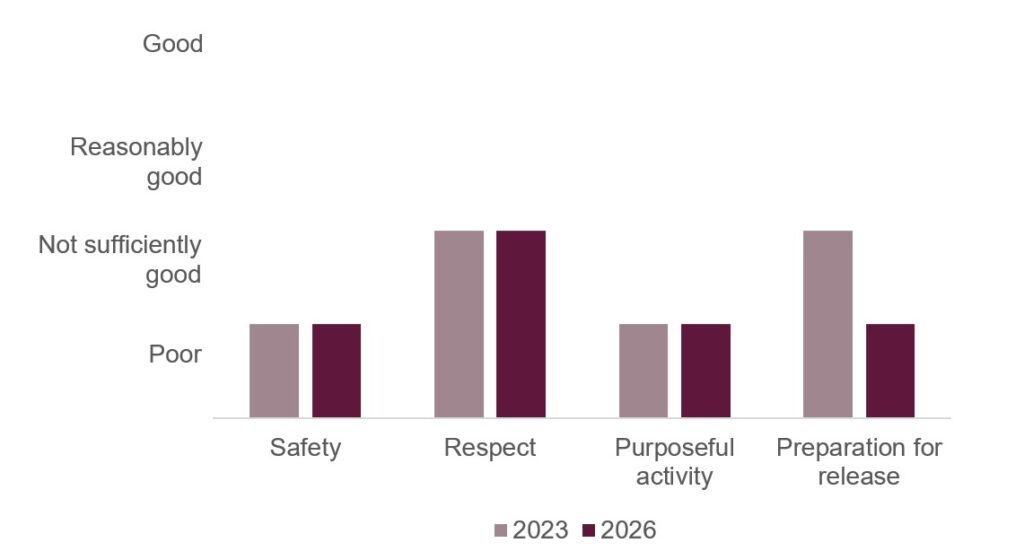
At this inspection of Woodhill, we found that outcomes for prisoners were:
- Poor for safety
- Not sufficiently good for respect
- Poor for purposeful activity
- Poor for preparation for release.
We last inspected Woodhill in 2023. Figure 1 shows how outcomes for prisoners have changed since the last inspection.
Figure 1: Woodhill healthy prison outcomes 2023 and 2026
What needs to improve (Back to top)
During this inspection we identified 16 key concerns, of which seven should be treated as priorities. Priority concerns are those that are most important to improving outcomes for prisoners. They require immediate attention by leaders and managers.
| Priority concerns | |
| 1. | The prison was not safe. Rates of violence had increased since our last inspection and overall levels were the second highest compared to similar prisons. The rate of serious assaults on staff was the highest in the long-term, high secure estate and around a third of all incidents involved the use of weapons. |
| 2. | Rates of self-harm remained among the highest in the adult male estate. |
| 3. | Drugs were far too easily available. Three deaths in the last two years had been classified as drug related, and the positive random mandatory drug testing rate (MDT; see Glossary) for the last 12 months was among the highest of all adult male prisons. |
| 4. | Many officers were failing to set standards, enforce basic rules or engage with prisoners constructively. |
| 5. | Too many education, skills or work sessions were cancelled. |
| 6. | Prisoners had little opportunity to address their offending behaviour. |
| 7. | There was little resettlement help, and risk management planning for release of the most dangerous men was inadequate. |
| Key concerns | |
| 8. | The rate of force being used had increased considerably and was the highest of all category B training prisons. |
| 9. | Patients waited far too long to transfer to hospital under the Mental Health Act. The average wait over the last year had been 191 days, which was very poor. |
| 10. | The prison was dilapidated and grubby. Extensive refurbishment, including the long-delayed shower improvement programme, was needed. |
| 11. | Urgent medical treatment was sometimes delayed. This was due to the lack of officers to escort patients to the A&E department in the community. |
| 12. | Leaders were not actively promoting fair treatment and inclusivity. The lack of consultation left them poorly sighted on the experiences of prisoners from different groups. |
| 13. | Time unlocked was particularly poor at weekends and for those who were unemployed. |
| 14. | The range of education, skills and work activities was too narrow and did not fully meet prisoner needs. |
| 15. | There were too few accredited qualifications, and prisoners were unable to gain recognition for the skills they had developed in industries. |
| 16. | There was no systematic approach to help prisoners get employment on release. |
Notable positive practice (Back to top)
We define notable positive practice as evidence of our expectations being met to deliver particularly good outcomes for prisoners, and/or particularly original or creative approaches to problem solving. Inspectors found one example of notable positive practice during this inspection, which other prisons may be able to learn from or replicate.
| 1. | In-cell laptops were used well to communicate with prisoners, including recorded messages from leaders about changes being made, informative videos, and podcasts involving prisoners. (See Prisoner consultation, applications and redress) |
Unless otherwise specified, these examples are not formally evaluated, are a snapshot in time and may not be suitable for other establishments. They show some of the ways our expectations might be met, but are by no means the only way.
Section 1: Leadership (Back to top)
Leaders provide the direction, encouragement and resources to enable good outcomes for prisoners.
We have found poor outcomes in safety and purposeful activity at each inspection of Woodhill since 2018. This had not improved, The Urgent Notification issued by the Chief Inspector in 2023 prompted remedial action by HMPPS, and some of that help continued, but leaders had not addressed the high rates of violence, drugs and self-harm, whilst they had allowed outcomes in our preparation for release test to deteriorate.
The new governor was an experienced leader but had only been in post for six months. A new deputy had joined him just two months prior to our inspection, but we had confidence that they had already analysed the needs and priorities of the prison accurately. Most staff we spoke to told us that they felt encouraged by the drive and leadership style of this new team.
The governor was trying to improve stability by delivering time out of cell more reliably. The success of this approach was being measured in that there had been fewer recent examples of protesting behaviour, such as the setting of cell fires or malicious fire alarm activation. This was encouraging although recorded rates of violence remained intractably high.
Leaders were still not delivering the outcomes expected of a training prison and following cuts to the education budget they had stopped delivering some of the activities aimed at improving employability. They had also failed to improve attendance at activities or address their frequent cancellation.
Probation leaders were not providing enough staff to deliver meaningful offender management contact time, and there were few opportunities for prisoners to address their offending behaviour.
Leaders were however, addressing the shortfall of officers, and more new recruits were due to start in addition to some transferring from other prisons. The governor was taking more robust action to reduce the proportion of officers not available for operational duties, including those under disciplinary procedures or regularly absent.
A consultant was working with senior leaders to promote team working, and the governor met with middle managers each week to improve communication and consultation. Leaders were making sure new supervising officers had time to shadow experienced colleagues, but this had yet to realise higher standards or better relationships on the wings.
Poor staff-prisoner relationships were at the heart of many of the frustrations for prisoners. Some staff lacked the competence and confidence to enforce rules or engage with prisoners constructively. The urgent need for clear leadership to support frontline staff was clear.
Leaders had allocated a member of the safety team to each house unit to promote improvements and offer direct support to their colleagues, which was a promising initiative. However, it was not yet having an impact on the quality of assessment, care in custody and teamwork case management (ACCT; see Glossary).
Experienced and visible health care leaders were working effectively together, and clinical staff felt valued and supported.
The governor and deputy secured some replacement laundry equipment and had begun to improve basic processes, such as reinstating weekly kit exchange to improve decency. However, the prison service had not provided adequate funding for refurbishments, and the prison was dilapidated. For example, shower refurbishments had been delayed for a long time.
Section 2: Safety (Back to top)
Prisoners, particularly the most vulnerable, are held safely.
Early days in custody
Expected outcomes: Prisoners transferring to and from the prison are safe and treated decently. On arrival prisoners are safe and treated with respect. Risks are identified and addressed at reception. Prisoners are supported on their first night. Induction is comprehensive.
| HMIP prisoner survey | Yes | Compared with last inspection |
| Overall, were you treated very/quite well in reception? | 71% | Higher |
The treatment of new arrivals had improved since our last inspection. Reception staff were friendly and completed reasonably good quality safety interviews, in private, with each man. Reception peer workers also provided useful support, and a member of the safety team spoke with prisoners soon after their arrival for an in-depth assessment of their concerns and vulnerabilities.
Prisoners spoke positively about staff on the induction unit, and first night cells were generally clean and well equipped.
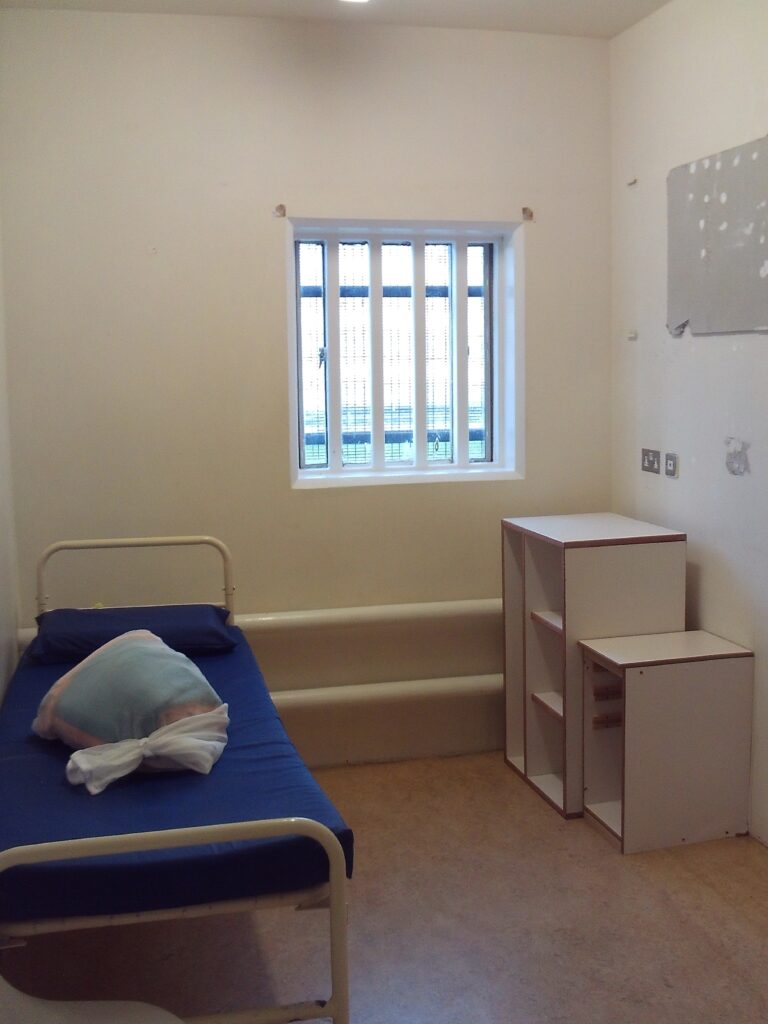
Access to basic provisions was good, and prisoners were given toiletries, clean clothing and a small amount of phone credit. They attended helpful induction sessions, but many waited too long to be approved to attend the gym.
Oversight of support provided was good, but when the induction unit was full, some were located on other residential units and quality assurance of their treatment and conditions was not as robust.
Promoting positive behaviour
Expected outcomes: Prisoners live in a safe, well ordered and motivational environment where their positive behaviour is promoted and rewarded. Unacceptable conduct is dealt with in an objective, fair, proportionate and consistent manner.
Encouraging positive behaviour
| HMIP prisoner survey | Yes | Compared with similar prisons |
| Have you ever felt unsafe here? | 61% | No difference |
| Do you feel unsafe now? | 39% | No difference |
Our prisoner survey and data provided by the prison showed that Woodhill remained unsafe. Too many prisoners felt unsafe and at the time of this visit only Swaleside had a higher rate of violence in the category B training estate. Since the last inspection, the rate of violence between prisoners had risen by 23% and the rate of assaults against staff had increased by about 38%. The rate of serious assaults against staff was high compared to similar prisons, with some causing severe injuries.
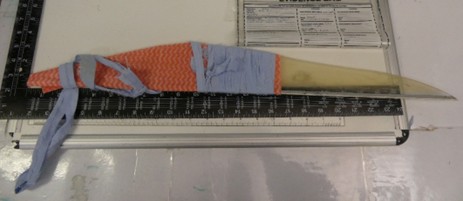
Leaders told us that around a third of all violent incidents involved the use of weapons, and in recent months many of these had been made from hard plastic and metal from the back of in-cell televisions.
Over the last six months, leaders had developed their approach to reducing the high rate of violence, including more reliable staffing of residential units to improve time out of cell and enable prisoners to have easier access to staff support. While investigations into violent incidents were of good quality, staff felt that challenge, support and intervention plans (CSIPs; see Glossary) were of little use to them or prisoners. The CSIPs we reviewed were too generic, lacking specific targets to address the behavioural problems for each prisoner.
There were some early signs of improving stability, but this had not stemmed the increase in violence. The rate of incidents at height (prisoners using the netting or climbing on railings) had reduced, the number of malicious fire alarm activations had dropped from over 900 to around 300 and the number of cell fires had halved. However, violence continued to be driven by drug use, debts, gang-related behaviour, boredom and limited engagement from staff.
Prison leaders told us that, at the time of this inspection, around 28 men on the main house units were refusing to leave their cell, often due to being in debt and fear of being attacked. Some had been isolating for well over 100 days and their daily regime was poor, with many not having had time in the fresh air for weeks.
The introduction of an enhanced wing was good, but leaders knew there was far more to do to develop their range of rewards and incentives, such as an incentivised substance free living unit (ISFL; see Glossary).
The adjudication system had collapsed, but the governor was rectifying this including addressing a big backlog of hearings. The independent adjudicator was now being used more often, and the scheduling of hearings was better. Improved co-ordination and liaison had been introduced to monitor cases reported to the police.
Use of force
| Data provided by the prison | |
| Number of times force had been used against prisoners in the year before this inspection (excluding the Close Supervision Centre CSC) | 1,034 |
The number of times force had been used had increased considerably since 2023, and the rate was the highest of all category B training prisons. PAVA (see Glossary) had been used 57 times (including one use on the CSC) in the last year, which was also high reflecting the increase in serious violence, including weapon use. The governor reviewed all uses of PAVA and led investigations into any suspected of being unnecessary or not proportionate to the threat.
In the video footage we reviewed, staff responded quickly to incidents, but some uses of force could have been avoided through more effective de-escalation techniques and more constructive staff-prisoner relationships. We also saw some antagonistic behaviour and heard inflammatory language from some staff in the video recordings of incidents.
Oversight had improved through weekly meetings to review all incidents. Leaders took robust action to challenge inappropriate use and poor practice. The use of body-worn cameras had also improved, and in the last few months over 90% of incidents had footage available.
Special accommodation was rarely used, but prisoners were not always removed at the earliest opportunity.
Segregation
The segregation unit remained very busy. The average length of stay for some men was long, as they had complex personal problems such as an acute mental health issue. The longer-term plan for some of these men was unclear.
Reintegration planning for others was taking place more consistently, but targets set were often not specific enough to the individual’s circumstances and risks.
Staff were knowledgeable about the prisoners, and we observed some positive attempts at engagement, but these were often brief. In our survey, only 30% of prisoners who said they had been in the unit in the last six months felt staff treated them well.
The unit was often full, and, during these times, the regime was very poor with showers and exercise only being offered every other day. The environment remained austere. Cells were often in a poor condition, communal areas were dilapidated, and exercise yards were bleak.

Management oversight of the unit had improved since our last inspection, and it was positive that psychologists were working there to support staff and prisoners. Recording of the reasons behind segregating individuals while they were being supported by Assessment, Care in Custody and Teamwork (ACCT) had improved and they were defensible.
Security
Expected outcomes: Security and good order are maintained through an attention to physical and procedural matters, including effective security intelligence and positive staff-prisoner relationships. Prisoners are safe from exposure to substance misuse and effective drug supply reduction measures are in place.
| Data provided by the prison | |
| Average random mandatory drug testing positive rate in the 12 months before this inspection | 41% |
Drugs were far too easily available, and their use continued to have a significant impact on the safety of prisoners and staff. The random MDT positive rate was among the highest of all adult male prisons. Leaders reported that the number using illicit drugs may well be closer to 55% due to the high number of prisoners who refused to take a test.
| HMIP prisoner survey | Yes | Compared with similar prisons |
| In this prison, is it easy/very easy to get illicit drugs? | 45% | No difference |
There had been three drug related deaths in the last two years, and over 65 prisoners had been found under the influence of drugs in the month before our visit. It was disappointing that only one in four suspicion tests had been completed so far in 2026 as those carried out produced a positive rate of over 90%. There was no ISFL unit to help prisoners stay drug free.
Improvements to physical security were being made, including new window grilles, designed to reduce prisoners’ ability to pass or receive illicit items, and drone-prevention wires over some external areas. Leaders were analysing other ingress routes such as visits and reception; however, staff searching was not frequent enough and operational staff were not routinely searched at the gate.
Leaders had reduced the number of intelligence reports waiting to be dealt with. Intelligence-led searches and additional staff in the DST team had led to over 800 finds of illicit items in the last year.
We saw many examples of a lack of order and control on the wings. For example, officers found it difficult to account for prisoners’ whereabouts, and they often failed to challenge poor behaviour and were not enforcing even minimum standards.
The management of prisoners convicted of terrorist offences was robust, with good multi-disciplinary working between the community, prison and police through a well-attended monthly meeting. Public protection measures, such as mail and phone monitoring, were used appropriately to safeguard others.
Safeguarding
Expected outcomes: The prison provides a safe environment which reduces the risk of self-harm and suicide. Prisoners at risk of self-harm or suicide are identified and given appropriate care and support. All vulnerable adults are identified, protected from harm and neglect and receive effective care and support.
Suicide and self-harm prevention
The rate of recorded self-harm remained among the highest in the adult male estate, despite a reduction since 2023. Prisoners told us that the lack of opportunities for progression, limited purposeful activity and frustrations caused by poor staff-prisoner relationships contributed to their reasons for self-harming.
Since our last inspection, the Prisons and Probation Ombudsman (PPO; see Glossary) had classified one death as self-inflicted. PPO recommendations were reviewed at the monthly safety meeting, but some highlighted issues, such as prisoners blocking their cell observation panels, continued. CCTV recordings were now being checked to ensure those in crisis were regularly observed.
The safety team worked closely with psychologists to support men who had the most complex needs, and we saw evidence of effective, targeted work. A small number of very vulnerable men were allocated to a quieter landing (known as the Compass Unit) so that they could be kept safe and receive additional support from staff.
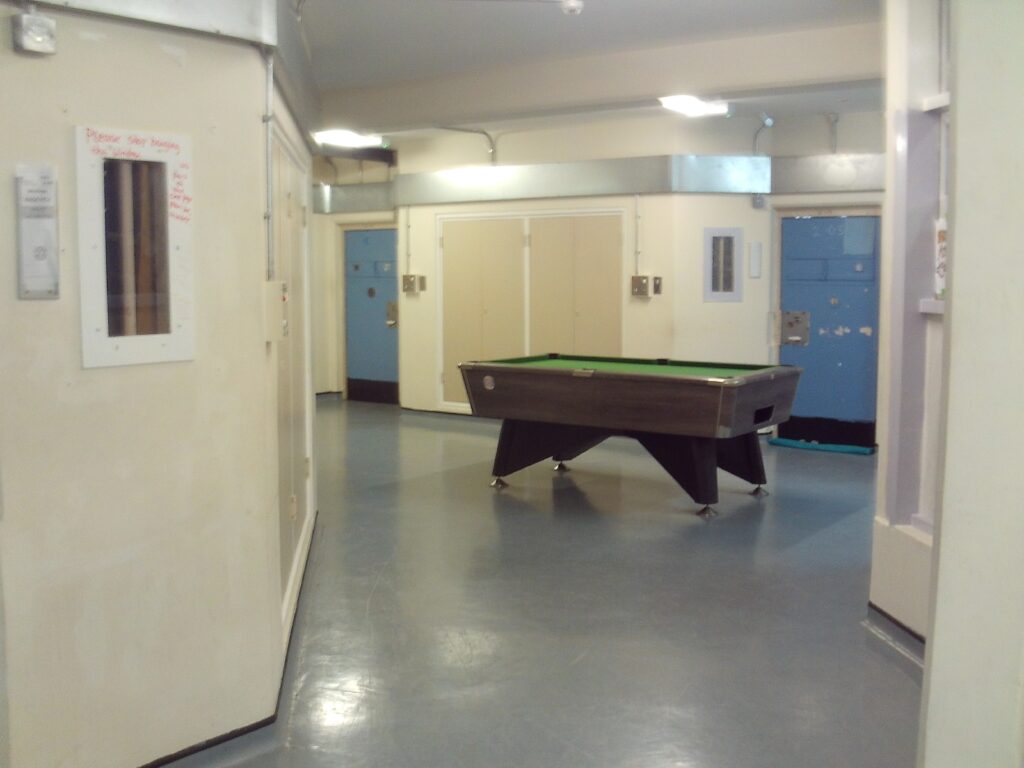
The quality of ACCT case management was inadequate, for example, care plans were often incomplete and most of those we spoke to who were on, or had been on, an ACCT said that they did not feel well supported.
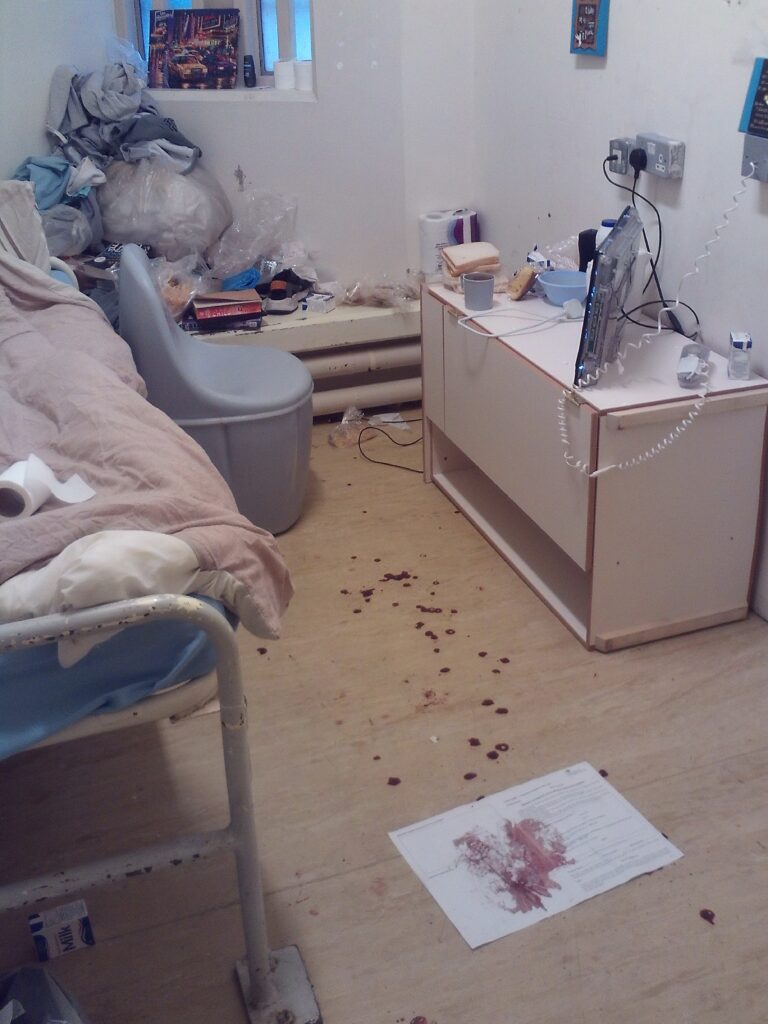
Leaders had improved their oversight of the use of anti-rip clothing and constant supervision was used appropriately. However, we saw a prisoner under constant supervision in a cell that contained evidence of blood from a previous self-harm incident.
The Samaritans’ free phone line was available to prisoners, but Listeners (see Glossary) we spoke to said they were not always unlocked to provide help to those in crisis.
Protection of adults at risk
Officers we spoke to had a reasonably good understanding of what to look out for in terms of safeguarding and concerns could be taken to the safety interventions meeting (see Glossary). However, leaders were not attending the local authority adult safeguarding board.
Section 3: Respect (Back to top)
Prisoners are treated with respect for their human dignity.
Staff/prisoner relationships
Expected outcomes: Prisoners are treated with respect by staff throughout their time in custody and are encouraged to take responsibility for their own actions and decisions.
| HMIP prisoner survey | Yes | Compared with similar prisons |
| Do most staff here treat you with respect? | 59% | No difference |
Our survey showed that prisoners’ perceptions about being treated with respect by staff had not improved since our last inspection. Many prisoners described some staff as being antagonistic, dismissive and disengaged, leaving them frustrated at not being able to get the simplest things done. We saw many examples where officers failed to maintain standards and challenge poor behaviour, such as, prisoners walking around the wing bare chested, vaping on landings, shouting at staff and blocking their cell observation panel.
| HMIP prisoner survey | Yes | Compared with similar prisons |
| Do you have a named officer (key worker)? | 46% | Lower |
Too few men said they had a key worker (see Glossary) and, even when they had one, they did not receive regular support. In the last year, less than 10% of planned sessions were recorded as completed.
There were few peer support roles, which limited opportunities for prisoners to support staff in their work or help other men.
Daily life
Expected outcomes: Prisoners live in a clean and decent environment and are aware of the rules and routines of the prison. They are provided with essential basic services, are consulted regularly and can apply for additional services and assistance. The complaints and redress processes are efficient and fair.
Living conditions
Cleanliness and upkeep of external areas, such as the gardens, had improved.
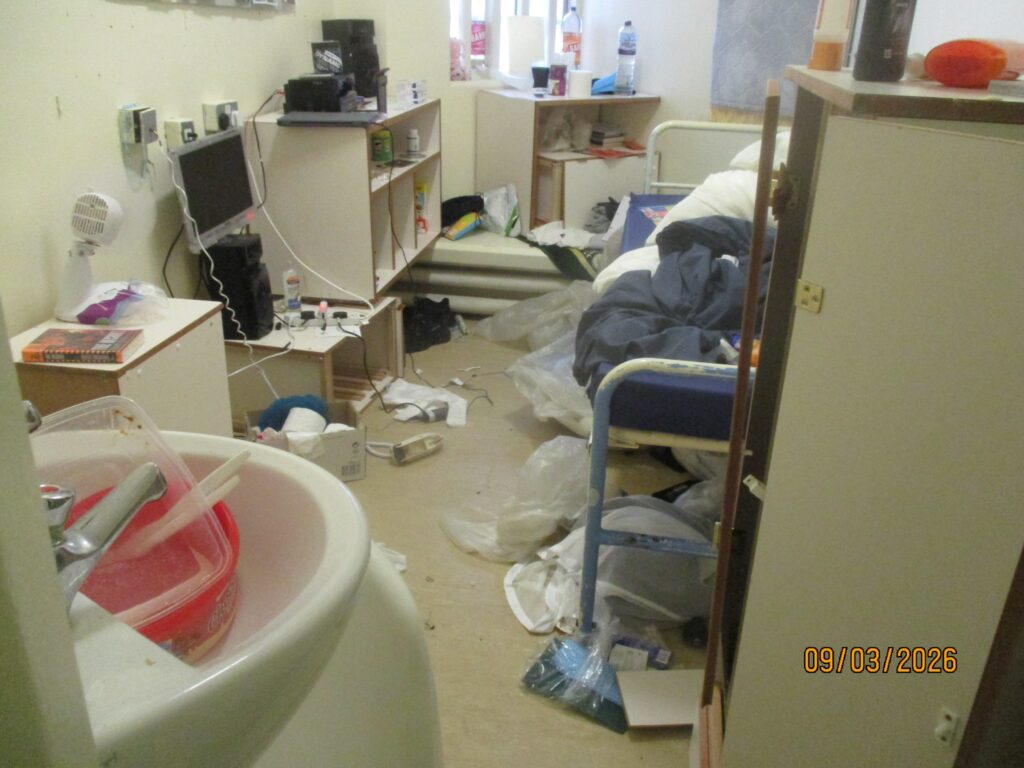
Apart from the showers, our survey showed more positive views from prisoners than in similar prisons about the cleanliness of communal areas. However, we found that staff failed to enforce the standards of cleanliness expected by their senior leaders, and many residential units were dirty and dilapidated. Access to cleaning equipment and materials was poor, and prisoners often resorted to using items of clothing or towels to clean their cells. Assurance checks by managers on the house units had yet to have any impact.
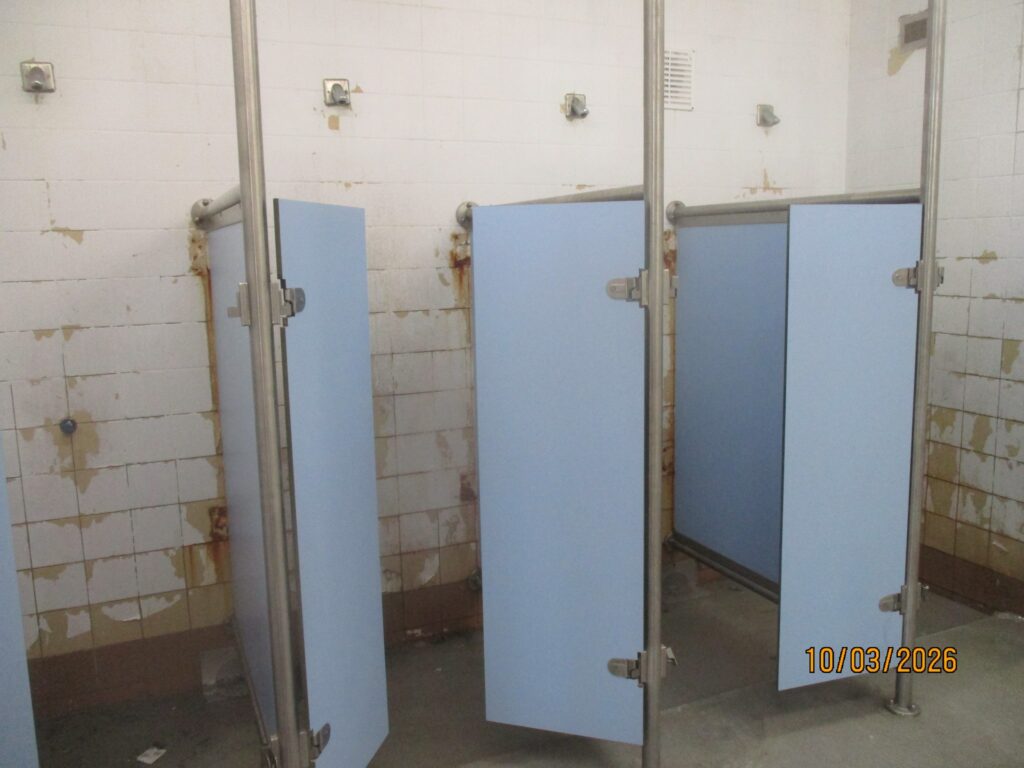
Many showers were out of action or damaged, damp and prone to flooding. The much-needed shower refurbishment programme had still not been completed, and many general repairs on the house units continued to take too long.
All prisoners had a single cell, but many lacked sufficient space for their clothing and other property. Prisoners faced delays in accessing their property held in storage at the prison, and at the time of this inspection there were 130 applications waiting to be dealt with.
We saw officers taking too long to answer calls from emergency cell bells, and leaders had only just reinstated monitoring of this.
Residential services
| HMIP prisoner survey | Yes | Compared with last inspection |
| Is the quality of the food in this prison very/quite good? | 35% | Higher |
| Do you get enough to eat at mealtimes always/most of the time? | 21% | No difference |
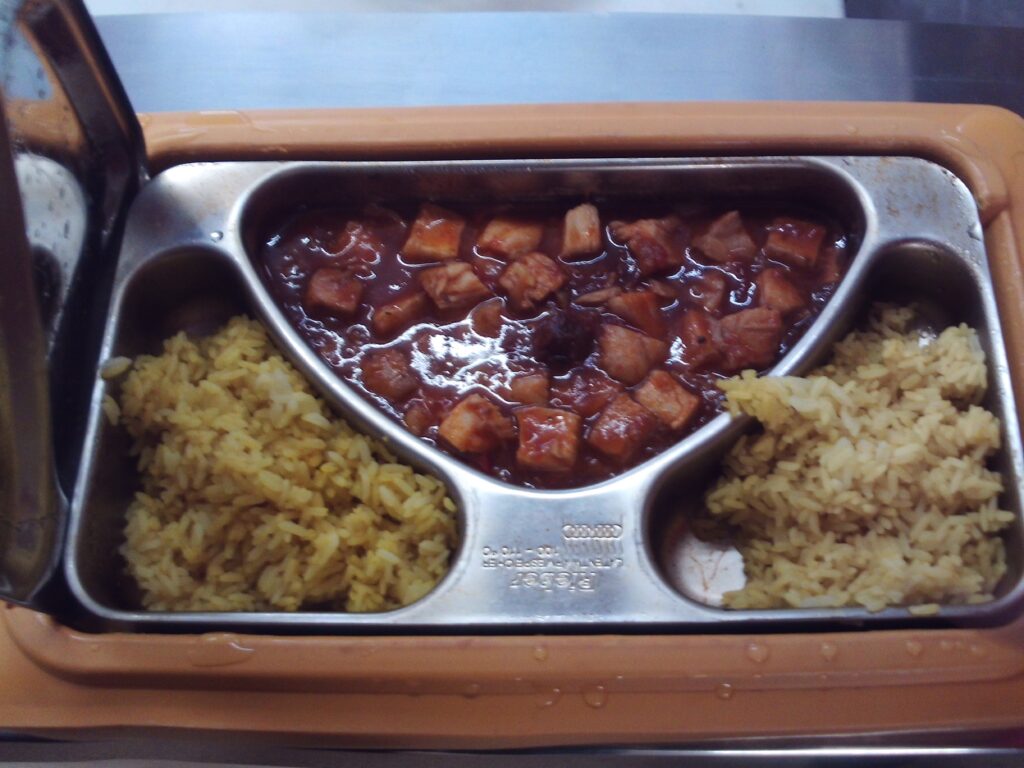
Although our survey showed that more prisoners than at the last inspection thought the quality of food was very or quite good this remained low, and perceptions about portion sizes had not improved at all. The serving of meals was not supervised well enough, and many prisoners said that food options often ran out.
Basic self-catering facilities were available on the wings, including toasters and air fryers, but many of these were dirty. Prisoners who were fasting during Ramadan were able to keep their food warm in a container but were not offered a choice of meal, which was unusual.
Canteen issues were discussed at council meetings, and the shop list was reviewed regularly. Most catalogues were not available to prisoners to browse, except for two that had been made available on the in-cell laptops.
Prisoner consultation, applications and redress
The introduction of in-cell laptops was good as they helped prisoners to make applications and manage aspects of their daily life such as checking their telephone credit. They were also used creatively to communicate with prisoners, including issuing recorded messages from leaders, information videos, and podcasts involving prisoners. However, it took too long for some departments to respond to applications from prisoners or deal with the request.
It was good that leaders used wing forums to help seek prisoners’ views on recent incidents of violence or other disorder. The prison council was now more effective, but there was too little communication with other prisoners about the outcomes of these meetings.
The rate of complaints had decreased by around 20% since the last inspection, but remained the highest of all category B training prisons.
| HMIP prisoner survey | Yes | Compared with last inspection |
| For those who have made a complaint are they usually dealt with fairly? | 18% | No difference |
Few prisoners had confidence in the system and there had been no improvement in their management. Too many responses we checked were dismissive and did not involve a thorough investigation or conversation with the prisoner.
Good facilities were in place for prisoners to meet with legal representatives either in person or using official prison video conferencing (see Glossary).
Fair treatment and inclusion
Expected outcomes: There is a clear approach to promoting equality of opportunity, eliminating unlawful discrimination and fostering good relationships. The distinct needs of prisoners with particular protected characteristics (see Glossary) or those who may be at risk of discrimination or unequal treatment, are recognised and addressed. Prisoners are able to practise their religion. The chaplaincy plays a full part in prison life and contributes to prisoners’ overall care, support and rehabilitation.
Leaders were not actively promoting fair treatment, nor trying to create an inclusive culture. While each senior manager had been allocated responsibility for leading on a protected characteristic, they did not offer regular consultation with prisoners, which meant they had limited understanding of the different experiences. For example, there was no additional support for, or consultation with, young adults, despite our survey showing that the prison held a larger cohort of this group than similar prisons.
Equalities meetings were not held often enough. Although data on disproportionality was discussed at these meetings, there was a lack of action to address issues identified.
Support for physically disabled men was limited. Cell adaptations were made when needed, but there was no disability access to the education centre. Officers did not always know about emergency evacuation plans for individual prisoners, and although a buddy scheme was in place, it was not a paid role and lacked any formal oversight.
Our survey showed that more prisoners who said they had a disability or mental health problem, or who were neurodiverse, reported feeling unsafe, but leaders were not sighted on this. In addition, very few prisoners who said they were neurodiverse felt they were getting the support they needed. Whilst support plans to help staff better understand and interact with these prisoners were in place, in some cases they were of little help as wing staff were not always aware of them.
Professional interpreting services were not always being used to communicate with prisoners who had limited or no English, but the wing kiosks did contain information in a range of languages, which was helpful.
More positively, complaints relating to feelings of discrimination were robustly investigated and there was a good level of independent scrutiny. The equalities manager worked with peer mentors to record podcasts on topics related to diversity and inclusion, which were shared with prisoners on their laptops.
Faith and religion
| HMIP prisoner survey | Yes | Compared with similar prisons |
| For those who have a religion, are you able to attend religious services, if you want to? | 88% | Higher |
| For those who have a religion, are your religious beliefs respected here? | 67% | Higher |
The chaplaincy team was adequately staffed to meet the religious needs of the population and benefited from the support of a large group of volunteers. The team was well integrated into senior management structures and regularly contributed to safety meetings, drawing on their strong relationships with prisoners. They also attended the prisoner council.
All chaplains were trained in mediation techniques and provided bereavement and pastoral support to prisoners, including regular visits to the residential units.
They worked hard to foster a sense of community within the prison through a range of activities, including a book club, a choir, celebration events and guest speakers. The managing chaplain also hosted a series of video podcasts featuring individual prisoners sharing their personal stories, which were made available on laptops.
Health, well-being and social care
Expected outcomes: Patients are cared for by services that assess and meet their health, social care and substance use needs and promote continuity of care on release. The standard of provision is similar to that which patients could expect to receive elsewhere in the community.
The inspection of health services was jointly undertaken by the Care Quality Commission (CQC) and HM Inspectorate of Prisons under a memorandum of understanding agreement between the agencies. The CQC found there were no breaches of the relevant regulations.
Strategy, clinical governance and partnerships
Services were well-led with effective clinical leadership ensuring quality, patient-centred care was being delivered. We observed a diligent team providing care with dignity, respect and patience.
Partnership working between the prison and health providers was strong, supported by regular local delivery board meetings and a dedicated health care governor.
Clinical governance and oversight were very good, with leaders sighted on risks. This and regular, bespoke audits, alongside a service improvement plan, were driving improvements. Clinical incidents were reported, lessons learned were disseminated and we saw several examples of changes being implemented as a result. The number of health care complaints was low and managed well. The service actively sought and acted on patient feedback.
An effective recruitment strategy had resulted in few vacancies and staff we spoke to felt valued and supported by the Trust. Mandatory training compliance was good, and supervision arrangements were embedded. It was positive the Trust had invested in upskilling staff in clinical skills and leadership.
Safeguarding arrangements were robust and had been enhanced by the introduction of safeguarding supervision.
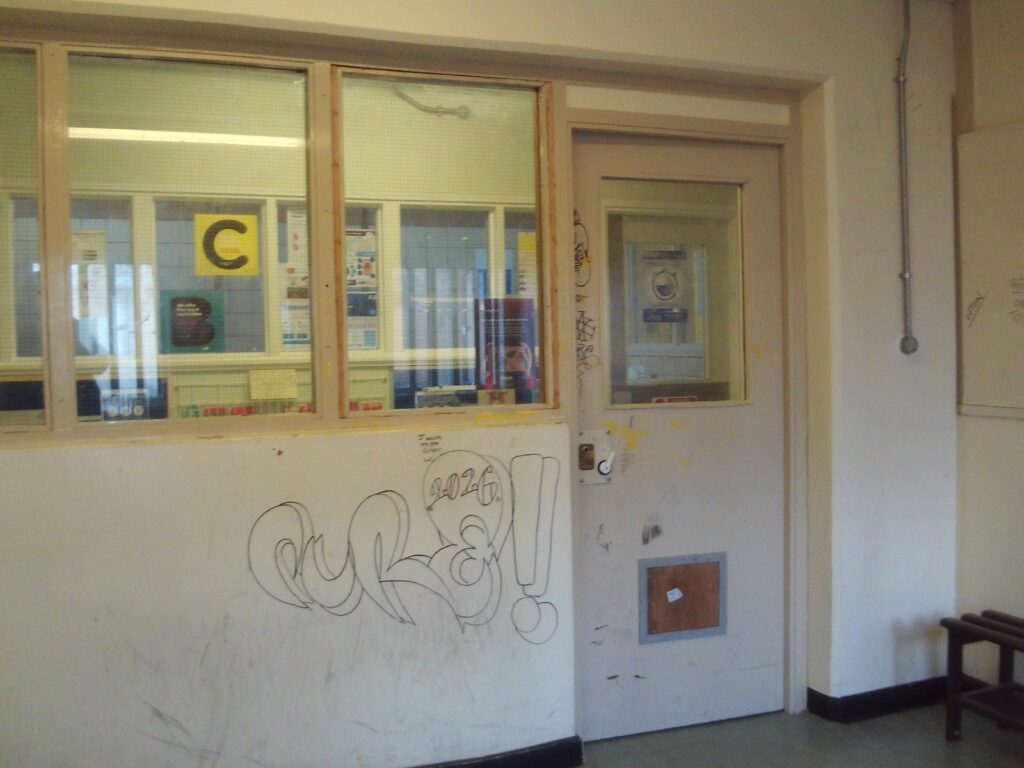
Clinical areas were clean and met infection control standards, however, patient waiting areas were bleak and covered in graffiti.
Emergency clinical equipment strategically placed around the prison contained the necessary kit and was checked regularly.
Promoting health and well-being
There was no joint health promotion strategy between health and the prison, although Central and North West London NHS Foundation Trust followed the national health promotion calendar. There were no health champions at the time of the inspection as previous ones had left and new recruits had not yet been identified.
Too little additional information was made available to patients in health care waiting areas or on the house units. Interpreting services were available, and while information was not routinely printed in alternative languages, this could be provided on request.
Sexual health screening was offered, with referrals to community services for ongoing care. Provision matched those in the community, with strong administrative oversight. Multi-agency outbreak plans were in place should they be needed.
Primary care and inpatient services
The primary care team was well led, with named nurses covering house units each day. Despite some new leadership posts the team was stable, cohesive, and showed strong commitment in challenging circumstances.
New arrivals received comprehensive and timely initial and secondary health screening. Consent for medical records was obtained appropriately and information shared promptly.
Patients used paper‑based applications which were reviewed each day by clinicians to identify urgent needs and allocate appointments. Waiting times were short, with next‑day GP access for routine issues and same‑day care for urgent cases.
Long‑term conditions were managed well, supported by audits and accessible personalised care plans. Joint working with pharmacy colleagues ensured effective medication reviews.
The administration team maintained strong links with external hospitals and oversaw appointments well. Four slots were available daily, but patient‑led cancellations were high. All declining patients were reviewed by a nurse. However, frequent delays in prison leaders getting patients to A&E created significant risk.
There was no end‑of‑life care suite, but there was an agreed pathway if required. All patients were seen before release and given a care summary and sufficient medication.
A good standard of care was being delivered in the inpatient unit with effective, multi-disciplinary oversight. However, there was a lack of therapeutic activity.
Social care
A memorandum of understanding between the relevant agencies had yet to be signed by all parties. There was good oversight from the prison and health care of patients referred for an assessment, and these took place promptly. Referral pathways were clear but not well advertised across the prison. Only one patient was in receipt of a social care package (see Glossary) during the inspection; the recording of care on the patient’s medical record was inconsistent which required attention.
Mental health
The mental health team delivered a responsive service and worked effectively with the prison and other providers. Staff reported feeling well supported and the team was well led.
Around 80 referrals a month were triaged with multidisciplinary oversight, ensuring patients were directed to suitable care. Most waits were reasonable, although some faced delays in receiving psychological therapies. The Trust had been successful in recruiting key psychological personnel, and there were significant reductions in waiting times. Alongside this, staff were facilitating valuable psychologically led groups.
Due to recruitment issues psychiatry provision was weak with some appointments being undertaken remotely, which was not appropriate. Physical health monitoring arrangements were robust, and records we looked at were good.
Clinical staff maintained a strong and consistent presence across the prison. They routinely attended the segregation unit and were present at all initial ACCT reviews. The team was well integrated into prison safety meetings.
| Data provided by the prison | |
| Average number of days waiting to transfer to a secure hospital in the 12 months before this inspection | 191 |
Significantly more patients had been transferred to secure hospital under the Mental Health Act than at the 2023 inspection. However, only one out of 17 patients had been transferred within 28 days with others having extremely long delays; some of the longest we have seen.
Support and treatment for prisoners with addictions and those who misuse substances
Partnership working with the addictions team had improved under new prison leadership. Efforts to reduce drug demand and strengthen recovery support met most needs. Joint working had commenced on a new drug strategy, recovery wing and ISFL (see Encouraging positive behaviour and Security).
The co‑located integrated team of recovery workers and clinicians was highly competent, supported by several prescribers and a specialist GP. Recruitment was underway to increase capacity, and staff were well supervised and trained.
Around 55 new arrivals each month were seen at induction and offered harm‑reduction support, and an open referral system generated up to 30 referrals a month. Assessments were prompt with no waiting list. In January 2026, 133 patients received psychosocial support with 27 receiving clinical treatment. Targets in plans were individualised and pertinent.
Patients had access to high quality in‑cell workbooks on addictions, emotional instability, anger, violence and empathy, underpinning both individual and group therapies. Opiate substitution therapy complied with national guidance. Prescribing was flexible and accompanied by effective joint reviews with the specialist GP and coordination with mental health practitioners.
The prison took reasonable steps to manage emergencies. Officers, including those undertaking their initial training, had been reminded about the identification of men thought to be under the influence of drugs, and pop‑up awareness sessions were held on houseblocks. Ninety officers were trained in naloxone administration (to counter opiate overdose) in case of emergency, which was impressive.
There were no peer mentors at the time of this inspection but there were plans to reintroduce them and consult service users more widely. Alcoholics Anonymous support had ceased, but a virtual Narcotics Anonymous option was being developed.
Good pre-release work was supplemented by Reconnect through-the-gate workers’ support.
Medicines optimisation and pharmacy services
The pharmacy was managed well, benefitting from onsite pharmacist oversight and skilled technicians. A range of improvements had been made to the management of medicines including pharmacy-led clinics and, unusually, pharmacy-led in-cell medicines checks.
Documented stock management including controlled drugs was systematic. Appropriate medicines were dispensed promptly, being administered to named patients on each houseblock, or from stock and/or out-of-hours as required. Missed dosages were carefully monitored and acted upon. Prison officers provided adequate supervision of queues at the administration hatches.
Governance was comprehensive. The medicines optimisation group received detailed oversight reports on trends, high-risk medications, and learning from audits and other sources, with indicated actions as necessary. As a result, systems improvements had occurred, such as an audit trail for unused stock return. And new developments were planned, for example, the introduction of electronic prescription tokens for patients on release.
Dental services and oral health
Time for Teeth offered a good range of community equivalent treatments. The current waiting time was around 14 weeks, which was good, and there was a low rate of missed appointments. A nurse and dentist visited the prison three days per week, which met demand. Appointments were triaged by the dental staff when on site and primary care could prescribe medication for pain or infection if a dentist was not on site.
Governance arrangements were robust and equipment was maintained appropriately. The dental suite was large enough and had a separate decontamination room. Cleanliness was good, and routine checks of tools, equipment and cleaning were consistently recorded.
Section 4: Purposeful activity (Back to top)
Prisoners are able and expected to engage in activity that is likely to benefit them.
Time out of cell
Expected outcomes: All prisoners have sufficient time out of cell (see Glossary) and are encouraged to engage in recreational and social activities which support their well-being and promote effective rehabilitation.
| HMIP prisoner survey | Yes | Compared with similar prisons |
| Do you usually spend less than two hours out of your cell each day on Monday – Fridays? | 36% | No difference |
Our roll checks found a third of prisoners locked in cell during the core working day. As a key priority for the governor upon taking up post was to promote safety and stability, he had introduced a regime which allowed half of a house unit to be unlocked for morning domestic period, whilst the other half could attend purposeful activity including wing-based cleaning. In the afternoon this was reversed. This was intended to promote more reliable delivery of the regime, even when there were staff shortages. However, the new regime meant less time out of cell for the many men not engaging in purposeful activity, or those who were unemployed. They were locked in cell for about 22 hours a day. The weekend regime for the whole prison was also poor.
Around a third of men were allocated to full-time activity, and they could have about 6.5 hours out of cell each day during the week. However, planned activities were often cancelled, which further reduced their time out.
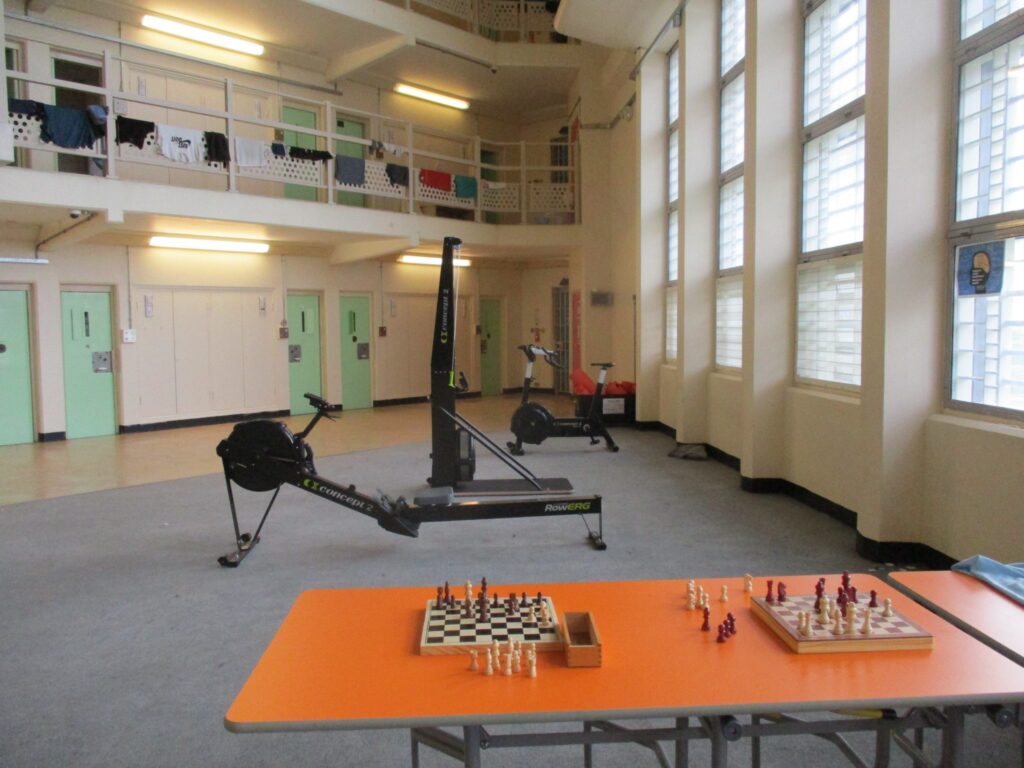
In our survey, 51% of prisoners said they could attend the gym three times a week or more which was good. They could participate in a wide range of activities, including team sports on the outside pitch.
Access to the library was very limited and, in our survey only 28% of men said they were able to visit it once a week or more, which was significantly lower than in similar prisons. In the prison’s own survey, one man said:
Education, skills and work activities

Ofsted inspects the provision of education, skills and work in custodial establishments in England. The following summary has been provided by Ofsted inspectors who attended this inspection. Their full report is published under ‘Further resources’.
Ofsted made the following assessments about the education, skills and work provision:
- Overall effectiveness: Inadequate
- Quality of education: Requires improvement
- Behaviour and attitudes: Inadequate
- Personal development: Requires improvement
- Leadership and management: Inadequate
Leaders and managers had ambitious plans for the curriculum but were hampered in implementing these due to the frequent cancellations of activities. This limited the range of education, skills and work activities offered.
Enough activity spaces had been provided to occupy prisoners on a full or part-time basis. The allocations process was mostly effective, but prisoners were not always allocated to the full number of available activity spaces. This resulted in waiting lists for most activities. Attendance at activities remained poor. Leaders had not rectified the concerns identified at the previous inspection.
A number of education, skills and work pathways, which included construction and services industries, had been created recently. Prisoners could gain skills and experience in interrelated topics, which helped them secure work within the prison and upon release.
Tutors and workshop instructors used the information they had on prisoners’ prior learning or experience to plan lessons and activities effectively. This contributed to prisoners enjoying their time in education, skills and work and learning new skills.
Instructors did not routinely use ‘Progress to Work’ booklets to identify and record the skills that prisoners needed to develop. They did not set meaningful targets for them. Prisoners whose first language was not English often struggled with using the workbooks and, consequently, did not complete them.
Prisoners working in industries or workshops, including the kitchen, the gardens and recycling, were unable to gain meaningful qualifications for the skills and knowledge they gained.
The Prison Education Service provider, Milton Keynes College, had constructed an effective curriculum that provided prisoners with skills that would help them once released. This included English, mathematics and business courses. The number of courses in English and mathematics and for prisoners whose first language was not English was not sufficient to meet demand.
In English and mathematics lessons, tutors provided prisoners with sufficient time to discuss topics and practise new concepts. Tutors used questioning and assessments well to check what prisoners knew and provided feedback on prisoners’ written work, which helped them to understand where they had gone wrong. However, too few prisoners achieved their intended qualification.
Leaders and managers had recently updated and relaunched their reading strategy. There was now a suitable emphasis on reading within the prison.
Prisoners received suitable information, advice and guidance while in prison. However, there was no systematic approach to supporting prisoners released from prison to go into employment.
At induction, staff accurately identified prisoners who had additional support needs. Staff knew how to support prisoners and put support plans in place where needed.
Staff set clear expectations for prisoners’ behaviours. For example, in the balloon packing workshop, the demands to meet production targets helped to focus prisoners on the work that needed to be completed.
Prisoners had a positive approach to learning when they participated in activities. Most wanted to attend classes, but the frequent cancellation of activities created frustration, which resulted in reduced motivation of prisoners.
Section 5: Preparation for release (Back to top)
Preparation for release is understood as a core function of the prison. Prisoners are supported to maintain and develop relationships with their family and friends. Prisoners are helped to reduce their likelihood of reoffending and their risk of harm is managed effectively. Prisoners are prepared for their release back into the community.
Children and families and contact with the outside world
Expected outcomes: The prison understands the importance of family ties to resettlement and reducing the risk of reoffending. The prison promotes and supports prisoners’ contact with their families and friends. Programmes aimed at developing parenting and relationship skills are facilitated by the prison. Prisoners not receiving visits are supported in other ways to establish or maintain family support.
| HMIP prisoner survey | Yes | Compared with similar prisons |
| Have you been able to see your family/friends more than once in the last month using video calling? | 3% | Lower |
| Do visits usually start and finish on time? | 12% | Lower |
Support to help men build or maintain links with their family and friends was limited. There were too few opportunities for secure video calling, with only 16 slots a week. Many families travelled long distances to visit in person, but sessions routinely started late. In our survey, one prisoner noted that his visits tended to be just over one hour instead of the advertised one hour and 45 minutes.
A small amount of individual casework to help men deal with legal proceedings, for example, those relating to contact with their children, had just been introduced but it did not meet the level of need within the population. There were no courses to help men develop their parenting skills and the Storybook Dads project (see Glossary) had not been used by many men in the last year.
Prisoners and children with neurodivergent needs could occasionally attend ‘quiet’ visit sessions, and there was a reasonably good range of family days (see Glossary). There were firm plans to start holding social events for the large proportion of men who did not get visits.
In-cell technology was valued by prisoners and made it much easier for them to keep in touch with their families using the ‘email a prisoner’ scheme (see Glossary).
Reducing reoffending
Expected outcomes: Prisoners are helped to change behaviours that contribute to offending. Staff help prisoners to demonstrate their progress.
| HMIP prisoner survey | Yes | Compared with similar prisons |
| Do you think your experiences in this prison have made you less likely to offend in the future? | 41% | No difference |
Woodhill was still not fulfilling its role as a training prison as there were few opportunities for prisoners to demonstrate progression, either by accessing work and education or addressing their offending behaviour.
Prisoners were not getting meaningful support to achieve their sentence plan targets. There were too few prison offender managers (POMs), especially probation officers, and delivery of key work was poor. In addition, programme staff had not been allowed to go onto the house units to speak with the men due to concerns over their safety, which limited the contact they could have with prisoners. The part-time resettlement worker could not interview high-risk men, who made up 90% of the population. There was no dedicated support for the large number of indeterminate sentenced prisoners and recalled men.
Far more prisoners were being released than at our last inspection, yet leaders had little resettlement provision.
How staff were supporting prisoners and managing risk
POM caseloads were high despite 20% of the population not being allocated one at all.
The offender management unit (OMU; see Glossary) was maintaining its focus on completing essential tasks, such as parole assessments and categorisation reviews. Over 100 men had been transferred to category C jails in the last year, but the lack of opportunities at Woodhill meant it was often difficult for men to evidence progression to the parole board.
Many prisoners, typically those in the middle of long sentences, went months without seeing anybody from the OMU. Prison officer offender managers were often cross deployed to help run the house units. Most sentence plans were created remotely by agency probation staff who the prisoner did not know, which did little to engage them in their next steps.
Public protection arrangements were weak, and managers knew that more work was needed to make sure the correct contact restrictions were put in place on all men requiring this control measure. Very little offence-related monitoring took place, and staff struggled to keep up to date with listening to telephone calls of others being monitored. Fewer than 10% of prisoners currently had their contact with children restricted, which was unusually low at a prison that held so many high-risk prisoners.
Opportunities for prisoners to progress
The lack of opportunities for prisoners to demonstrate progress and reduce their risk of harm was the most common cause of frustration we heard about during the inspection week.
There was little meaningful one-to-one work being provided to prisoners. A new accredited programme, ‘Building Choices’, had been introduced in August 2025. However, it had been slow to start and only seven men had completed it so far. Specific versions of the programme for the riskiest men and those with learning difficulties were needed but were not available. There were few other structured interventions available to help men change their attitudes and thinking.
Returning to the community
Expected outcomes: Prisoners’ specific reintegration needs are met through good multi-agency working to maximise the likelihood of successful resettlement on release.
| Data provided by the prison | |
| Number of releases in the 12 months before this inspection | 136 |
The number of releases had doubled since the last inspection, but they received little resettlement support, and weaknesses in risk management planning for release risked endangering the public. It was mostly left to POMs, who were already overstretched, to check on release plans and escalate any concerns they had to the community-based offender manager, but there was insufficient recorded evidence of them liaising in some cases. There was also too little timely communication from POMs to keep prisoners updated as release approached, but it was encouraging to see COMs holding their own video calls with some prisoners.
The interdepartmental risk management meeting was not sufficiently frequent or well attended and did not generate useful actions to support effective risk management. The quality of written contributions to Multi-Agency Public Protection Arrangements (MAPPA; see Glossary) meetings was not consistently good enough, but attendance by POMs was being prioritised.
Most prisoners had accommodation on the day of release, often in an approved premises. About a third of men went to sustainable accommodation, and only about 6% had been released homeless in the last year.
Very few prisoners left with employment. A lack of resettlement services meant that men could not routinely open a bank account or see the Department for Work and Pensions about their benefit claims ahead of release.
There was some good and developing support from the NHS Reconnect service (to improve the well-being of people leaving prison, reduce inequalities, and address health-related drivers of offending behaviour) before and after release to help men build links with health services in their local community.
Section 6: About HMP Woodhill (Back to top)
Category of the prison
Category B training prison within the long-term, high-security estate.
Brief history
Woodhill opened in the 1990s and is a training prison in Milton Keynes. It predominantly holds Category B men, however, there are also several specialised units, including a close supervision centre.
Population
527 prisoners were held at the time of the inspection. There was operational capacity for 586. (Figures provided by the prison.)
- Around 36 new receptions and 11 releases each month.
- About 90% of men presented a high risk of harm to others. Most were serving long custodial sentences.
- 48% of prisoners were from black and minority ethnic backgrounds.
- 160 prisoners were receiving support for substance misuse.
- 80 prisoners were referred for mental health assessment each month.
Short description of residential units
House units 1, 2, 3 and 4B – general population
House unit 4A – enhanced prisoners
House unit 5 – induction
House unit 6 – close supervision centre
Segregation unit
Health care unit
Prison status (public/private)
Public
Key providers
Physical health provider: Central and North West London NHS Foundation Trust
Mental health provider: Central and North West London NHS Foundation Trust
Substance misuse treatment provider: Central and North West London NHS Foundation Trust
Dental health provider: Time for Teeth (Northamptonshire Healthcare NHS Foundation Trust)
Prison education framework provider: Milton Keynes College
Escort contractor: Serco
Prison group director
Hannah Lane, South Central region
Name of governor/director and date in post
Damian Evans, September 2025
Changes of governor/director since the last inspection
Nicola Marfleet, September 2017 to May 2025
Matt Davies, May 2025 to September 2025
Date of last inspection
14–25 August 2023
Progress on concerns from the last inspection (Back to top)
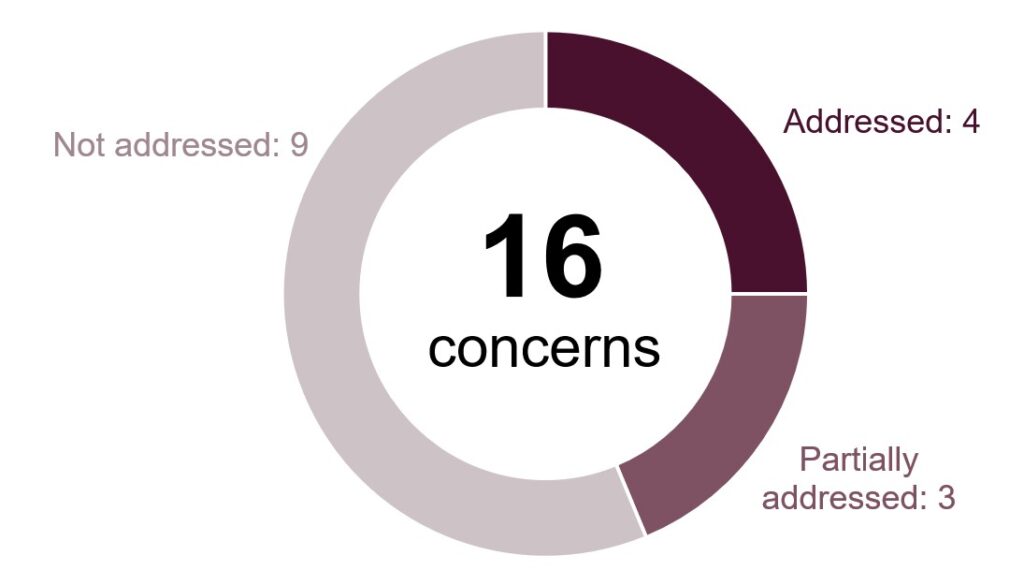
At our last inspection in 2023 we raised 16 concerns, six of which were about areas of priority concern.
At this inspection we found the following progress:
The following is a list of all the concerns raised, organised under the four tests of a healthy prison.
Safety
Priority concerns
A severe shortage of officers was the fundamental strategic challenge facing the prison. It undermined almost all elements of delivery and limited the amount of time unlocked for prisoners, their access to activities and the care they received.
Partially addressed
Levels of violence between prisoners and against staff were among the highest for any prison in England and Wales. An inexperienced staff group lacked the confidence to challenge poor behaviour by prisoners and there were too few incentives throughout the prison to promote pro-social behaviour. The widespread availability of illicit drugs was also a significant causal factor.
Not addressed
Levels of self-harm were the highest in the adult male estate. The
care and support given to those in crisis was not consistently good
enough.
Not addressed
Key concerns
Early days arrangements were not good enough. Reception and first
night processes were weak and induction was very poor.
Addressed
The amount of force used by staff on prisoners was very high.
There was too little scrutiny for leaders to be confident that all use of
force was justified.
Partially addressed
Too many prisoners were segregated for excessive periods, in
rundown conditions, with access to only a limited regime and little
reintegration planning.
Not addressed
Respect
Key concerns
Applications, complaints and consultation processes were weak,
and access to basic amenities was poor.
Partially addressed
Prisoners who were acutely unwell, including those who had taken
an overdose of illicit drugs and were assessed as an emergency, were not receiving care that met the national guidelines for clinical
monitoring or escalation of concerns.
Addressed
Prisoners did not have up-to-date assessments of their medication
risks and needs, and the queues at the dispensing hatch were not
properly supervised. There was therefore loss of confidentiality and a
risk of diversion.
Addressed
Purposeful activity
Priority concerns
Prisoners spent far too long locked up. The regime was not working,
with activities regularly cancelled, so that even employed prisoners
were frequently locked up for more than 21 hours each day. At
weekends all prisoners were locked up for almost all the time.
Not addressed
The education curriculum delivered was not sufficiently ambitious
or challenging to meet the needs of the prison population.
Not addressed
Key concerns
Too few prisoners had sufficient opportunity to raise their levels of
skill in English and mathematics, and those with complex needs or
with learning difficulties and/or disabilities were not given the
necessary support.
Not addressed
Insufficient purposeful activity was offered to occupy prisoners
fully for the core week and punctuality at the activity sessions that
did take place was poor.
Not addressed
The careers information, advice and guidance arrangements were
insufficient to provide prisoners with the help they needed to make
informed and realistic decisions about their futures.
Addressed
Preparation for release
Priority concern
Many prisoners were frustrated about the lack of opportunities to
progress in their sentence. Contact between prison offender
managers and prisoners was sporadic and key work was non-existent.
Not addressed
Key concerns
Public protection telephone monitoring arrangements were weak.
Not addressed
More about this report (Back to top)
This report outlines the priority and key concerns from the inspection and our judgements against the four healthy prison tests. Each of the following four sections contains a detailed account of our findings against our Expectations for men’s prisons.
Find out more about our Expectations and how we inspect
Find out more about priority and key concerns
Find out about notable positive practice
Findings from the survey of prisoners and a detailed description of the survey methodology are published alongside this report. Please note that we only refer to comparisons with other comparable establishments or previous inspections when these are statistically significant. The significance level is set at 0.01, which means that there is only a 1% chance that the difference in results is due to chance.
The tables in this report which provide data from HMI Prisons prisoner surveys also include comparisons with similar prisons.
| Description | What it means |
| Lower | the prison’s percentage is statistically significantly lower than the comparator: prisons with the same function type, or at the last inspection |
| Higher | the prison’s percentage is statistically significantly higher than the comparator: prisons with the same function type, or at the last inspection |
| No difference | the prison’s percentage is not statistically significantly different to the comparator: prisons with the same function type, or at the last inspection |
Inspection team
This inspection was carried out by:
Martin Lomas, Deputy Chief inspector
Sandra Fieldhouse, Team leader
Jonathan Tickner, Inspector
Jessie Wilson, Inspector
Paul Rowlands, Inspector
Rick Wright, Inspector
Yvette Howson, Inspector
Rebecca Stanbury, Inspector
Shaun Thomson, Health and social care inspector
Paul Tarbuck, Health and social care inspector
Dayni Johnson, Care Quality Commission inspector
Helen Ranns, Researcher
Sam Moses, Researcher
Jasjeet Sohal, Researcher
Emma Crook, Researcher
Emma King, Researcher
Steve Lambert, Ofsted inspector
Allan Shaw, Ofsted inspector
Diane Koppit, Ofsted inspector
Find out more about the terms and abbreviations used in this report in our glossary.
Easy read summary and press notice (Back to top)
Survey material and Ofsted full report (Back to top)
The following files may not be suitable for users of assistive technology.
Request an accessible format
If you use assistive technology (such as a screen reader) and need a version of any of these documents in a more accessible format, please email media@hmiprisons.gov.uk. Please tell us what format you need. It will help us if you say what assistive technology you use.