
HMP Wakefield
Report on an independent review of progress at HMP Wakefield by HM Chief Inspector of Prisons 27-29 April 2026.
Section 1: Chief Inspector’s summary (Back to top)
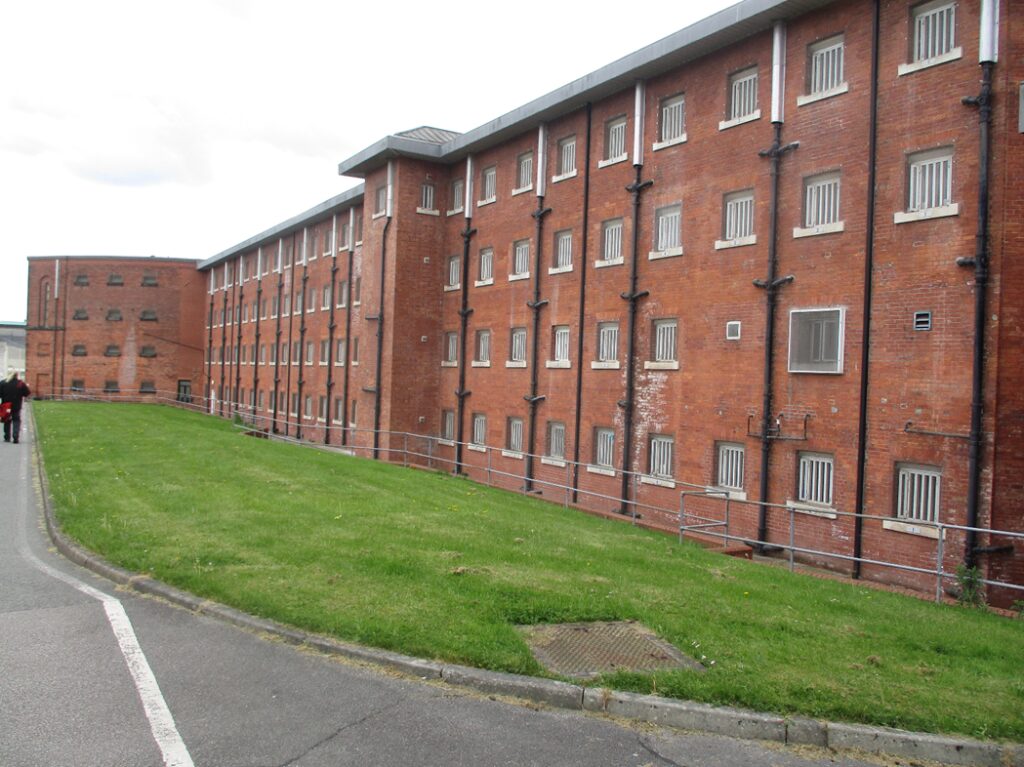
HMP Wakefield is a high security men’s prison in West Yorkshire. Many prisoners are serving long sentences for serious offences, including sexual offences.
This review visit followed up on the concerns we raised at our most recent inspection of HMP Wakefield in 2025.
What we found at our last inspection
At our previous inspections of HMP Wakefield in 2022 and 2025, we made the following judgements about outcomes for prisoners.
Figure 1: HMP Wakefield healthy prison outcomes in 2022 and 2025
Note: rehabilitation and release planning became ‘preparation for release’ in October 2023.
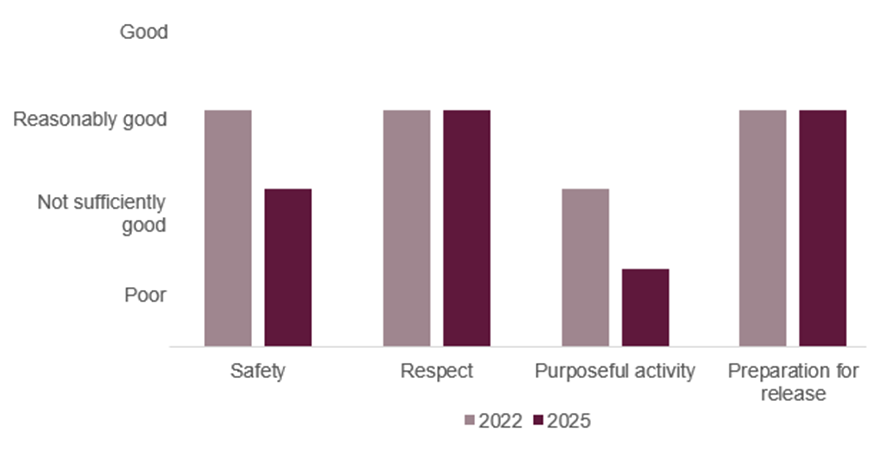
In 2025, the prison still faced significant challenges. The infrastructure was deteriorating and the population was changing, with more younger prisoners arriving, and fewer being convicted of sexual offences. Staff shortages had led to restricted regimes and prisoners spending longer periods locked in their cells. Violence had increased sharply and many prisoners felt unsafe, with no clear strategy in place to address this. Health care had improved, but mental health services remained under pressure. Education and work opportunities were limited. Public protection arrangements and family contact were, however, notable strengths.
What we found during this review visit
In the months after the 2025 inspection, there had been two alleged murders in very close succession. Two prisoners had taken their own lives and there had been a further death yet to be classified. These events had taken a significant additional toll on leaders, staff and prisoners.
In response, leaders had reconfigured the population in an attempt to prioritise prisoner safety. At this review visit, almost all prisoners were deemed vulnerable due to their offence or circumstances. Leaders had also taken steps to improve oversight of safety (see Behaviour management).
Safety concerns were the backdrop to yet further restrictions to the regime, with prisoners spending even longer locked in their cells. However, by the time of this review, there were some early signs of improvement. Staff shortages and a reduced education curriculum had further limited opportunities for full-time employment, but leaders were making better use of available spaces, for example, repurposing underused classrooms to support workshop activity. Progress toward a more active regime, however, remained slow.
Since the full inspection, there had been significant changes to the leadership team, including the arrival of a new deputy governor and four other senior leaders. Leaders appeared to us to be more visible around the prison and clearer about institutional priorities.
Charlie Taylor, HM Chief Inspector of Prisons, May 2026
Section 2: Key findings (Back to top)
At this IRP visit, we followed up eight concerns from our inspection in July 2025. Ofsted followed up four themes based on their findings.
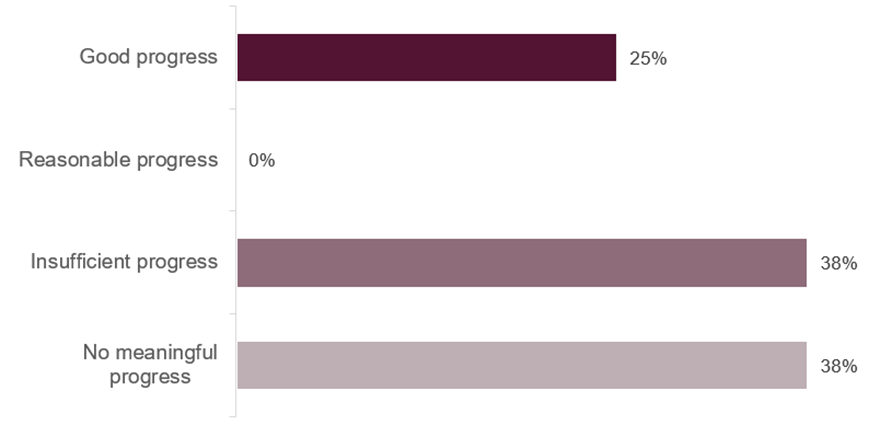
HMI Prisons judged that there was good progress in two concerns, insufficient progress in three concerns and no meaningful progress in three concerns.
Figure 2: Progress on HMI Prisons concerns from July 2025 inspection (n=8)
This bar chart excludes any concerns that were followed up as part of a theme within Ofsted’s concurrent prison monitoring visit.
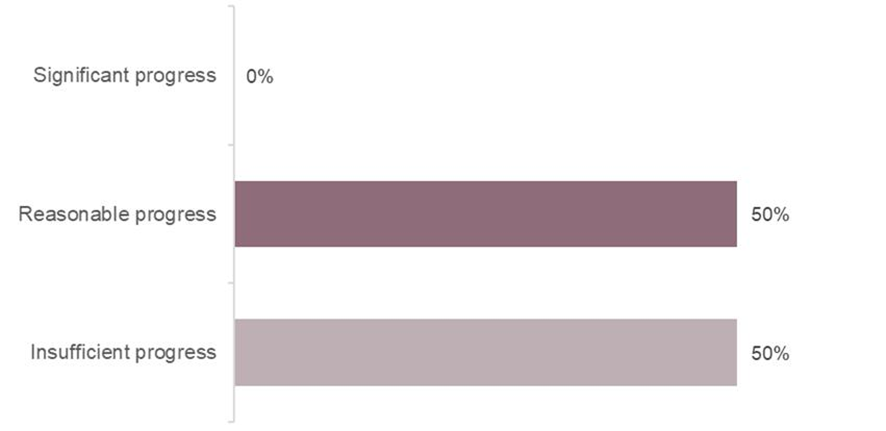
Ofsted judged that there was reasonable progress in two themes and insufficient progress in two themes.
Figure 3: Progress on Ofsted themes from July 2025 inspection (n=4).
Notable positive practice
We define notable positive practice as:
Evidence of our expectations being met to deliver particularly good outcomes for prisoners, and/or particularly original or creative approaches to problem-solving.
Inspectors found two examples of notable positive practice during this IRP visit, which other prisons may be able to learn from or replicate. Unless otherwise specified, these examples are not formally evaluated, are a snapshot in time and may not be suitable for other establishments. They show some of the ways our expectations might be met, but are by no means the only way.
| 1. | Patients admitted to the inpatient unit were given an expected length of stay on arrival. This helped both staff and patients better understand the anticipated progress following admission and supported timely return to the main prison (see Health, well-being and social care). |
| 2. | The inpatient Macmillan gold standard palliative care suite had been improved and was helping to make end-of-life care more bearable (see Health, well-being and social care). |
Section 3: Progress against our concerns and Ofsted themes (Back to top)
The following provides a brief description of our findings in relation to each concern followed up from the full inspection in 2025.
Behaviour management
Concern: There had been an increase in levels of violence, and many prisoners told us that they felt unsafe.
There had been several serious incidents at HMP Wakefield since our inspection, including the alleged murder of two prisoners. Leaders had responded to these incidents by introducing a coordinated set of measures aimed at improving safety.
Leaders had reconfigured the population following a review of common themes from these incidents, including a self‑inflicted death. The population had previously been integrated, with prisoners convicted of sexual offences accommodated alongside those convicted of other serious offences. As a result of the reconfiguration, a considerable number of prisoners had moved out of the prison to be replaced by others considered more suitable. Nearly all prisoners at Wakefield were now deemed vulnerable due to their offence or circumstances.
All prisoners present at the time of the incidents, and all new admissions, were subject to individual risk assessment with input from a range of departments, assessing both risks and potential vulnerabilities. Leaders subsequently designated D wing to accommodate those at greatest risk, and by the time of our visit, this had been extended to C wing. It was encouraging to see that there were now fewer prisoners self-isolating and prisoner perceptions of their own safety were improving (see Concern: The regime for prisoners self-isolating out of fear for their safety was too punitive).
Leaders had also introduced further changes to the daily regime. Exercise was delivered in wing-based groups rather than mixed cohorts, and cell doors were locked during communal activities. This enabled staff to supervise prisoners more effectively.
Oversight of safety had improved. A new safety analyst was in post and leaders had commissioned work, including a prisoner survey, to improve understanding of the underlying drivers for violence. Since the previous inspection, a full‑time psychologist had been embedded within the safety department, providing additional support in the assessment and management of prisoners identified through processes such as assessment, care in custody and teamwork (ACCT) case management of prisoners at risk of suicide and self-harm and challenge, support and intervention plans (CSIPs, see Glossary).
These measures had had a really positive impact on levels of violence among prisoners and their perceptions of safety. Incidents of prisoner‑on‑prisoner violence had reduced by 68% during the six months before this visit compared with the same period before the previous inspection.
Almost all prisoners who had lived in Wakefield before these changes told us they felt much safer. Staff echoed this view, saying that the establishment was calmer and safer to work in.
Violence against staff had increased slightly over the same two periods. Leaders indicated that this was, in part, attributable to the enforced transfers in and out of the prison, which had temporarily increased tension, and continuing frustration at the limited nature of the regime for prisoners. This was confirmed by local data.
We considered that the prison had made insufficient progress against this concern.
Concern: The regime for prisoners self-isolating out of fear for their safety was too punitive.
At the previous inspection, 12 prisoners had been self-isolating from the rest of the population because they feared for their safety. Leaders had segregated a further 15 prisoners on the wings due to similar concerns.
At this visit, only one prisoner was self-isolating, and none were segregated on the wings. Many prisoners who had been self‑isolating before the population changes told inspectors that they felt much safer. They expressed more willingness to engage with the regime, and many were now working.
Leaders had addressed the punitive elements of self-isolation. Prisoners were no longer placed on the lowest level of the incentives scheme (see Glossary) and were able to retain certain privileges, including access to a television in their cells and some in-cell activity. They were now offered a shower, time out of cell and exercise each day separate from other prisoners.
A new policy had been introduced to guide staff in the management of self‑isolating prisoners. This included multi‑agency reviews and reintegration planning. Safeguards for this vulnerable cohort had been strengthened further during this visit by the introduction of regular assessments by health care professionals.
We considered that the prison had made good progress against this concern.
Living conditions
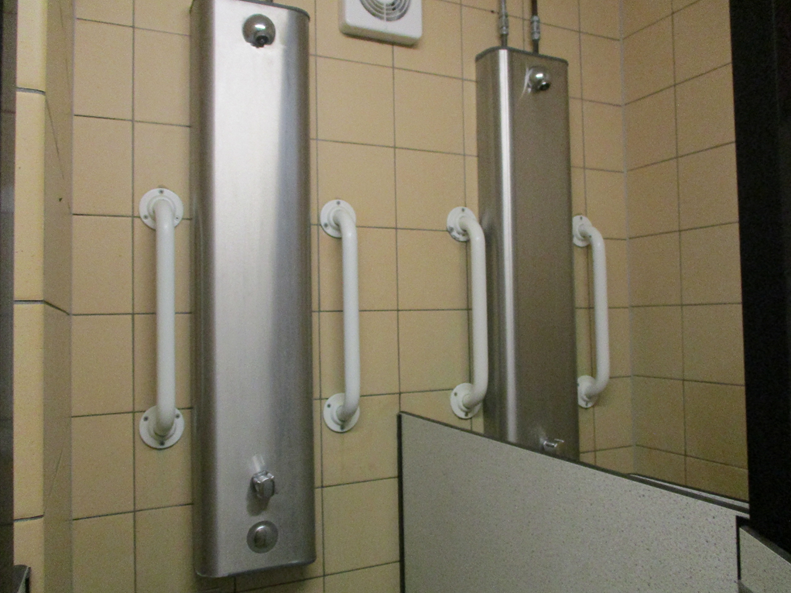
Concern: The prison’s infrastructure was in a very poor condition in some important areas and in need of investment. Vital security systems had broken down and living conditions had deteriorated. Wings were shabby, showers were in very poor condition, water boilers and washing machines were subject to regular breakdowns, and electrical issues sometimes affected emergency cell call bells.
Leaders were actively seeking to drive up standards of cleanliness with tangible improvements in accommodation and communal areas. In addition, work had been done to ensure washing machines had been repaired and were now operational.
Showers were cleaner but remained in poor condition. Several were not working during our visit, and we observed damaged flooring and inadequate ventilation. Funding had not yet been approved for improvement work.
Prior to the 2025 inspection, work on the residential units had been approved and included improvements to fire alarm systems, call points, and electrical installations. However, many other key areas remained in urgent need of repair, including critical security systems and the poor infrastructure in many communal locations such as workshops.
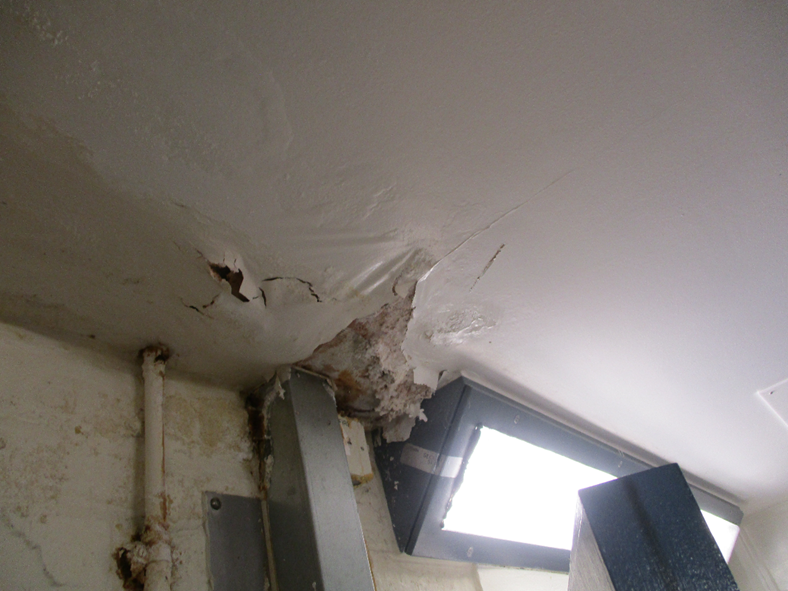
Leaders demonstrated a clear understanding of the scale of work required to restore the deteriorating infrastructure and associated systems and had escalated these issues within HMPPS. However, much of this programme remained at an early stage, with many projects still in the scoping and design phases. Further funding bids would be required before any substantive work could begin.
We considered that the prison had made insufficient progress against this concern.
Health, well-being and social care
Concern: Some poor enablement of health services hampered delivery and presented risks to patient safety. Inpatient beds were sometimes used for non-clinical admissions, and officers allocated to the inpatient unit were often redeployed to other duties, preventing them from supervising patients, and the safe delivery of care. Patients experienced delays in attending emergency and some routine hospital appointments because of prison processes.
Despite early improvement following the inspection, we noted several examples of deteriorating access to health care that had adversely affected patients’ health. Following the regime changes introduced in October 2025, primary care clinics had ceased altogether. They had restarted in December 2025, but at a considerably reduced level, which was compounded by the fact that fewer officers were available to support health care delivery. It was no longer possible to run clinics in both health centres simultaneously. As a result, patients were unable to access clinicians who were available to see them.
Health staff had to work in different ways on the wings, where time was wasted waiting for cells to be opened and there was little access to private facilities or medical equipment. This led to a reduction in the quantity and quality of care delivered.
As an example, since July 2025 constructive work had resulted in 95% compliance with evidence-based standards of care for patients with long-term conditions (LTCs) such as asthma or high blood pressure, but by January 2026 compliance had fallen to 79%. The LTCs lead nurse had to assist with nurse triage on the wings and ad hoc phlebotomy (blood-taking) sessions. The nurse had to check on her patients with LTCs as they presented rather than at planned clinics, and only welfare checks rather than clinical assessments were possible. This lack of detailed monitoring had the potential to compromise patient safety.
Waiting times had increased since the last inspection and were too long. Patients waited up to 11 weeks to see a GP, compared with three weeks in July 2025, and 110 patients were waiting up to 35 weeks for a dental appointment.
We identified good practice in joint prison and health planning of inpatient care and palliative care, albeit non-clinical admissions still occurred. The inpatient Macmillan gold standard palliative care suite had been improved with overnight facilities for family or friends to stay with their loved ones at the end of life. This made an arduous and emotionally charged situation in unfamiliar surroundings slightly more bearable.
Care was planned at effective multidisciplinary team meetings and there was now a new, more rigorous policy for bed usage which set an expectation of reasonable progress in treatment and subsequent return to normal location. However, officers continued to be redeployed at short notice, making it impossible to offer a predictable therapeutic programme. This particularly disadvantaged patients with dementia who required a stable routine. We were told of health and social care professionals unable to access patients because there were not enough officers to open cell doors.
The number of planned prison escorts available to patients had been reduced by two a week and, since the inspection, 19% of external hospital appointments had been cancelled by the prison. Evidence-based practices could not be completed in a timely manner which affected the quality of care. For example, there had been breaches of the NHS target of two-week waits for urgent referrals such as potential cancer assessments.
We considered that the prison had made no meaningful progress against this concern.
Concern: Patients waited far too long for a transfer to specialist mental health beds under the Mental Health Act.
Up to seven patients at any one time were awaiting assessment decisions for secure hospital beds. At the time of our visit, the five patients listed had waited longer than the 28 days in the NHS transfer guidelines for the first of two opinions that were required before arriving at the hospital. Two patients had been waiting for more than 500 and 300 days respectively, which was seriously concerning. Conflicting opinions on the levels of security required for these patients on arrival at NHS units effectively led to the NHS failing these patients.
The prison had no choice but to try to support these sick men without the appropriate environment, resources and therapeutic options. This led to distressing situations for patients and staff, and potentially avoidable progression of untreated mental disorders.
We considered that the prison had made no meaningful progress against this concern.
Concern: Some health facilities did not meet essential infection prevention control standards, risking patient safety. This was because of a combination of poor maintenance, long waits for repairs and the absence of regular cleaning.
The quarterly comprehensive infection compliance and control audit carried out by the health provider again contained many risks arising from the built environment. Some work had been done to improve flooring in the hub primary care centre, but crumbling plaster remained in the residential wing dispensary and X-ray room in the separate health care centre.
Other long-standing deficits in infection prevention and control persisted, for example the lack of wrap-around flooring in the health centre clinical areas where there were gaps between the flooring and skirting boards and exposed concrete in inpatient rooms. As a result, biological organisms could not be eradicated as expected in health care settings.
Daily schedules of cleaning had been introduced since our inspection, so that patients experienced cleaner health facilities, but the underlying fabric remained shabby.
The new health care governor had started to prepare business cases to address some of the identified infection prevention and control risks, which was encouraging.
We considered that the prison had made insufficient progress against this concern.
Health, well-being and social care
Concern: Time out of cell for too many prisoners was poor. We found around half of the population locked up during the working day.
Since the previous inspection, prisoners had spent extensive periods on a highly restrictive regime following a series of serious incidents. The regime had only started to reopen in January 2026.
Staff shortages, poor infrastructure and a reduced curriculum meant that leaders were decreasing the number of prisoners in full-time roles and transitioning to a routine where most prisoners would be working for half of the week.
During our roll checks, we found 45% of prisoners locked in their cells – a marginal improvement from 51% at the full inspection.
The core day was structured so that full-time working prisoners could receive up to 8.5 hours out of their cells, which was unchanged since the last inspection. Prisoners attending work on a half-time basis could receive up to 5.5 hours out of their cells each day, while those who were unemployed or not engaged in activities received just over two hours a day.
Staff shortages continued to have a very negative impact on the delivery of the regime. Classes and workshops were frequently cancelled or unable to operate, contributing to an inconsistent daily routine. Prisoners reported that the prolonged periods locked in their cells, combined with the unreliability of the regime, were a major source of frustration.
Time out of cell at weekends had deteriorated and was poor. Prisoners received an average of 1.5 hours out of their cells on Saturday and Sunday, a reduction from the three hours at the inspection.
We considered that the prison had made no meaningful progress against this concern.
Concern: The single exercise area was not well used. The prison had not done enough to understand why so few prisoners accessed time in the open air.
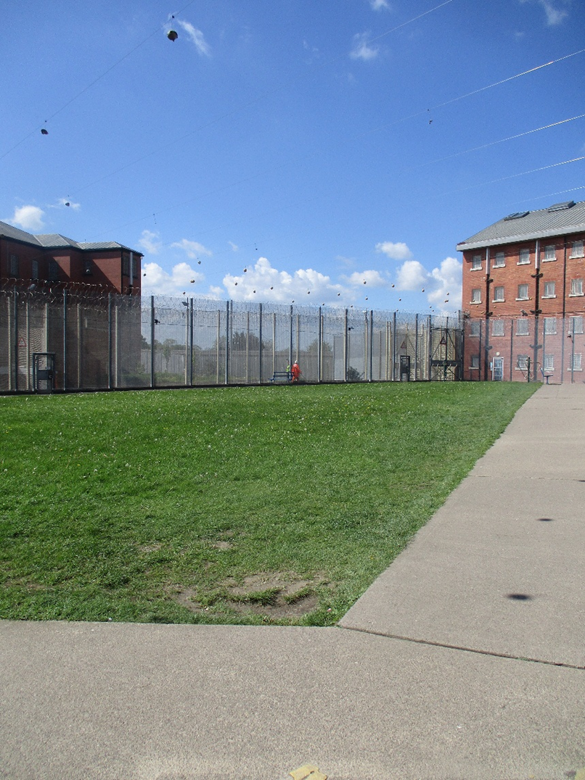
Since October 2025, leaders had introduced wing allocated exercise yard slots, which had resulted in improved access to time in the open air. Prisoners were offered about one hour of exercise each day, an increase from 30 minutes at the last inspection. About twice as many prisoners were now using the exercise yards. While this represented a clear improvement, overall uptake of exercise remained too low.
Some prisoners confirmed to us that the new arrangements were a better way to deliver time in the open air and said they felt safer as a result.
The facilities on the yards remained limited, apart from some fixed exercise equipment, and there was little seating available. Leaders told us they were considering gardening projects to improve these areas, but these had not yet been implemented.
We considered that the prison had made good progress against this concern.
Education, skills and work

This part of the report is written by Ofsted inspectors. Ofsted’s thematic approach reflects the monitoring visit methodology used for further education and skills providers. The themes set out the main areas for improvement in the prison’s previous inspection report or progress monitoring visit letter.
Theme: What progress had leaders and managers made to ensure there were enough activity spaces for eligible prisoners and that these spaces were allocated effectively?
Leaders had introduced a regime which enabled all eligible prisoners to participate in education, training and work. Most prisoners were in education, training and work for at least half the week, with a small proportion in part-time activities lasting less than half the week. Three quarters of activities were in work and workshops, and a quarter of activities in education.
In difficult circumstances, leaders tried to maintain activity spaces. Due to problems with the infrastructure of two workshops, leaders had successfully moved these activities to the education building. Leaders had recently introduced a programme for retired prisoners which met their social and wellbeing needs.
On the wings, prisoners were engaged in meaningful activities across a range of jobs, including painting, cleaning, laundry, management of stores and support for other prisoners.
Leaders had improved the process of allocating prisoners to education, training and work. The allocations team collaborated with staff on the wings, in workshops and education, and had improved the process of matching prisoner needs, aspirations and security risk to the activity. The process was effective.
Leaders had reduced the waiting list for induction, which was now low, and increased the speed by which prisoners were allocated to education, skills and work.
Leaders had changed the pay policy and removed the job seeker allowance, which had been a disincentive for prisoners to go to work. More prisoners attended education, training and work.
Leaders had well-developed plans to increase the number of activities by opening a workshop in gardens and horticulture, and providing a waste management option. Leaders were committed to re-opening the textiles workshop.
Ofsted considered that the prison had made reasonable progress against this theme.
Theme 2: What progress had leaders and managers made to ensure that education and training was ambitious and sufficient for prisoners with long sentences, including those ready for higher levels of study?
For financial reasons, leaders had reduced the range of courses in education. In some cases, this reduced prisoners’ access to higher-level courses. Prisoners could no longer access courses in fashion and textiles, and life skills, nor the higher level courses in digital skills and business enterprise.
Due to staff shortages, leaders had temporarily closed the textiles and woodwork workshops. These workshops had provided opportunities for prisoners to develop higher- level practical skills.
Eighteen prisoners benefitted from access to higher-level courses through distance learning opportunities. However, leaders did not meet the current need.
Leaders had developed an innovative and ambitious course for prisoners who were neurodivergent. Teachers designed individual creative projects for prisoners to develop personal and practical skills. Leaders had trained trainers to adapt their teaching to meet the learning needs of individual prisoners. Leaders had planned the learning space to support mixed media and digital tasks in a safe and welcoming environment.
Prisoners continued to take responsible roles within education, skills and work through roles as mentors, taking on trusted positions and acting as wing representatives. Through these, they developed listening, speaking and planning skills.
In contracted work, prisoners continued to meet tight deadlines and exacting quality standards. Prisoners developed vital employability skills.
Leaders had plans to review the curriculum in the light of the recent changes to the prison population. Leaders rightly planned to introduce qualifications into the workshops, and to provide more opportunities for higher-level study.
Ofsted considered that the prison had made insufficient progress against this theme.
Theme 3: What progress had leaders and managers made to ensure that prisoners had consistent access to education, skills and work?
Leaders had improved prisoners’ punctuality and attendance by changing to a half-time regime and by improving the process for moving prisoners to education, skills and work, which led to a prompt start to activities.
By changing the regime, leaders had reduced the disruption to prisoners’ learning and work. Leaders had ensured that appointments, distribution of medicines and access to fresh air took place when prisoners were not attending education, skills and work.
Managers and officers monitored attendance effectively. Staff quickly followed up any unexpected absences. Attendance had improved between February and April and was high during this period.
Leaders ensured that courses ran in education. Leaders had not ensured consistent access to the textiles and woodwork workshops due to staff shortages.
Leaders had increased the proportion of prisoners who were engaged with education, training and work compared with the previous inspection. Leaders rightly planned to increase it further.
Ofsted considered that the prison had made reasonable progress against this theme.
Theme 4: What progress had leaders and managers made to ensure that the reading strategy was implemented effectively?
Leaders had revised the reading strategy but had not included precise targets. The reading strategy review group had met to discuss partnerships, activities and events that would encourage reading across the prison. Leaders had issued reading pens and reading kits to the wings. Leaders had recently distributed an informative reading newsletter. Leaders were committed to the strategy.
Leaders did not set targets against which they could measure and report on the impact of the strategy. Within education, leaders did not measure and report on the progress that prisoners were making against the initial reading assessment. From October 2025 to April 2026 leaders closed the library, and most prisoners who borrowed books remotely were already skilled readers. Leaders had provided education staff with appropriate training in phonics to provide reading support in lessons, but emergent readers made slow progress.
Only a few prison staff had benefitted from awareness training on reading and dyslexia. Leaders had established reading corners in work areas, but instructors did not use them regularly with prisoners. Too few prisoners in workshops improved their reading.
Leaders had contracted with the Shannon Trust to employ a reading specialist from February 2025. The specialist had recently trained eleven reading mentors. Leaders had started to identify prisoners for support. Mentors had begun to provide support, but it was too early to measure any impact.
Ofsted considered that the prison had made insufficient progress against this theme.
Section 4: Summary of judgements (Back to top)
A list of the HMI Prisons concerns and Ofsted themes followed up at this visit and the judgements made.
HMI Prisons concerns
There had been an increase in levels of violence, and many prisoners told us that they felt unsafe.
Insufficient progress
The regime for prisoners self-isolating out of fear for their safety was too punitive.
Good progress
The prison’s infrastructure was in a very poor condition in some important areas and in need of investment. Vital security systems had broken down and living conditions had deteriorated. Wings were shabby, showers were in very poor condition, water boilers and washing machines were subject to regular breakdowns, and electrical issues sometimes affected emergency cell call bells.
Insufficient progress
Some poor enablement of health services hampered delivery and presented risks to patient safety. Inpatient beds were sometimes used for non-clinical admissions, and officers allocated to the inpatient unit were often redeployed to other duties, preventing them from supervising patients, and the safe delivery of care. Patients experienced delays in attending emergency and some routine hospital appointments because of prison processes.
No meaningful progress
Patients waited far too long for a transfer to specialist mental health beds under the Mental Health Act.
No meaningful progress
Some health facilities did not meet essential infection prevention control standards, risking patient safety. This was because of a combination of poor maintenance, long waits for repairs and the absence of regular cleaning.
Insufficient progress
Time out of cell for too many prisoners was poor. We found around half of the population locked up during the working day.
No meaningful progress
The single exercise area was not well used. The prison had not done enough to understand why so few prisoners accessed time in the open air
Good progress
Ofsted themes
What progress have leaders and managers made in ensuring there are enough activity spaces for eligible prisoners and that these spaces are allocated effectively?
Reasonable progress
What progress have leaders and managers made in changing education and training so that it is ambitious and sufficient for prisoners with long sentences, including those ready for higher levels of study?
Insufficient progress
What progress have leaders and managers made in ensuring that prisoners have consistent access to education and skills and work?
Reasonable progress
What progress had leaders and managers made to ensure that the reading strategy was implemented effectively?
Insufficient Progress
More about this report (Back to top)
This report contains a summary from the Chief Inspector and a brief record of our findings in relation to each concern we have followed up. You may find it helpful to refer to the report of the full inspection for further detail on the original findings (available in Our reports).
Independent reviews of progress (IRPs) are designed to improve accountability to ministers about the progress prisons make in addressing HM Inspectorate of Prisons’ concerns in between inspections. IRPs take place at the discretion of the Chief Inspector when a full inspection suggests the prison would benefit from additional scrutiny and focus on a limited number of the concerns raised at the inspection. IRPs do not therefore result in assessments against our healthy prison tests.
The aims of IRPs are to:
- assess progress against selected priority and key concerns
- support improvement
- identify any emerging difficulties or lack of progress at an early stage
- assess the sufficiency of the leadership and management response to our concerns at the full inspection.
Find out more about priority and key concerns
Inspection team
This independent review of progress was carried out by:
| Donna Ward David Foot Esra Sari Paul Tarbuck Martin Ward Allen Shaw | Team leader Inspector Inspector Health and social care inspector Ofsted inspector Ofsted inspector |
Further resources (Back to top)
Find out more about the terms and abbreviations used in this report in our glossary.