
HMP Lowdham Grange
Report on an independent review of progress at HMP Lowdham Grange by HM Chief Inspector of Prisons 11–13 May 2026.
Section 1: Chief Inspector’s summary (Back to top)
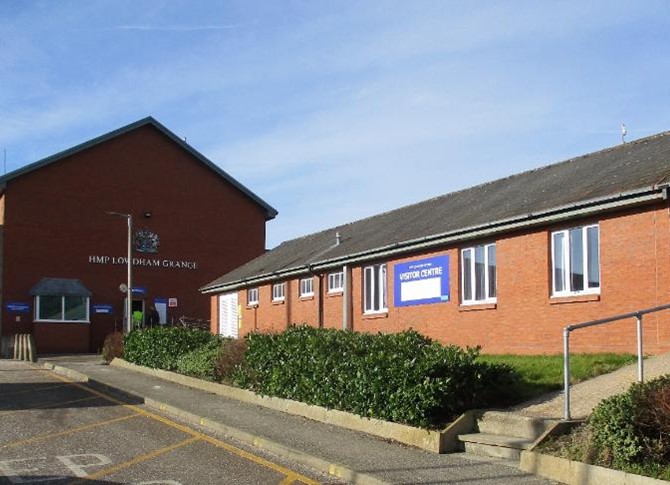
HMP Lowdham Grange is a men’s category B training prison. It is part of the long-term high security estate.
This review visit followed up on the concerns we raised at our last inspection of HMP Lowdham Grange in 2025.
What we found at our last inspection
At our previous inspections of HMP Lowdham Grange in 2023 and 2025 we made the following judgements about outcomes for prisoners.
Figure 1: Lowdham Grange healthy prison outcomes in 2023 and 2025
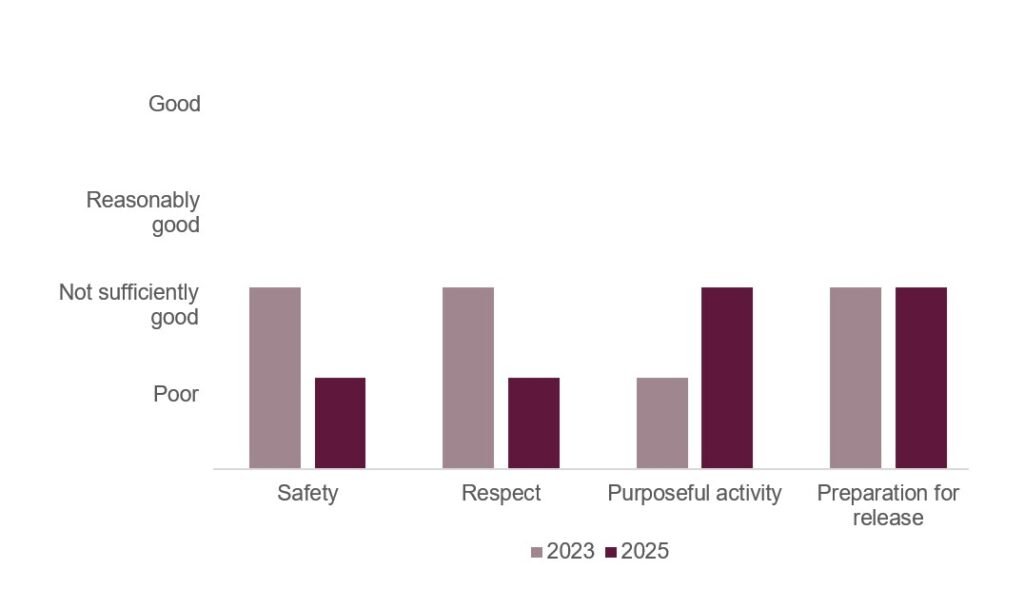
At the 2025 inspection, outcomes were so bad that serious consideration was given to invoking the urgent notification process. Violence, self-harm, use of force and illicit drug use were all high, while governance and support for vulnerable prisoners were poor. Important systems, such as those relating to complaints, visits and adjudications, were in disarray. An extremely poor health care service was endangering patient safety.
There were regular shortages of prison officers, and the high number of inexperienced staff did not have enough mentoring or management support. Not enough had been done to ensure fair treatment, and some prisoners with disabilities were living in unacceptable conditions.
Time out of cell and attendance at activities were inconsistent at best, and prisoners had limited contact with prison offender managers.
What we found during this review visit
It was pleasing to find that the prison’s staff and leadership team had made considerable improvements over the previous year.
The supply of illicit drugs had been reduced through a range of security measures, and the rate of positive drug tests had dropped sharply. The prison was noticeably more ordered, but we were concerned that both use of force and self-harm rates had increased further, despite better governance and support structures. The management of the segregation unit had improved, and fewer people were held there.
A new health care provider had provided robust leadership, and the service had much better governance. Health care staffing was much improved, and services were delivered more consistently and effectively.
The prison as a whole was fully staffed, and an expanded programme of peer mentoring was helping inexperienced officers to develop their skills. Systems for complaints, consultation, applications and adjudications were now all working reasonably effectively. While there was much better management of equalities work, some prisoners with disabilities still did not have enough ongoing support.
Time out of cell was more predictable and Ofsted found that more prisoners were attending education, skills and work activities, and doing so on time. Achievements had also improved, and a useful programme of careers fairs had been established. Dedicated resettlement offender managers were providing good support to prisoners approaching release. The visits provision was now reasonable.
The serious and longstanding problems facing Lowdham Grange will take some time yet to be fully resolved, but the building blocks for progress were now firmly established. This was the result of strong and committed leadership from the governor and the hard work of many other capable managers throughout the prison. While there is a considerable distance still to travel to ensure good outcomes for prisoners, we left with some confidence in the prison’s positive progress toward improvement.
Charlie Taylor, HM Chief Inspector of Prisons, May 2026
Section 2: Key findings (Back to top)
At this IRP visit, we followed up 13 concerns from our most recent inspection in March 2025, and Ofsted followed up four themes based on their latest progress monitoring visit to the prison. Please note, we split some of the concerns into separate areas, therefore they do not exactly match the concerns in the full inspection report.
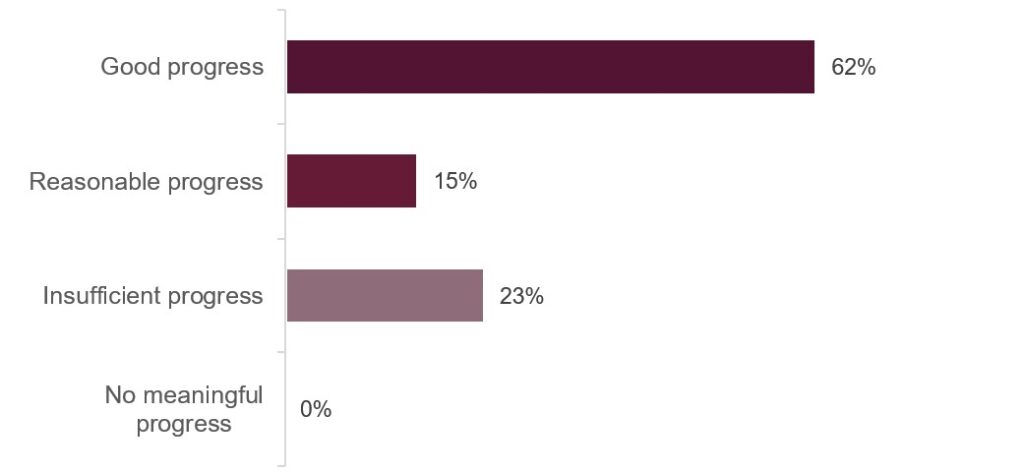
HMI Prisons judged that there was good progress in eight concerns, reasonable progress in two and insufficient progress in three. There were no areas of no meaningful progress.
Figure 2: Progress on HMI Prisons concerns from 2025 inspection (n=13)
This bar chart excludes any concerns that were followed up as part of a theme within Ofsted’s concurrent prison monitoring visit.
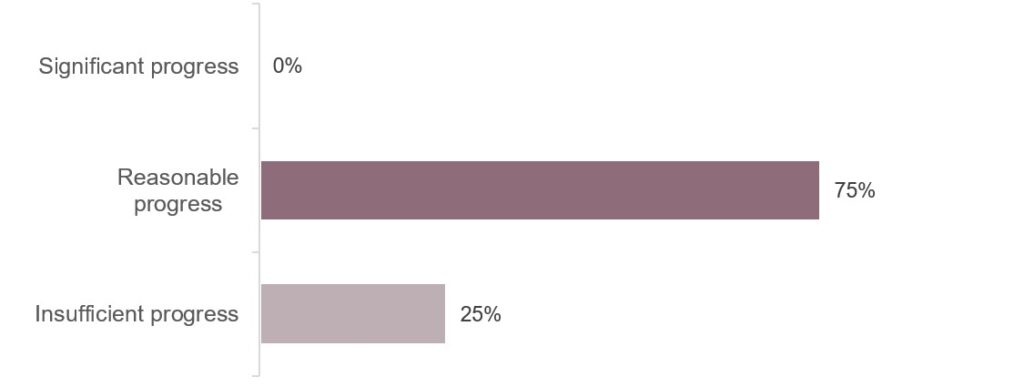
Ofsted judged that there was reasonable progress in three themes and insufficient progress in one theme.
Figure 3: Progress on Ofsted themes from 2025 monitoring visit (n=4).
Notable positive practice
We define notable positive practice as:
Evidence of our expectations being met to deliver particularly good outcomes for prisoners, and/or particularly original or creative approaches to problem-solving.
Inspectors found two examples of notable positive practice during this IRP visit, which other prisons may be able to learn from or replicate. Unless otherwise specified, these examples are not formally evaluated, are a snapshot in time and may not be suitable for other establishments. They show some of the ways our expectations might be met, but are by no means the only way.
| 1. | Within existing resources, leaders had appointed two prison offender managers to help meet the resettlement needs of every prisoner approaching release, with some evidence of improving outcomes. See Reducing reoffending. |
| 2. | Maverick Sounds, an organisation that helps prisoners express themselves through music, was helping to improve prisoners’ well-being. See Health, well-being and social care. |
Section 3: Progress against our concerns and Ofsted themes (Back to top)
The following provides a brief description of our findings in relation to each concern followed up from the full inspection in 2025.
Leadership
Concern: Middle managers were not providing sufficient visible leadership on residential units to a staff group that contained many inexperienced officers.
The prison was now fully staffed against its profile and no longer reliant on short-term detached duty staff. We learned that 45% of prison officers were within their first two years in service. They showed variable levels of confidence and skills in their engagement with prisoners. However, new staff now received ongoing support from six experienced staff who acted as ‘New Colleague Mentors’. The mentors helped staff to work through a thorough structured learning booklet over the period of a year.
There was a strong group of custodial managers, but senior officers were less experienced. Both were slightly more visible on some units but not yet to the degree that was necessary to provide the level of support that staff and prisoners needed.
We considered that the prison had made reasonable progress in this area.
Early days in custody
Concern: Reception and first night risk assessments were not always completed or sufficiently thorough when they were done.
The prison had reviewed the arrival and induction process, leading to several improvements. The introduction of a care custody record had standardised reception questions and helped to ensure that first night interviews covered key risk factors. However, we found gaps in the paperwork that quality assurance had not identified.
First night interviews were held in private, and we observed a well-conducted interview during our visit. New arrivals had access to peer mentors in reception, including Listeners and Insiders (see Glossary), and leaders had created a private, more relaxed space for these conversations.
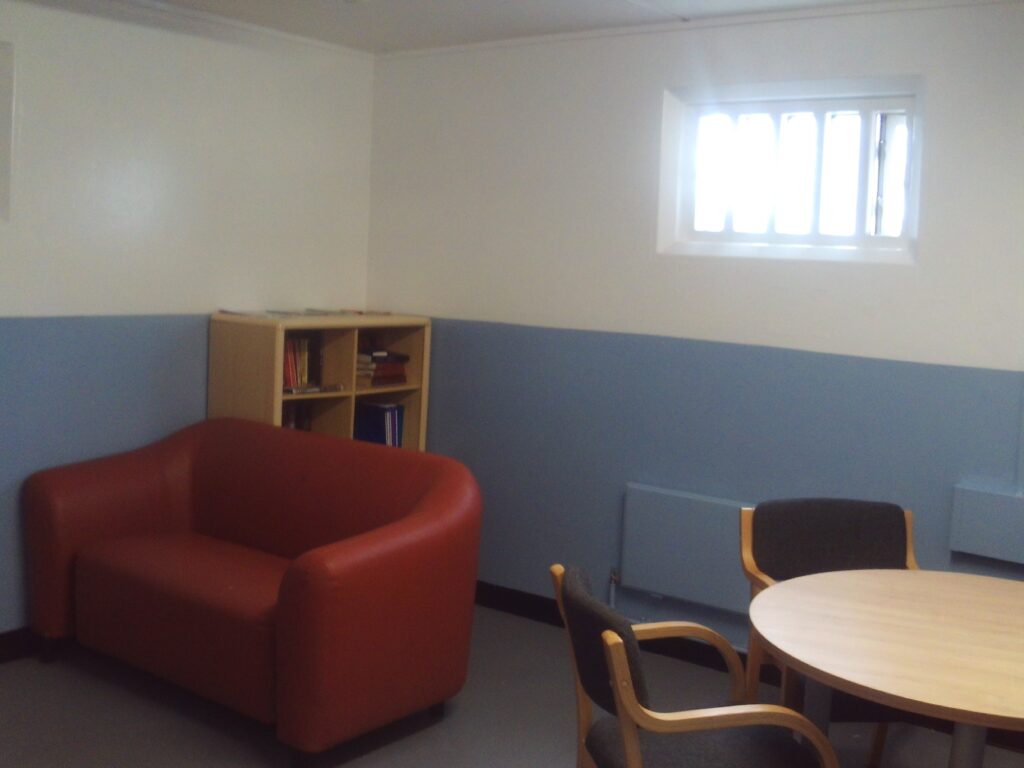
All prisoners received an initial health screening in reception, and it was positive that safer custody staff met all new arrivals within 24 hours to complete a more in-depth safety interview. However, around a fifth of prisoners arrived after 5pm and did not always receive a full risk assessment and first night interview until the next day.
We considered that the prison had made good progress in this area.
Adjudications
Concern: The adjudication process was poorly managed and lacked credibility among prisoners. Many charges were not brought to a conclusion and there was a lack of oversight and quality assurance.
The backlog of adjudications had reduced by almost half since the full inspection and was continuing to decline, although too many were still not progressed in a timely way. The number of outstanding cases remained high at 231.
Leaders had taken effective action to improve the adjudication process with the appointment of a temporary dedicated adjudications liaison officer, clearer guidance for staff and the introduction of an electronic adjudications system. The new system had resulted in better oversight and tracking, and managers were held responsible for completion of hearings they had opened and adjourned. Prisoners we spoke to were not as critical of the process as at the full inspection.
Regular standardisation meetings were taking place, and relationships with the independent adjudicator had improved. Monthly quality assurance by senior leaders provided additional scrutiny and supported ongoing improvements.
We considered that the prison had made good progress in this area.
Use of force
Concern: The use of force had risen substantially and was very high. Governance and oversight were poor.
Although now on a downward trajectory, the use of force rate had increased by 79% since the full inspection and the use of PAVA (see Glossary) had nearly trebled. Over the previous 12 months, PAVA had been drawn 90 times and used in 60 incidents.
Oversight of all use of force was more effective. There were now weekly assurance meetings, chaired by the deputy governor, and all incidents were triaged by the coordinator. Every use of PAVA or batons was now reviewed, and the reviews we examined demonstrated appropriate scrutiny and evidence of learning.
The monthly use of force meeting had better attendance and good data analysis, but emerging issues did not always prompt action.
The use of body-worn cameras had improved, with 75% of incidents captured in the previous 12 months compared to 65% at the full inspection. However, in the incidents we reviewed, cameras were not always activated early enough, and a quarter of all incidents remained unrecorded.
We considered that the prison had made insufficient progress in this area.
Segregation
Concern: The regime, conditions and oversight structures in the segregation unit were not good enough.
The use of segregation had reduced markedly and was continuing on a downwards trajectory. There had been 230 uses in the previous 12 months compared with 288 at the time of the full inspection. Leaders had removed some cells from use to encourage less use.
Oversight of segregation had improved with multidisciplinary review meetings three times a week and record-keeping was better. The segregation monitoring and review group meeting had recently been reintroduced. Staff received regular supervision.
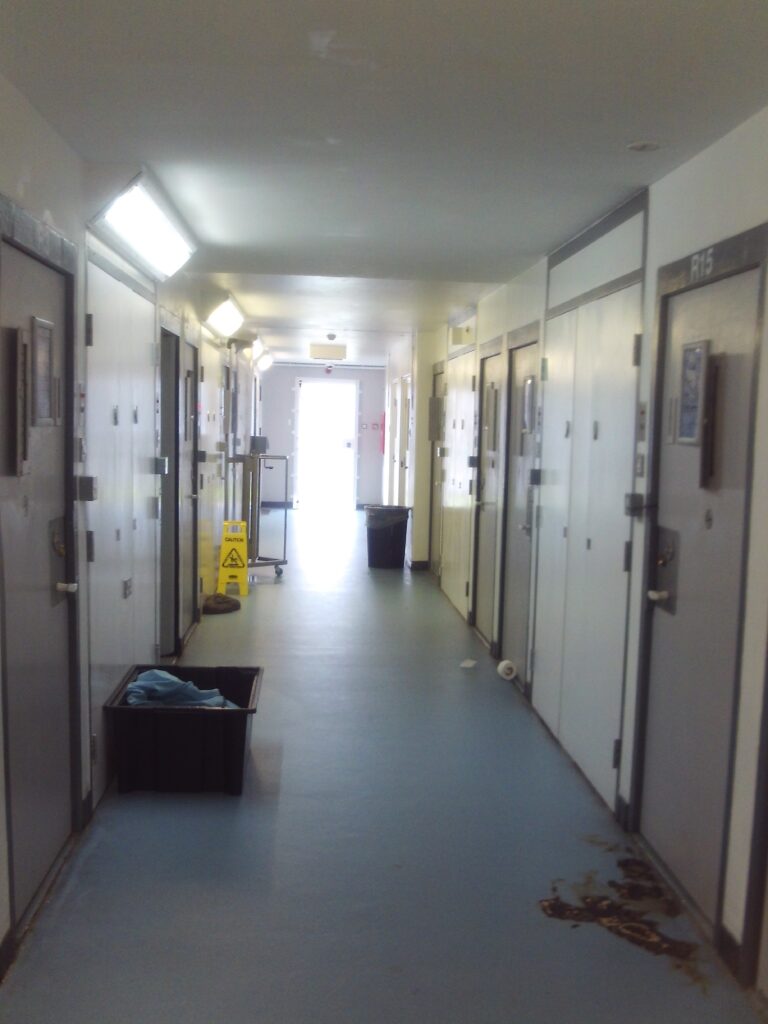
The regime was more consistent, and officers were no longer diverted from the unit because of staff shortages elsewhere. All prisoners could collect meals from the servery, but showers were still inappropriately limited to once every other day, and time in the open air was restricted to 30 minutes a day.
Prisoners had working in-cell telephones, which could be used throughout the day without time limits, and some prisoners were actively engaged in in-cell education.
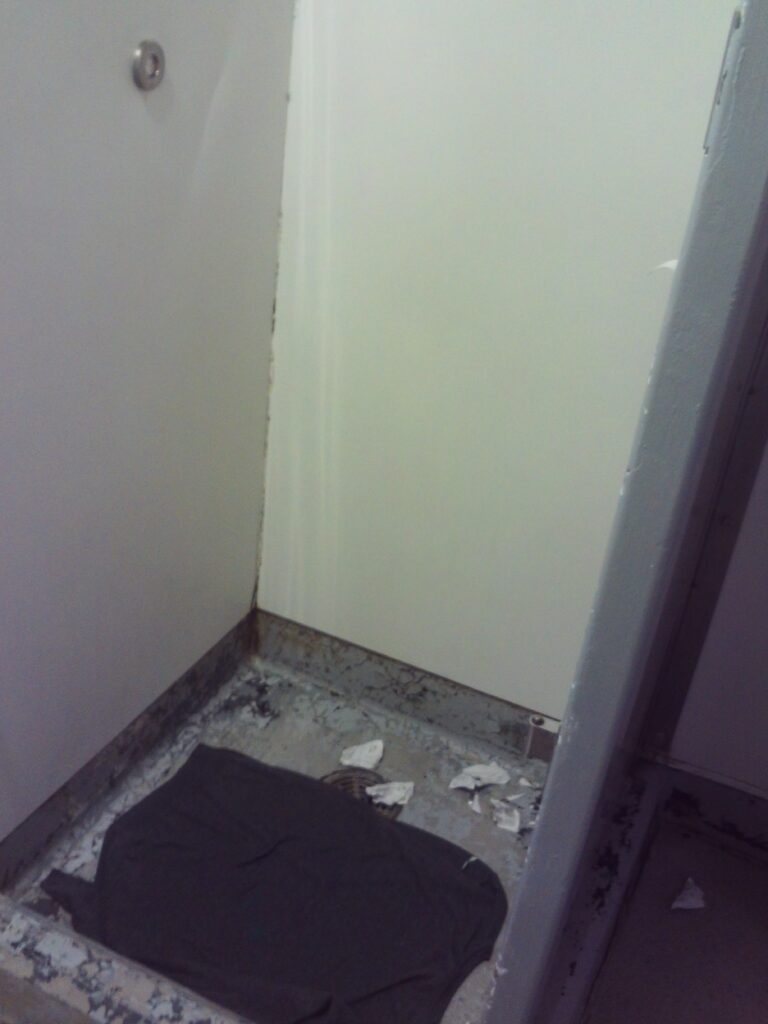
Despite staff efforts, cleanliness was undermined by the ageing infrastructure of the unit, especially the showers. A painting programme was underway, but some damaged surfaces were difficult to restore. Leaders had submitted a bid for much-needed refurbishment work but there was no confirmed approval or timescale.
We considered that the prison had made good progress in this area.
Security
Concern: Despite some recent improvements to security, too many illegal drugs were coming into the prison, and in the previous two years there had been four deaths attributable to problematic drug use.
Illicit drug use remained high, but it had reduced since the full inspection: the random mandatory drug testing (see Glossary) positive rate was now 25% compared to 41% previously. There had been one confirmed drug-related death in the previous year.
Leaders had taken effective steps to reduce supply, including enhanced security measures, such as netting over some exercise yards and tighter controls on parcels and paper. Oversight of prisoners central to the illicit economy had strengthened, and joint meetings now ensured that intelligence was used effectively to identify and disrupt activities.
Drones remained a problem, with 17 sightings in the past six months, but drone wire installation was imminent to help mitigate the risk.
Leaders had developed better links with local police and neighbouring prisons, and a quarterly meeting shared intelligence on drugs entering the prison.
Dedicated search team staffing had increased to 16, including night cover, leading to a more rigorous approach to intelligence gathering and increased searching.
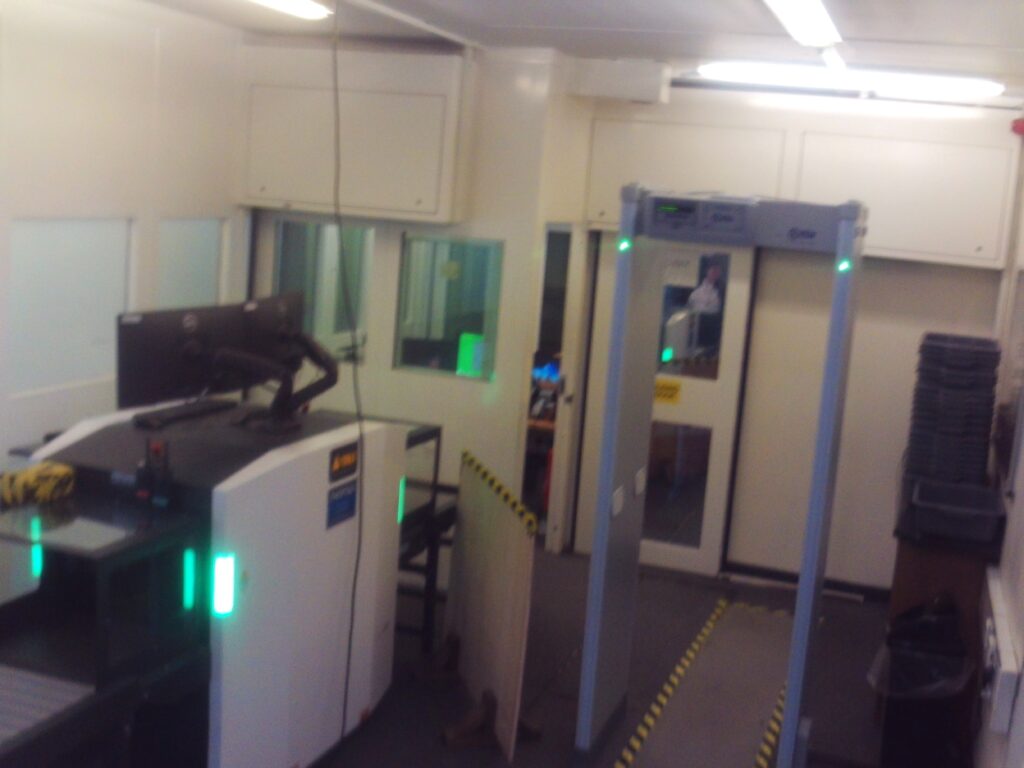
The cramped gate area posed significant security risks. Despite the introduction of enhanced technology, including a new X-ray machine, the high volume of staff and visitors moving through such a confined space made it extremely difficult to properly screen for prohibited items.
Security staffing levels had increased, with four collators now in place. Over 1,000 intelligence reports were being submitted each month and were triaged twice daily. This improved process had cleared the existing backlog and enabled more timely assessment and action on incoming intelligence.
We considered that the prison had made good progress in this area.
Suicide and self-harm prevention
Concern: The rate of self-harm was high, and the response to death in custody recommendations was inadequate. There had been two self-inflicted deaths in the previous two years, and support for those at risk of self-harm was weak.
There had been no more self-inflicted deaths since the full inspection, but there had been four non-natural deaths. Leaders had strengthened their approach to preventing future deaths by appointing a lead and introducing a monthly meeting. All Prisons and Probation Ombudsman (see Glossary) and early learning recommendations had been included in an action plan, but records did not show what recommendations had been addressed.
The rate of self-harm had increased by 50% and remained on an upward trajectory. It was now higher than at comparable prisons. Serious incidents requiring hospital treatment had doubled from 46 to 94.
Prisoners identified regime frustrations, difficulties in getting things done, and unmet mental health support as the main drivers of self-harm. Leaders had improved their understanding and monitoring of these issues, but this had yet to translate into sustained positive outcomes.
The safety meeting had improved into a three-way forum with better data and attendance, although actions were not always followed through.
Assessment, care in custody and teamwork (ACCT; see Glossary) case management was more consistent, and reviews were timelier. However, gaps in documentation and inconsistencies in daily checks remained. More prisoners supported through ACCT case management were now employed, but care plans rarely included activities to support prisoners in crisis, and key worker (see Glossary) support was limited.
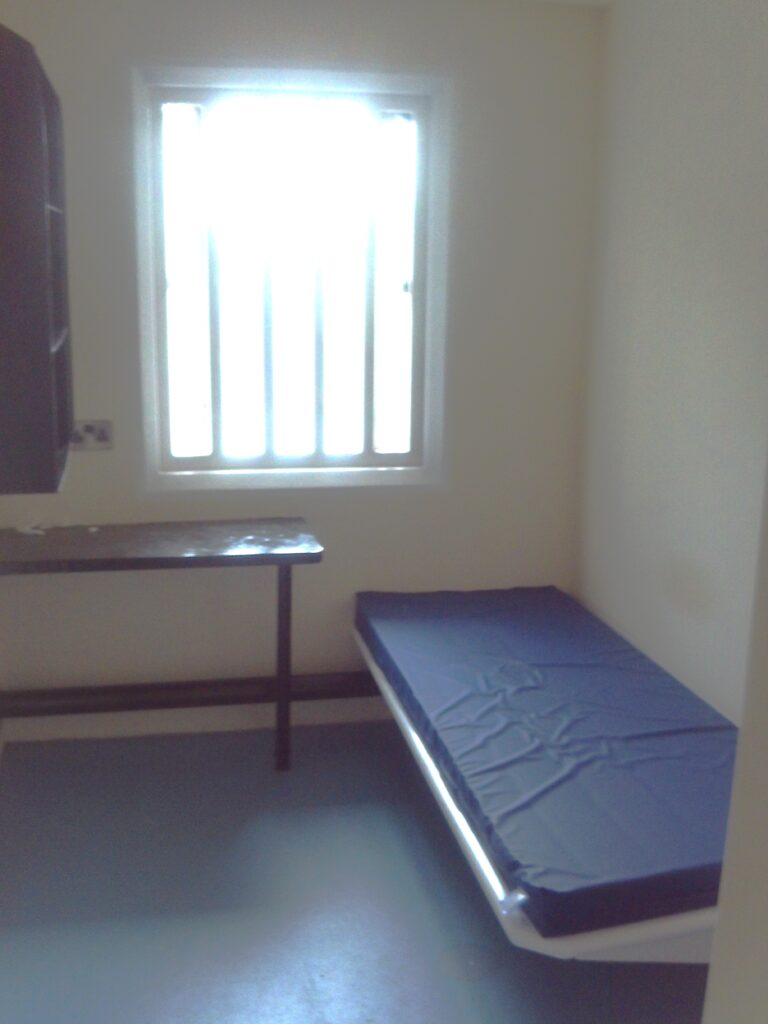
Constant supervision cells had improved, with better evidence of reviews. Recording of anti-ligature clothing had also improved, but authorisation paperwork remained unavailable in most cases.
We considered that the prison had made insufficient progress in this area.
Prisoner consultation, applications and redress
Concern: Prisoner complaints and applications systems were not working effectively, and consultation opportunities were limited.
Leaders had introduced a prison council and other consultation forums for specific groups, including indeterminate sentence for public protection prisoners (IPP; see Glossary); prisoners with protected characteristics (see Glossary); and house block forums. The prison council met monthly, and its action plan showed that issues raised were acted on. Senior leaders did not attend consistently enough.
Oversight of complaints had improved, resulting in better timeliness and quality. In the previous 12 months, 87% of complaints had been answered on time, rising to 94% in the previous two months.
Complaint forms were readily available on the wings and collected daily by administrative staff. The prison had introduced a standard response template and quality assurance process, and the responses we reviewed were polite and usually addressed the issues raised. However, prisoners were rarely spoken to during investigations, and this weakness had not been adequately addressed through quality assurance. Leaders made changes to address this during our visit.
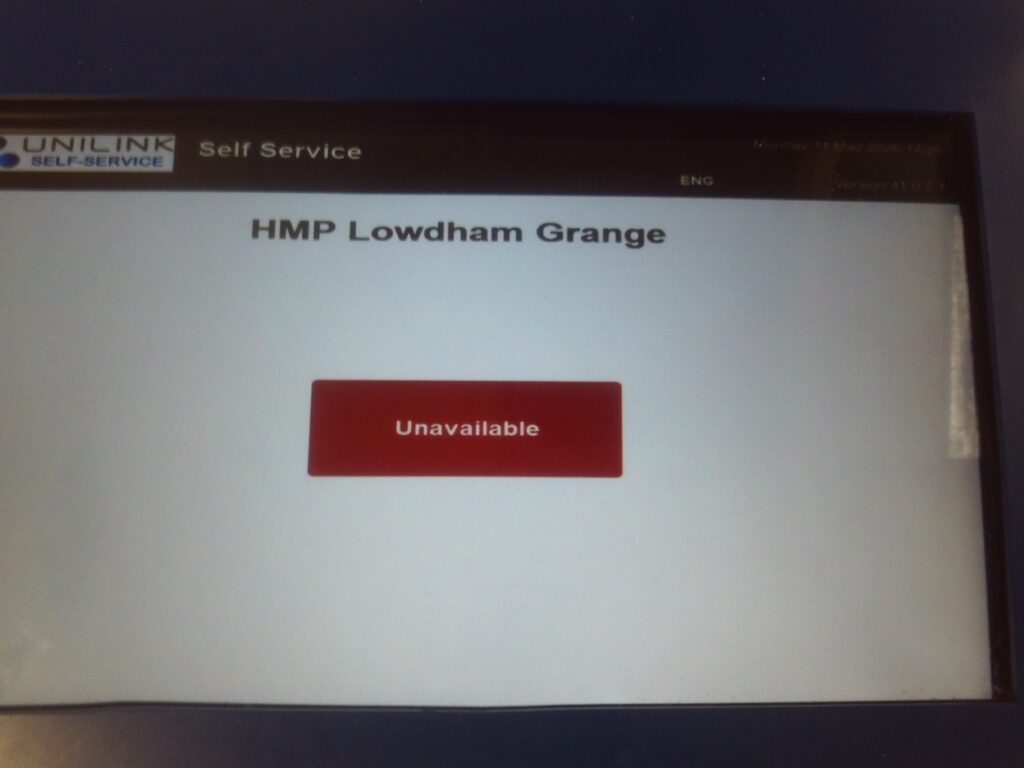
Application responses were now tracked and monitored, and in the last 12 months 93% had been answered within seven days. However, the electronic kiosks on the wings remained unreliable and needed upgrading. The prison had recently introduced a process to ensure broken kiosks were reported and repaired quickly, but prisoners still had to resort to paper forms sometimes, which lacked the same oversight. Around 140 prisoners had in-cell technology to make applications. This was about to increase by another 300 but was only available to enhanced prisoners.
We considered that the prison had made good progress in this area.
Fair treatment and inclusion
Concern: The promotion of fair treatment and inclusion was poor, and it was especially concerning to find some prisoners with disabilities living in neglectful conditions.
An equalities advisor appointed since the full inspection had strengthened oversight of fair treatment and inclusion. A needs analysis, strategy and local action plan had been completed. Although a part-time prison officer had also been appointed to support this work, they were frequently cross-deployed.
Diversity and equality action team meetings were now in place every two months and were well attended. Consultation arrangements included regular protected characteristic forums. A foreign national lead officer had been reintroduced, and leaders were planning to create an equalities hub that prisoners could visit.
Responses to discrimination incident reporting forms (see Glossary) were now completed within the required timescales. Almost none were upheld and all were now being sent to the Zahid Mubarak Trust (see Glossary) for external scrutiny.
However, once again we found a vulnerable prisoner living in unacceptable conditions with inadequate adaptations. Communication between prison, health care and social care services was poor, resulting in delays and a lack of coordinated care. Despite some attempts to provide support, staff had not taken sufficient action to address these concerns.
We considered that the prison had made insufficient progress in this area.
Health, well-being and social care
Concern: Health services were unsafe. Ineffective clinical governance, inconsistent leadership, inadequate staffing and extremely long waits for primary care were leading to very poor outcomes.
Since the full inspection, Northamptonshire Healthcare NHS Foundation Trust (NHFT) had taken over the health contract. NHFT had established the foundations for a more stable service, which reflected sustained efforts to embed governance processes and improve partnership working. The local delivery board had become more effective, and a significant ongoing recruitment campaign had increased staffing levels. Positively, 24-hour nursing provision had been reinstated to better meet the needs of the population.
The interim head of health care provided robust leadership to address the broad range of challenges facing the service. The recent addition of a deputy head of health care had further strengthened managerial oversight and drive.
An audit programme was now in place to systematically evaluate the service and was driving improvements. The monitoring and evaluation of clinical incidents was effective; lessons learned were shared with staff to enhance service delivery. Compliance with mandatory training had improved, but managerial and clinical supervision and the management of complaints were not yet good enough.
Access to the GP and the management of external hospital appointments had improved, and long-term condition management was developing. Although patients had the required health screening on arrival, the full assessment which was required to be undertaken in seven days often exceeded this timeframe and was not in line with NHS standards.
The introduction of substance misuse screening (SMS) for all new receptions and prisoners leaving the segregation unit was positive. While the wait for a routine SMS assessment had reduced from 17 weeks to three, this was still too long.
Mental health services had improved and included valued additional initiatives such as ‘Maverick Sounds’; this project used music to foster creativity, promote self-esteem and improve well-being.
In addition to following up health concerns with HM Inspectorate of Prisons, the Care Quality Commission also conducted a comprehensive assessment of health services which resulted in a separate report for the health provider.
We considered that the prison had made good progress in this area.
Education, skills and work

This part of the report is written by Ofsted inspectors. Ofsted’s thematic approach reflects the monitoring visit methodology used for further education and skills providers. The themes set out the main areas for improvement in the prison’s previous inspection report or progress monitoring visit letter.
Theme one: What progress had leaders and managers made in ensuring that attendance in education, skills and work had improved and was high, particularly at English and mathematics lessons, and that prisoners attended their activities on time?
Leaders had taken appropriate action to improve attendance across education, skills and work activities, especially at English and mathematics lessons. They had recruited an activities custodial manager to work with residential staff to promote the importance of prisoners attending activities and arriving on time. They had employed an administrator to monitor non-attendance. Leaders had increased the time between staff starting their shifts and needing to unlock prisoners for activities. This mostly allowed staff time to complete administrative duties efficiently without delaying prisoners’ movement to education, skills and work.
Since the full inspection, attendance across activities had almost doubled because of leaders’ actions. These included a bonus for qualification achievement and an increase in prisoners’ pay for attending education lessons. However, leaders acknowledged that attendance was not yet consistently high enough. While they ensured that English and mathematics lessons were always available, prisoners were often frustrated by the changes to the regime, which led to lockdowns and the closure of other activities.
Leaders had ensured that managers responsible for attendance across the prison worked closely together to improve prisoners’ attendance at activities. This enabled greater prison-wide oversight and the development of effective joint strategies to improve attendance rates.
Leaders’ introduction of outreach lessons for English and mathematics had resulted in fewer prisoners refusing to attend lessons in these subjects. This was because they learned in environments more conducive to their learning needs, such as prison workshops.
The governor held leaders strongly to account for ensuring that prisoners attended activities and on time. Leaders and managers discussed individual prisoners’ non-attendance in depth at morning meetings. Staff followed up unauthorised absences swiftly and adjusted prisoners’ incentives and earned privileges status where appropriate.
In a few instances, non-attendance at education lessons was due to prisoners attending other activities that could have been scheduled at other times, such as gym sessions.
Ofsted considered that the prison had made reasonable progress against this theme.
Theme two: What progress had leaders and managers made to ensure that prisoners achieved their mathematics qualifications?
Since the full inspection, leaders had analysed the reasons for lower achievement rates in mathematics qualifications. They had taken appropriate action to improve prisoners’ achievement of functional skills qualifications. Overall achievement rates in mathematics had risen and were now higher than the national average.
Leaders had redesigned the mathematics curriculum to meet prisoners’ needs. For example, they had introduced short, modular qualifications for those prisoners who found progression from entry level 3 to level 1 functional skills qualifications challenging. At the time of the monitoring visit, prisoners were making effective progress towards filling gaps in their knowledge and gaining confidence. However, it was too early to judge whether the new approach helped more prisoners to achieve their level 1 qualification.
Mathematics tutors used assessments of what prisoners knew and could do to plan prisoners’ learning effectively. This ensured that prisoners followed an individualised programme of learning relevant to their needs and remained on target to achieve their qualification.
Leaders had introduced an effective outreach provision. This enabled those prisoners who found classroom-based learning challenging, and those in the segregation unit, to work towards and achieve functional skills mathematics qualifications.
Leaders had further enhanced the mathematics curriculum to help prisoners to develop their mathematical skills beyond qualifications. This included courses such as ‘money matters’ modules, and the setting of clear targets for prisoners to develop their mathematical skills in prison workshops.
Learners mostly valued the importance of improving their mathematical skills. They spoke positively of the support they received and how this had helped them to achieve their qualifications. Prisoners generally understood how mathematics would benefit them to gain employment and go on to higher-level studies. A few prisoners articulated how their achievement of mathematics qualifications had helped them in managing budgets.
Ofsted considered that the prison had made reasonable progress against this theme.
Theme three: What progress had leaders and managers made to ensure that the curriculum provided opportunities for prisoners who did not speak English to develop and improve their English skills?
Prisoners for whom English was not their first language made slow progress in the development of their English language skills. Unforeseen staffing issues meant that leaders were unable to continue with the curriculum dedicated to the development of English for speakers of other languages (ESOL). Leaders continued to support ESOL prisoners to attend entry-level English lessons to help them to gain some knowledge of the English language. However, this was not an appropriate curriculum for those prisoners who had none or very few English language skills. Consequently, these prisoners had not achieved a qualification or made sufficient progress in their learning, despite attending lessons for a significant amount of time. At the time of the monitoring visit, leaders had appointed a new ESOL specialist who was undergoing vetting and security checks.
ESOL prisoners who already had higher-level English language skills made better progress. They participated well in lessons and a few achieved entry level 1 and entry level 2 English qualifications.
Leaders recognised the slow progress that prisoners had made since the full inspection. They had recently introduced a short, modular qualification to help prisoners to develop the basic English language skills they needed. However, at the time of the monitoring visit, it was too soon to judge the effectiveness of this curriculum change on prisoners’ progress.
Ofsted considered that the prison had made insufficient progress against this theme.
Theme four: What progress had leaders and managers made to ensure that prisoners received appropriate careers information, advice and guidance?
At induction, prisoners received detailed and personalised information about the courses and activities available to help them achieve their long-term goals. Staff created suitable learning and work plans and monitored the progress that prisoners made against these plans frequently. Prisoners generally made at least expected progress towards their goals.
Since the previous inspection, leaders had implemented effective support for those prisoners who were released directly into the community. They had established a resettlement board that closely monitored prisoners’ preparation for release. Leaders ensured that prisoners received appropriate careers information, advice and guidance relating to relevant employment opportunities. Staff helped prisoners to create professional CVs in preparation for job applications. Leaders monitored prisoners’ destinations at six weeks and six months following release. They had identified a significant improvement in those who were still employed after six months, although from previously low rates.
Leaders had established a programme of useful careers fairs. These aimed to help prisoners due to be released to understand the broader employment options and support networks available to them. Although this was a recent initiative, prisoners welcomed these opportunities and appreciated the advice and guidance they received.
Prisoners with long sentences had opportunities to take greater responsibility at work or learn new skills that would help them to develop new career opportunities in the future. For example, prisoners aspired to become highly trusted prisoners, developed high-level computer coding skills and created learning resources that helped children to understand the devastating consequences of crime.
Prisoners used the virtual campus (see Glossary) effectively to develop their CVs in readiness for release. However, while they had access to job boards in workshops, leaders had not provided prisoners with access to the virtual campus to search for appropriate employment opportunities.
Ofsted considered that the prison had made reasonable progress against this theme.
Children and families and contact with the outside world
Concern: Prisoners were not being supported adequately to maintain family ties. The shambolic visits booking system was a particular hindrance to family contact.
Family support had improved significantly since the last inspection. The Prison Advice and Care Trust (PACT; see Glossary) had taken over the family service contract and was fully staffed. PACT was delivering key services including family days (see Glossary). Support for prisoners with no visits was developing and the New Bridge befriending scheme had been introduced.
PACT had responsibility for individual casework and interventions, but some of this had only recently started to be delivered. Monthly contract meetings with PACT supported oversight of service delivery.
Since September 2025, the prison had successfully moved to the national booking system for visits. There was evidence that this had improved access for families and friends and reduced cancellations. Prisoners we spoke to were generally positive about the increased efficiency of the booking process. Additional secure social video calling (see Glossary) slots were available at weekends, which was positive.
Only the minority of prisoners with in-cell technology had access to the messaging service to maintain contact with family and friends (see Prisoner consultation, applications and redress).
We considered that the prison had made good progress in this area.
Reducing reoffending
Concern: Prisoners did not have enough opportunity to demonstrate risk reduction or learn skills to prepare them for release; sentence progression was hindered by the lack of meaningful face-to-face contact with prison offender managers.
Face-to-face contact between prison offender managers (POMs) and prisoners had increased. POMs met all new arrivals, and we saw evidence of more structured one-to-one work. We also saw more contact leading up to key events, such as recategorisation and release.
However, offender management unit (see Glossary) staffing was still problematic, with four probation officer vacancies. Caseloads were still high, and there was an offender assessment system (see Glossary) backlog of 66 at the time of inspection. The prison had recently received a large number of prisoners from another prison without up-to-date assessments, and managers had agreed that no more would be accepted without current assessments.
Staffing in the psychology team had improved, increasing support for some of the most complex prisoners, including those serving IPP sentences and those in segregation.
Based on submitted proposals, the prison had capacity for 66 prisoners to complete an accredited programme in the coming 12 months. However, regime slippage and a shortage of rooms had reduced the level of delivery, and we found examples of prisoners being released without the chance to complete the necessary offending behaviour programme.
In the previous 12 months, fewer than a third of recategorisation reviews had been completed on time. This had risen to nearly half in the month before our visit, when the prison had introduced a new process to improve timeliness. More prisoners received a lower recategorisation decision than at the full inspection, and improved oversight of transfers meant category C and D prisoners were moved more quickly.
We considered that the prison had made reasonable progress in this area.
Returning to the community
Concern: Release planning was undermined by poor communication between prison and community offender managers, and some prisoners close to release did not have the necessary risk management plans in place.
Lowdham Grange was not a resettlement prison and had no dedicated funding to meet the needs of the increasing number of prisoners being released (around 12 a month). Despite this, release planning had improved considerably.
Leaders had appointed two prison POMs to carry out resettlement work for all prisoners approaching release. This included developing resettlement plans, liaising with community offender managers (COMs) and making referrals. A resettlement board had also been introduced to bring departments together and help ensure needs were met before release.
The allocation of COMs continued to be delayed, and this led at times to poor communication about release and risk management plans, late housing referrals, delayed Multi-Agency Public Protection Arrangements (see Glossary) decisions and late home detention curfew (see Glossary) releases. However, outcomes were starting to improve as a result of better governance and oversight, and POMs proactively chasing and escalating outstanding release plans.
In the previous 12 months, six prisoners had been released homeless, compared with 13 at the last inspection, one of which was since the resettlement POMs were introduced in August 2025.
We considered that the prison had made good progress in this area.
Section 4: Summary of judgements (Back to top)
A list of the HMI Prisons concerns and Ofsted themes followed up at this visit and the judgements made.
HMI Prisons concerns
The use of force had risen substantially and was very high. Governance and oversight were poor.
Insufficient progress
The rate of self-harm was high and the response to death in custody recommendations was inadequate. There had been two self-inflicted deaths in the previous two years and support for those at risk of self-harm was weak.
Insufficient progress
Middle managers were not providing sufficient visible leadership on residential units to a staff group that contained many inexperienced officers.
Reasonable progress
Health services were unsafe. Ineffective clinical governance, inconsistent leadership, inadequate staffing and extremely long waits for primary care were leading to very poor outcomes.
Good progress
Reception and first night risk assessments were not always completed or sufficiently thorough when they were done.
Good progress
The adjudication process was poorly managed and lacked credibility among prisoners. Many charges were not brought to a conclusion and there was a lack of oversight and quality assurance.
Good progress
The regime, conditions and oversight structures in the segregation unit were not good enough.
Good progress
Despite some recent improvements to security, too many illegal drugs were coming into the prison and in the previous two years there had been four deaths attributable to problematic drug use.
Good progress
Prisoner complaints and applications systems were not working effectively and consultation opportunities were limited.
Good progress
The promotion of fair treatment and inclusion was poor and it was especially concerning to find some prisoners with disabilities living in neglectful conditions.
Insufficient progress
Prisoners were not being supported adequately to maintain family ties. The shambolic visits booking system was a particular hindrance to family contact.
Good progress
Prisoners did not have enough opportunity to demonstrate risk reduction or learn skills to prepare them for release; sentence progression was hindered by the lack of meaningful face-to-face contact with prison offender managers.
Reasonable progress
Release planning was undermined by poor communication between prison and community offender managers and some prisoners close to release did not have the necessary risk management plans in place.
Good progress
Ofsted themes
What progress had leaders and managers made in ensuring that attendance in education, skills and work had improved and was high, particularly at English and mathematics lessons, and that prisoners attended their activities on time? Reasonable progress
What progress had leaders and managers made to ensure that prisoners achieved their mathematics qualifications?
Reasonable progress
What progress had leaders and managers made to ensure that the curriculum provided opportunities for prisoners who did not speak English to develop and improve their English skills?
Insufficient progress
What progress had leaders and managers made to ensure that prisoners received appropriate careers information, advice and guidance?
Reasonable progress
More about this report (Back to top)
This report contains a summary from the Chief Inspector and a brief record of our findings in relation to each concern we have followed up. You may find it helpful to refer to the report of the full inspection for further detail on the original findings (available in Our reports).
Independent reviews of progress (IRPs) are designed to improve accountability to ministers about the progress prisons make in addressing HM Inspectorate of Prisons’ concerns in between inspections. IRPs take place at the discretion of the Chief Inspector when a full inspection suggests the prison would benefit from additional scrutiny and focus on a limited number of the concerns raised at the inspection. IRPs do not therefore result in assessments against our healthy prison tests.
The aims of IRPs are to:
- assess progress against selected priority and key concerns
- support improvement
- identify any emerging difficulties or lack of progress at an early stage
- assess the sufficiency of the leadership and management response to our concerns at the full inspection.
Find out more about priority and key concerns
Inspection team
This independent review of progress was carried out by:
Martin Lomas, Deputy chief inspector
Hindpal Singh, Bhui Team leader
Alice Oddy, Inspector
Chelsey Pattison, Inspector
Dawn Mauldon, Inspector
Maureen Jamieson, Health and social care inspector
Dayni Johnson, Care Quality Commission inspector
Cat Raycraft, Care Quality Commission inspector
Suzanne Wainwright, Ofsted inspector
Christopher Brooker, Ofsted inspector
Further resources (Back to top)
Find out more about the terms and abbreviations used in this report in our glossary.