
HMP Feltham B
Report on an independent review of progress at HMP Feltham B by HM Chief Inspector of Prisons, 5–7 October 2026

Section 1: Chief Inspector’s summary (Back to top)
HMP Feltham B was previously a remand centre for young adults up to 21 years of age, serving the London and south-east region. Following a poor inspection by HMI Prisons in 2015, Feltham B changed designation to hold sentenced young adults. In 2023, the jail became an adult category C prison by extending the age limit to 25, and then 30. In February 2025, the age limit was removed, and Feltham B now holds adults of all ages.
This review visit followed up on the concerns we raised at our last inspection of HMP Feltham B in September 2025.
What we found at our last inspection
At our previous inspections of HMP Feltham B in 2023 and 2025, we made the following judgements about outcomes for prisoners.
Figure 1: HMP Feltham B healthy prison outcomes in 2023 and 2025
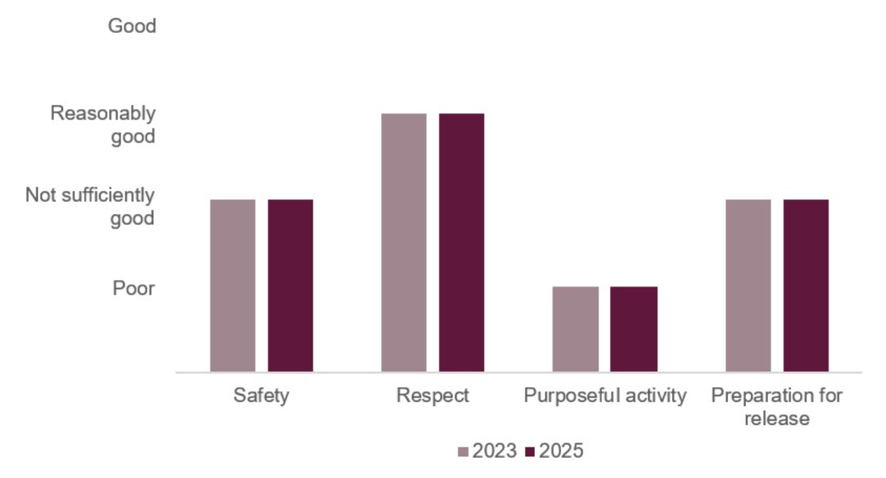
Our inspection in 2025 had been the first following Feltham B’s transition to a category C adult prison. This process had brought substantial changes, most notably a complete separation from Feltham A, a children’s young offender institution (see Glossary) that shares the same site. The appointment of the first dedicated governor for Feltham B had been a positive step. He had initiated improvements, including the abolition of the practice of keeping prisoners who were in conflict apart from one another, thereby facilitating the introduction of free flow movement to education, work, and other elements of the regime. This was transforming the atmosphere and culture at the prison and had created potential for more meaningful engagement of prisoners with activity and other services. Poor allocations and lack of activity spaces, however, meant that this remained, at least for the time being, an aspiration.
Although there was some good work to motivate and reward prisoners, drugs were widely available, and, despite reductions, rates of violence and use of force remained higher than at similar prisons. In particular, the use of PAVA (see Glossary) was extraordinarily high. The offender management unit (OMU; see Glossary) was severely understaffed, which meant many prisoners lacked any contact with a prison offender manager (POM) to help them progress in their sentence. While the new governor had reinvigorated the establishment, we found that much work remained to be done to improve outcomes for prisoners.
What we found during this review visit
Our findings at this visit were encouraging. There was evidence that the governor was giving the strength of leadership and direction needed to build on the early indications of positive change identified at our last inspection. We found mostly good or reasonable progress against the concerns that we examined.
Some creative approaches to training and support for staff were contributing to improved relationships with prisoners and better incident management. The use of PAVA had declined considerably, and illicit drug use was less prevalent. Health care services were now better able to meet the needs of an adult population.
Leaders had created sufficient activity places for the population, and our partners from Ofsted found some improvements in oversight, the reading strategy and support for neurodiverse prisoners. Attendance at education, skills and work, however, remained insufficient. Despite the considerable efforts by an under-staffed OMU, we also found that support for sentence planning and progression was still not good enough.
Overall, this was a promising review. The governor, his senior team and staff had clearly worked hard to build the foundations necessary for an effective category C adult resettlement and training prison. The challenge remains for leaders to strengthen the prison’s rehabilitative focus by increasing prisoners’ participation in purposeful activity and opportunities for progression.
Charlie Taylor, HM Chief Inspector of Prisons, October 2026
Section 2: Key findings (Back to top)
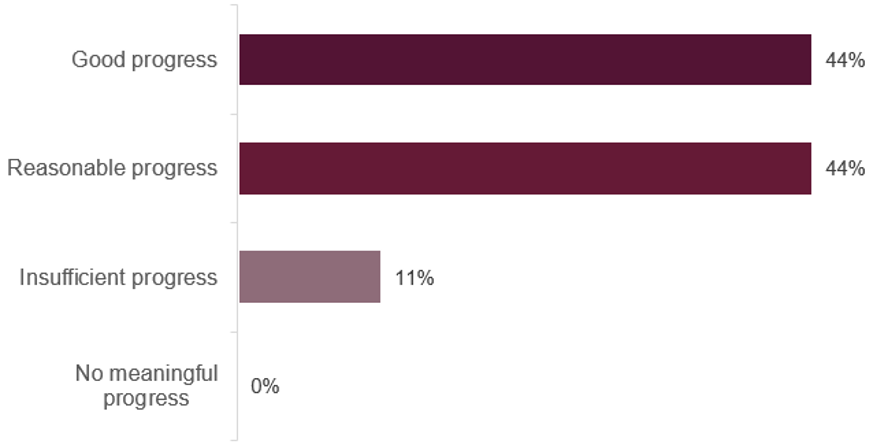
At this IRP visit, we followed up nine concerns from our most recent inspection in September 2025, and Ofsted followed up four themes based on their latest inspection.
HMI Prisons judged that there was good progress in four concerns, reasonable progress in four concerns and insufficient progress in one concern
Figure 2: Progress on HMI Prisons concerns from 2025 inspection (n=9)
This bar chart excludes any concerns that were followed up as part of a theme within Ofsted’s concurrent prison monitoring visit.
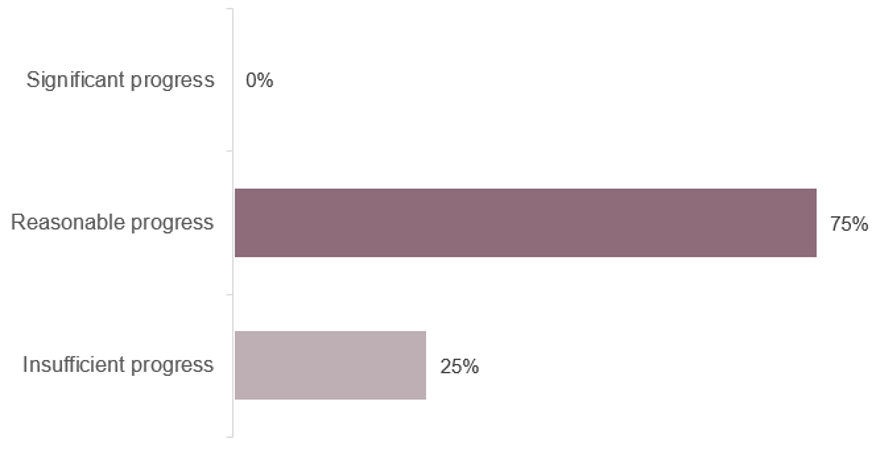
Ofsted judged that there was reasonable progress in three themes and insufficient progress in one theme.
Figure 3: Progress on Ofsted themes from 2025 inspection (n=4).
Notable positive practice
We define notable positive practice as:
Evidence of our expectations being met to deliver particularly good outcomes for prisoners, and/or particularly original or creative approaches to problem-solving.
Inspectors found four examples of notable positive practice during this IRP visit, which other prisons may be able to learn from or replicate. Unless otherwise specified, these examples are not formally evaluated, are a snapshot in time and may not be suitable for other establishments. They show some of the ways our expectations might be met, but are by no means the only way.
| 1. | The introduction of ‘PAVA panels’ was good practice in identifying learning from incidents and was supporting the downward trend in use (See Managing behaviour). |
| 2. | Leaders were being creative in their approach to improving staff and prisoner relationships with initiatives including ‘instructional coaching’ and ‘breaking breakfast’ (See Staff/prisoner relationships). |
| 3. | Leaders had taken a positive approach to giving prisoners more independence around food. Snacks were readily available on residential units, and there were good self-catering facilities across the prison (See Residential services). |
| 4. | The dental team contacted each patient 24 hours prior to their appointments and, if necessary, reallocated appointments to reduce the wastage of clinical time (See Dental services and oral health). |
Section 3: Progress against our concerns and Ofsted themes (Back to top)
The following provides a brief description of our findings in relation to each concern followed up from the full inspection in 2025.
Security
Concern: The supply of illicit drugs remained a significant threat to the prison. The positive rate for random mandatory drug testing was among the highest of all category C prisons.
The random mandatory drug testing (MDT; see Glossary) positive rate remained high at 27% but had fallen from 38% at our last inspection. There were also indications that the illicit economy was less active than at our previous visit.
Drug testing results indicated that the most commonly used illicit drug was cannabis, and that the prevalence of synthetic cannabinoids (colloquially known as ‘spice’) had fallen. Leaders were making more use of MDT for prisoners suspected of using illicit drugs and those considered to pose a greater risk.
Leaders had a reasonable understanding of how illicit substances were entering the jail and were taking appropriate action to address this; regional search teams continued to attend the prison regularly to assist, and regular staff searches were taking place.
It was disappointing that the new enhanced gate security facility that had been commissioned prior to our last inspection was still not operational, although it was due to open imminently.
A prolonged period of reduced staffing in the security team had undermined the day-to-day management of intelligence. Intelligence reports were triaged twice daily, but delays in processing reports meant that intelligence-led cell searching was often delayed by a week or more.
Work to promote recovery had been strengthened; a second incentivised substance free living (ISFL; see Glossary) had opened, and the two units provided a positive environment with good time out of cell and association facilities. Regular group activities took place for prisoners on the ISFLs, including yoga, peer support and sessions with the substance misuse service.
Leaders had consulted with an external organisation to develop their approach to supporting recovery. Trained substance misuse peer workers (known as ‘recovery transmitters’) were active around the prison providing support to prisoners with substance misuse issues, and they received regular supervision from the substance misuse service.
It was positive that prisoners outside of the ISFLs could access weekly mutual aid and peer support groups held in the evenings, allowing individuals to attend after their work or education. The recent introduction of rehabilitative adjudications was also positive.


We considered that the prison had made reasonable progress in this area.
Managing behaviour
Concern: Incident management was weak, leading to avoidable escalation and contributing to the highest use of PAVA in England and Wales.
The rate of PAVA use had fallen by 78% and the rate of use of force had reduced by 54% since the last inspection. The prison no longer had the highest rate of PAVA use in the country.
Leaders told us that improved staff confidence, better staff retention and additional training had contributed to reductions in the use of PAVA and improvements in incident management.
Leaders had introduced ‘PAVA panels’ to undertake detailed reviews of incidents and identify learning. The panel meetings were designed to both challenge and support staff and explore whether incidents could have been managed differently. In the panels we reviewed, leaders also gave praise where appropriate.
Incident management training had been delivered to middle managers and supervising officers by national teams. Local training for officers had also been extended to provide more guidance.
In the video footage we reviewed, we did not identify any incidents where poor management had contributed to the use of force.
We considered that the prison had made good progress in this area.
Staff/prisoner relationships
Concern: Staff-prisoner relationships were not good enough, and many staff were not able to assist prisoners with the things that they needed.
Staff-prisoner relationships had improved since our last inspection.
During our visit, we observed positive interactions between staff and prisoners. We saw few instances of low-level rule breaking by prisoners. However, on some wings, there was still limited engagement between staff and prisoners. For example, men on Swallow, Quail and Partridge units were less positive about their relationship with staff than on the specialist units.
Leaders had prioritised improving staff confidence and competence through the introduction of ‘instructional coaching’ which provided tailored guidance and practical feedback. Leaders told us that this training and support had contributed to a reduction in staff sickness absence and improved staff retention.
‘Breaking Breakfast’ was a positive initiative that enabled staff and prisoners to prepare and share a meal together, helping to strengthen relationships.
There had been limited progress in increasing the amount of key work (see Glossary) sessions, although there were early indications of improvements in quality.
We considered that the prison had made reasonable progress in this area.
Residential services
Concern: Meals served to prisoners were small and not appetising. Supervision of serveries by staff was also poor.
Leaders had taken some positive steps to improve catering in the prison, including making some changes to meal options based on prisoner feedback such as the introduction of a ‘gym pack’ protein-based lunch option. Leaders surveyed prisoners for their preferences when preparing new menu choices.
The rate of complaints about food had declined since our last visit and was now among the lowest for category C prisons.
Portion control at serveries had improved, but supervision remained inconsistent. The cleanliness of serveries was variable, and we saw limited control of prisoners’ queuing during the serving of meals.
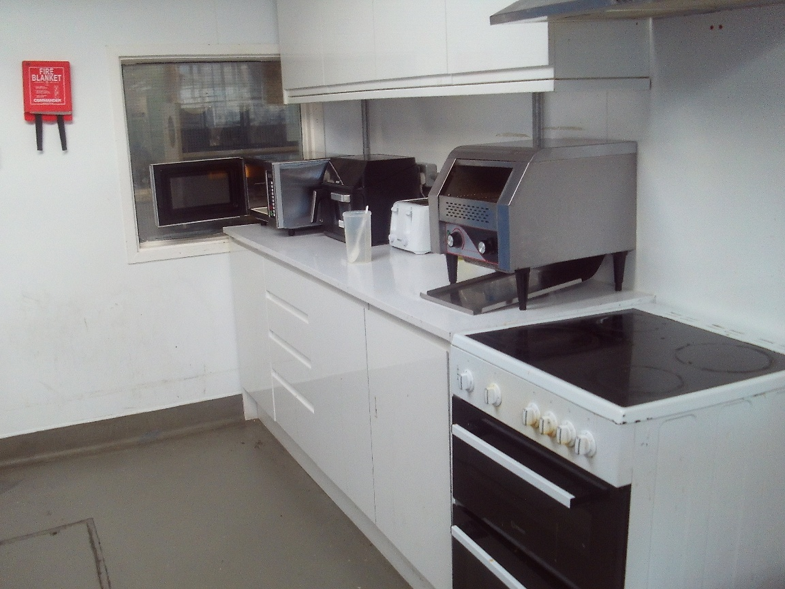
There had been a commendable focus on self-catering, which prisoners appreciated. All units now had good self-catering facilities, including ovens, air fryers and microwaves. Prisoners were able to cook their own food and eat communally during the evening association period.
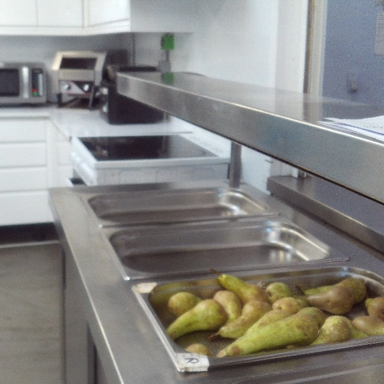
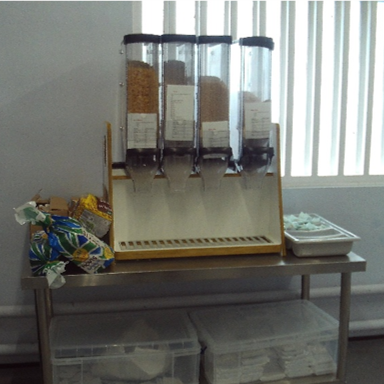
Self-serve breakfast cereal dispensers had been expanded to all residential units and prisoners had ready access to these throughout the day. Leaders had also made noodles and snacks, such as fruit, readily available to prisoners.
However, some prisoners continued to express dissatisfaction with the food. The variety of evening meals available to prisoners was limited.
We considered that the prison had made reasonable progress in this area.
Strategy, clinical governance and partnerships
Concern: Clinical governance structures did not identify key risks to patient safety. There was a lack of policies and procedures to support safe medicines management, incident reports and investigations did not meet the required standard and information sharing through daily handover and care plans was not sufficiently robust.
Clinical governance was well led, strong and benefited from an effective partnership with the prison to better meet the health needs of an adult population.
Staff were well supported by the directors of the health provider (Central and North West London NHS Foundation Trust), who attended the prison regularly. A new health needs assessment was received during the week of our visit, and the NHS commissioner had led a multi-prison discussion to ensure more effective transfer of information.
Oversight arrangements and information sharing had been transformed with regular quality, performance and complex care meetings that had both multi-agency and disciplinary attendance. Records of meetings were notably detailed, and most identified learning points which were promptly disseminated among staff via twice daily multi-disciplinary handover meetings and weekly staff training events.
Identification of clinical risks was a key feature of health and prison joint discussions. Risks were taken to prison safer custody and safeguarding meetings to ensure safe and individualised risk management practices.
The business manager and team regularly checked that clinicians were responding to tasks allocated to them electronically, so that follow-up of risks was assured. The health clinical risk log was now more effectively used to record concerns, instigate investigations and formulate risk management actions. Accumulated strategic risks were regularly reviewed.
Local operating procedures and guidance materials were being migrated into a new database alongside relevant Trust policies so that a comprehensive set was emerging. Work to better develop guidelines for some long-term conditions was underway. There was an appropriate set of medicine management procedures and guidance, including a revised in-possession risk assessment policy.
There were Trust-mandated clinical audits supplemented by local compliance assurance checks. For example, the primary care lead checked a sample of care plans each month and suggested improvements, if necessary, to staff in supervision.
A memorandum of understanding with the local authority that clarified responsibilities for providing social care and support for men at Feltham B had also been adopted.
We considered that the prison had made good progress in this area.
Mental health
Concern: Not all patients being transferred to hospital under the Mental Health Act were transferred within 28 days. Assessment and treatment for poor mental health was delayed with potential detrimental consequences for health outcomes.
Since our last inspection, seven patients had been transferred under mental health legislation, of which six entered hospital within the target of 28 days. A further patient waited 41 days due to NHS requirements for more information delaying the process, which remained unacceptable.
There had been a marked improvement in transfer times since the year prior to our last inspection when two out of four patients had excessive waits beyond target (85 and 97 days respectively).
Focused oversight of the administrative process and effective communication between health partners in the prison and community mental health services in the patient’s catchment area had contributed to the reduction in transfer times.
We considered that the prison had made good progress in this area.
Dental services and oral health
Concern: There was a waiting list of nearly 200 patients who required dental treatment and no plan to address this backlog.
Waiting lists for dental services had reduced by around half since our last visit and most patients waited for shorter times.
A refurbished dedicated Feltham B dental suite had become operational since our last visit. More dental sessions were now commissioned, with digital technology improving efficiency.
The dental team contacted each patient 24 hours prior to their appointments and reallocated appointments, if necessary, to reduce the wastage of clinical time. A dentist, hygienist and therapist were available, so patients had access to a full range of NHS community-standard therapeutic options.
During this visit, there were 102 outstanding appointments for routine treatments for 55 patients. Most patients waited up to four weeks, compared with up to six months at the last inspection. Waiting lists were carefully monitored by the lead dentist and commissioners.
We considered that the prison had made good progress in this area.
Time out of cell
Concern: Prisoners were locked up for too long at weekends.
Leaders had improved the regime to increase time out of cell at weekends. They had consulted with prisoners and linked regime changes to the incentives scheme to incentivise positive behaviour.
Prisoners on the highest incentive level could have up to 7.75 hours out of cell on Saturdays and Sundays and those on the enhanced unit were only locked up for a roll check. Those on the standard level of the incentives scheme now had more time out of cell at the weekends, with 5.5 hours on a Saturday and up to 3.5 hours on a Sunday.
However, time out of cell for prisoners on the basic level remained inadequate, and the policy of only allowing them to shower once at the weekend was not decent. These men had less than 2.5 hours out of cell in total across the weekend.
Management assurance checks had been introduced to improve the consistency of delivery of the weekend regime. However, prisoners told us that unlock times remained inconsistent on some units.
Leaders told us about plans to improve access to outside areas, which would further increase time out of cell at weekends.
We considered that the prison had made reasonable progress in this area.
Education, skills and work

This part of the report is written by Ofsted inspectors. Ofsted’s thematic approach reflects the monitoring visit methodology used for further education and skills providers. The themes set out the main areas for improvement in the prison’s previous inspection report or progress monitoring visit letter.
Theme 1: What progress have leaders and managers made in using data effectively to evaluate the impact of their actions and prioritise improvements?
Leaders had taken effective action to enhance their oversight of the quality of education, skills and work provision. In most instances, they had access to accurate and up-to-date performance information, which they used well to monitor key aspects of the provision and identify areas requiring improvement.
Leaders had strengthened their monitoring of performance across education, skills and work. They routinely collected and analysed detailed information on several aspects of the provision, including participation, attendance and outcomes. As a result, they had a clear understanding of the provision’s strengths and areas for improvement and had implemented appropriate action plans to address identified weaknesses.
Leaders had reviewed the membership of key meetings to ensure that all relevant stakeholders contributed to informed and timely decision making. Consequently, communication and coordination across services had improved.
Leaders took a measured and strategic approach to improvement, using data effectively to prioritise actions and resources. They focused appropriately on areas identified at the previous inspection and had improved several aspects of the provision. For example, they had increased activity spaces, improved allocation processes and strengthened support for prisoners with learning difficulties and/or disabilities (LDD).
Leaders had not secured consistent improvements across all areas. Some actions were still at an early stage or not fully embedded. In addition, staffing shortages had slowed the pace of improvement in some areas and delayed the implementation of planned actions.
Leaders used most performance information effectively. However, information relating to prisoners’ reading development and achievement gaps between different groups was not routinely used to measure progress or evaluate the impact of interventions.
Ofsted considered that the prison had made reasonable progress against this theme.
Theme 2: What progress have leaders and managers made in ensuring that there are sufficient activity spaces in education, skills and work, and that prisoners are allocated meaningful activities that are specific to their education needs and career aspirations?
Leaders had created sufficient activity spaces across education, skills and work for the prison population. They had increased capacity in high-demand curriculum areas, such as English, and had advanced plans in place to introduce new workshops, including rail track maintenance and drylining. These additions broadened the curriculum offer, better matched prisoners’ needs and interests and provided them with opportunities to develop skills relevant to future employment opportunities.
The allocation process had improved and was robust. Staff gathered and analysed detailed information on prisoners’ needs, aspirations and circumstances to identify suitable education, skills and work activities. They allocated prisoners promptly to activities. There were no significant delays in induction or information, advice and guidance processes. Only a small number of prisoners were briefly awaiting allocation to an activity and very few were unemployed.
Leaders recognised the impact that staff absences and vacancies had on the capacity of education, skills and work. They had taken appropriate action to mitigate these challenges and ensured that most prisoners continued to access purposeful activity. Leaders had created additional part-time places in education and work to keep prisoners engaged.
Most prisoners had learning and work plans in place, with clear targets to support their progress towards personal, educational and employment goals. However, these targets were not always linked sufficiently well to available progression pathways and were not reviewed regularly enough to ensure they remained relevant and supported prisoners’ longer-term aspirations.
Staff did not always provide timely or sufficiently detailed information, advice and guidance to help prisoners understand how their allocated activities linked to their long-term goals and career aspirations. In addition, prisoners approaching release did not always receive timely support to prepare for further training, employment or resettlement.
Too many prisoners participated in activities that were not meaningful and did not prepare them sufficiently for life and work on release.
Ofsted considered that the prison had made reasonable progress against this theme.
Theme 3: What progress have leaders and managers made in implementing the neurodiversity support and reading strategies effectively?
Leaders had made progress in implementing the reading strategy across the establishment. They had successfully introduced a wide range of reading initiatives to promote a culture of reading among prisoners. These included well-used book corners, reading clubs and specialist reading support programmes delivered through the Shannon Trust (see Glossary) and other voluntary organisations.
Most staff, including tutors and Shannon Trust mentors, had received phonics training. They promoted the importance of reading effectively, both for pleasure and to support vocational learning and employment-related skills.
Most prisoners who participated in reading activities improved their reading skills. Non-readers and emerging readers increased their reading ability by at least one level.
In most areas, staff monitored and tracked prisoners’ reading progress effectively. However, in some newer workshops, the recording and monitoring of reading development was not consistently established.
Since the previous inspection, leaders had strengthened neurodiversity support across education, skills and work. The neurodiversity support manager worked effectively to raise awareness of neurodiversity across the establishment. Staff regularly discussed prisoners’ identified support needs and took effective action to ensure that appropriate support and reasonable adjustments were in place.
Staff, including tutors, had full access to information on prisoners’ identified needs and recommended useful support strategies. They used this information well to adapt teaching and provide individualised support to prisoners with LDD.
Most prisoners with LDD received suitable support to participate in and benefit from their allocated activities. They had detailed support plans in place and spoke positively about the support they received in lessons and work settings.
Leaders implemented reasonable adjustments for prisoners with identified support needs. However, they did not monitor the effectiveness of these adjustments consistently, limiting their ability to evaluate their impact on prisoners’ participation and progress.
Ofsted considered that the prison had made reasonable progress against this theme.
Theme 4: What progress have leaders and managers made in improving prisoners’ attendance at education and work by reducing clashes with regime activities?
Too many prisoners did not attend their allocated activities consistently. Leaders had rightly focused on reducing clashes and had revised the regime to enable this. However, their actions had not secured sufficient improvement in attendance across education, skills and work. Although attendance was higher in a small number of vocational areas, this improvement was not sustained across the wider provision.
Leaders and managers had taken positive steps to improve attendance. They had strengthened their monitoring of attendance and had begun to analyse patterns of absence more closely. Leaders had reduced absences arising from competing regime activities, including the gym and library. However, clashes with other activities, such as chaplaincy provision, persisted. Furthermore, increases in health care, well-being and other unscheduled appointments continued to impact negatively on prisoners’ attendance at education and work.
Leaders implemented suitable initiatives to encourage participation, including incentives and raising staff awareness of how these should be applied. Staff challenged non-attendance effectively, particularly when prisoners failed to attend education or work without a valid reason. They followed up concerns promptly and applied the prison’s incentives and disciplinary processes consistently to promote attendance. However, despite these actions, leaders had not secured sufficient improvement in attendance across education, skills and work.
Leaders continued to face challenges relating to staff vacancies and absences across education and industries. These staffing pressures disrupted the delivery of some popular and high-demand provision, including carpentry and mathematics. Prisoners experienced interruptions to their learning and work activities, which reduced their confidence in the reliability of the provision. Too many prisoners, particularly those allocated to education, lacked the motivation to attend their planned activities consistently.
Ofsted considered that the prison had made insufficient progress against this theme.
Preparation for release
Concern: Prisoners were unable to access support for sentence planning and progression. The lack of an interim operating model during the acute staffing shortfall meant the few prison offender managers in post were overwhelmed.
Leaders had given appropriate priority to efforts intended to drive improvement, but the OMU remained under considerable pressure.
Progress had been constrained by a range of factors, including managing the demands of various national policy changes and early release schemes, persistent staffing challenges and the many prisoners arriving with only a short time left to serve.
Offender manager staffing levels had increased since our last inspection, and the number of prison POMs had doubled. However, the unit was still not up to full capacity and remained vulnerable to staffing pressures. Reliance on two remotely-based agency probation officers, the limited experience of some new staff and longstanding vacancies in substantive probation officer posts reduced the department’s resilience.
While all prisoners were now allocated a POM, high caseloads and competing priorities continued to limit regular and meaningful contact. As a result, offender management work remained largely reactive to critical tasks, with insufficient focus on sentence planning and progression.
Many prisoners continued to express frustration about the lack of in-person contact with their POM, and some offender managers described feeling overwhelmed by the demands placed on them.
OMU staff worked hard to address administrative backlogs, but many prisoners arrived without current offender assessment system (OASys; see Glossary) assessments or sentence plans, or with overdue categorisation reviews, creating additional work and placing further pressure on the department to keep pace.
The recent introduction of a weekly OMU clinic, together with the recruitment of OMU peer orderlies and wing representatives, were positive steps to improve prisoners’ access to sentence planning information. However, key work (see Glossary) did not sufficiently support offender management outcomes.
We considered that the prison had made insufficient progress in this area.
Section 4: Summary of judgements (Back to top)
A list of the HMI Prisons concerns and Ofsted themes followed up at this visit and the judgements made.
HMI Prisons concerns
The supply of illicit drugs remained a significant threat to the prison.
Reasonable progress
Incident management was weak, leading to avoidable escalation and contributing to the highest use of PAVA in England and Wales.
Good progress
Staff-prisoner relationships were not good enough, and many staff were not able to assist prisoners with the things that they needed.
Reasonable progress
Meals served to prisoners were small and not appetising. Supervision of serveries by staff was also poor.
Reasonable progress
Clinical governance structures did not identify key risks to patient safety. There was a lack of policies and procedures to support safe medicines management, incident reports and investigations did not meet the required standard and information sharing through daily handover and care plans was not sufficiently robust.
Good progress
Not all patients being transferred to hospital under the Mental Health Act were transferred within 28 days. Assessment and treatment for poor mental health was delayed with potential detrimental consequences for health outcomes.
Good progress
There was a waiting list of nearly 200 patients who required dental treatment and no plan to address this backlog.
Good progress
Prisoners were locked up for too long at weekends.
Reasonable progress
Prisoners were unable to access support for sentence planning and progression. The lack of an interim operating model during the acute staffing shortfall meant the few prison offender managers in post were overwhelmed.
Insufficient progress
Ofsted themes
What progress have leaders and managers made in using data effectively to evaluate the impact of their actions and prioritise improvements?
Reasonable progress
What progress have leaders and managers made in ensuring that there are sufficient activity spaces in education, skills and work, and that prisoners are allocated meaningful activities that are specific to their education needs and career aspirations?
Reasonable progress
What progress have leaders and managers made in implementing the neurodiversity support and reading strategies effectively?
Reasonable progress
What progress have leaders and managers made in improving prisoners’ attendance at education and work by reducing clashes with regime activities?
Insufficient progress
More about this report (Back to top)
This report contains a summary from the Chief Inspector and a brief record of our findings in relation to each concern we have followed up. You may find it helpful to refer to the report of the full inspection for further detail on the original findings (available in Our reports).
Independent reviews of progress (IRPs) are designed to improve accountability to ministers about the progress prisons make in addressing HM Inspectorate of Prisons’ concerns in between inspections. IRPs take place at the discretion of the Chief Inspector when a full inspection suggests the prison would benefit from additional scrutiny and focus on a limited number of the concerns raised at the inspection. IRPs do not therefore result in assessments against our healthy prison tests.
The aims of IRPs are to:
- assess progress against selected priority and key concerns
- support improvement
- identify any emerging difficulties or lack of progress at an early stage
- assess the sufficiency of the leadership and management response to our concerns at the full inspection.
Find out more about priority and key concerns
Inspection team
This independent review of progress was carried out by:
| Sara Pennington Harriet Leaver Rick Wright Jade Richards Simon Dorman Tareek Deacon Paul Tarbuck Saher Nijabat Diane Koppit | Team leader Inspector Inspector Inspector Inspector Tareek Deacon Paul Tarbuck Saher Nijabat Diane Koppit |
Find out more about the terms and abbreviations used in this report in our glossary.