
HMP & YOI New Hall
Report on an unannounced inspection of HMP & YOI New Hall by HM Chief Inspector of Prisons 20–30 April 2026.

Introduction (Back to top)
This inspection of HMP & YOI New Hall found a prison operating effectively; a consequence of committed leadership and strong partnership working. Outcomes were good in three of our healthy prison tests – safety, respect and preparation for release – but not sufficiently good for purposeful activity, where shortcomings in education, skills and work provision remained a concern.
The governor had, despite a relatively short period in post, developed a clear understanding of the prison’s strengths and weaknesses and was widely respected by staff and prisoners for her visibility and commitment to improving outcomes. This had contributed to better performance in health care and resettlement support, as well as progress against all but one of the concerns we identified at our last inspection.
The prison was calm and ordered, and most women told us they were treated with respect. Staff-prisoner relationships were a strength and interactions we observed were caring and supportive, particularly within specialist wings. However, some prisoners reported that poor behaviour was not challenged consistently by staff, and victims of bullying or violence did not always feel supported.
Support for women at risk of self-harm was impressive and included very effective key work and a broad range of multidisciplinary interventions to help women manage their vulnerabilities. Leaders kept tight control over the use of restrictive measures, such as anti-rip clothing, on women in crisis.
We remained concerned that women who should have been considered for a place in a mental health hospital were instead being held in New Hall. In addition, some women subsequently waited far too long to move to hospital which delayed their access to appropriate treatment.
Health services had however, improved significantly. Women had access to services that included strong substance misuse provision. Despite this, the rate of positive mandatory drug tests was the highest among all women’s prisons and leaders struggled in their efforts to stem the flow of illicit substances getting into the jail. There was little security at the main gate, and the prison had not been given permission to use the X-ray body scanner.
Leaders had developed positive initiatives to support women’s rehabilitation, including strong offender management and useful resettlement support. Nevertheless, too many continued to face uncertainty about accommodation on release, and a small number were released homeless. Weaknesses in purposeful activity also remained a significant concern. Most women were allocated to education, training or work, but the curriculum was limited and opportunities to gain accredited qualifications were restricted, notably in the acquisition of English and mathematics skills.
Overall, New Hall is a good prison that shows care and compassion in looking after the women it holds. Leaders at all levels had demonstrated a sustained commitment to improvement and were very receptive to our observations at this visit. The governor and her staff should be congratulated for what they are achieving. At our next visit to the prison, I would expect to see much better provision of purposeful activity.
Charlie Taylor, HM Chief Inspector of Prisons, June 2026
Outcomes for prisoners (Back to top)
We assess outcomes for prisoners against four healthy prison tests: safety, respect, purposeful activity, and preparation for release (see More about this report for more information about the tests). We also include a commentary on leadership in the prison (see Section 1).
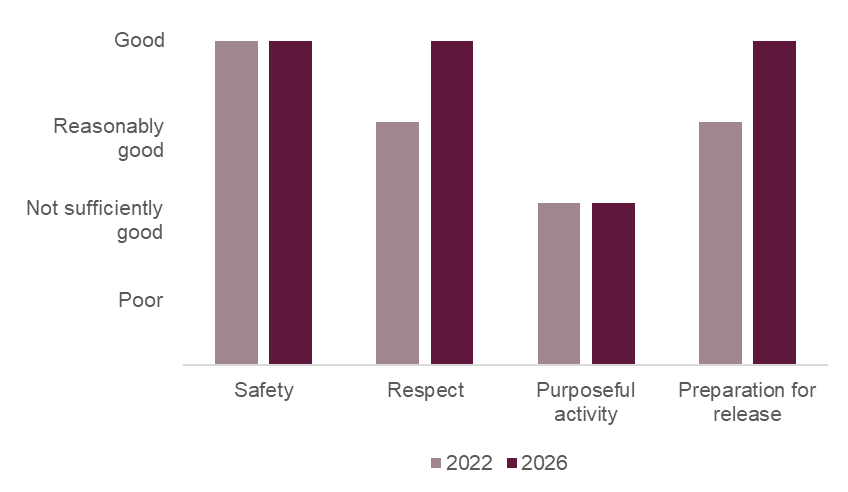
At this inspection of New Hall, we found that outcomes for prisoners were:
- good for safety
- good for respect
- not sufficiently good for purposeful activity
- good for preparation for release.
We last inspected HMP & YOI New Hall in 2022. Figure 1 shows how outcomes for prisoners have changed since the last inspection.
Figure 1: HMP & YOI New Hall healthy prison outcomes 2022 and 2026
What needs to improve (Back to top)
During this inspection we identified nine key concerns, of which four should be treated as priorities. Priority concerns are those that are most important to improving outcomes for prisoners. They require immediate attention by leaders and managers.
| Priority concerns | |
| 1. | Some mentally unwell women had been sent to prison due to the lack of services in the community, including places in secure mental health hospitals. Those requiring hospital treatment under the Mental Health Act waited far too long to be transferred. |
| 2. | The positive random mandatory drug test (MDT) rate over the last 12 months was the highest among all women’s prisons. There was no enhanced searching of staff and visitors, and permission to use the X-ray body scanner on prisoners had been delayed for far too long. |
| 3. | Leaders did not offer a sufficiently broad education, training and work curriculum. Instructors did not support women to develop their English and mathematics skills. |
| 4. | Leaders did not offer women the opportunity to accredit their learning in most workshops. |
| Key concerns | |
| 5. | Officers did not always challenge poor behaviour by prisoners. Victims of discrimination, bullying or violence did not feel fully supported. |
| 6. | Patients waited too long to receive dental care. |
| 7. | Staff shortages in the chaplaincy team limited the amount of support offered. |
| 8. | Education, training and work staff did not consistently support women to develop their understanding of British values or the dangers of radicalisation and extremism. |
| 9. | Some women who posed a high or very high risk of harm to others were refused a place in an approved probation hostel, which left them homeless on release. |
Notable positive practice (Back to top)
We define notable positive practice as evidence of our expectations being met to deliver particularly good outcomes for prisoners, and/or particularly original or creative approaches to problem solving. Inspectors found some examples of notable positive practice during this inspection, which other prisons may be able to learn from or replicate.
| 1. | Leaders at the prison were gathering evidence about the number of mentally unwell women sent to custody when they may have benefited from being diverted to a more appropriate treatment setting, such as a mental health hospital. (See Protecting women, including those at risk of abuse or neglect) |
| 2. | The prison did not charge new arrivals for their television for the first 14 days to help them keep out of debt. (See Early days in custody) |
| 3. | Prisoners could access the safer custody telephone line at any time to raise concerns about their own safety or well-being. (See Reducing self-harm and preventing suicide) |
| 4. | Patients had very good access to a specialist sexual health nurse which had led to improved outcomes. (See Sexual and reproductive health) |
| 5. | The local GP would attend the prison to assess the health of babies living on the mother and baby unit. (See Relationships with children, families and other people significant to women) |
Unless otherwise specified, these examples are not formally evaluated, are a snapshot in time and may not be suitable for other establishments. They show some of the ways our expectations might be met, but are by no means the only way.
Section 1: Leadership (Back to top)
Leaders provide the direction, encouragement and resources to enable good outcomes for prisoners.
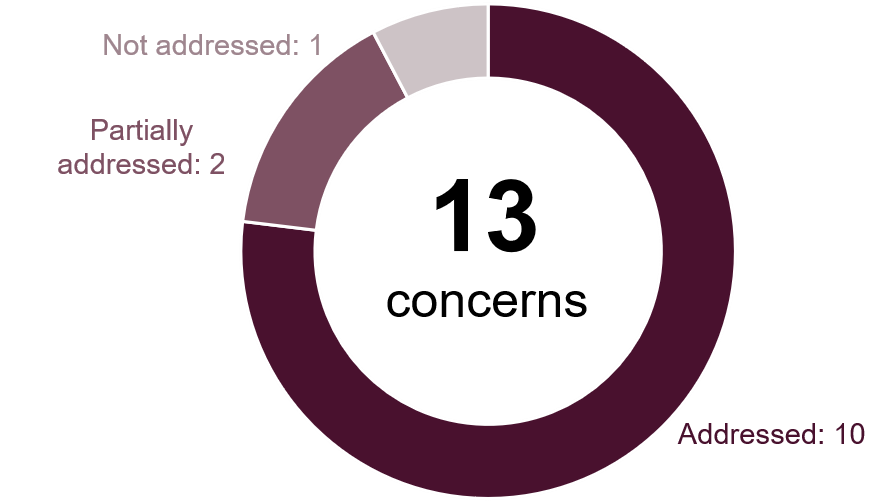
Leaders welcomed this inspection, were very open to feedback and responsive to emerging findings. They had addressed or partially addressed all but one of the concerns from our last inspection.
The governor was an experienced leader and in her nine months at New Hall she had developed an impressive understanding of the prison’s strengths as well as areas for improvement. On taking up the post, she had made the time to meet and get to know all senior and middle managers individually and identify what they needed from her as leader. Staff and prisoners we spoke to were very positive about her leadership style and visibility.
She also managed Askham Grange; an open jail located over 40 miles away. This made a very complicated job even more challenging as she would, on average, spend two days a week away from New Hall.
In his time as governor, the acting governor had included the women’s estate psychological services in the senior leadership team, to embed their expertise. The current governor had subsequently consulted widely with senior leaders to shape priorities, and the team was working well together across functions. However, some middle managers needed further support and upskilling to develop their confidence and capability.
Despite 30% of band 3 officers not being available for operational duties, leaders made sure the day-to-day regime was delivered reliably. They were using overtime payments for officers and were improving their management of sickness absences to make this more robust.
The new education contract had reduced the overall hours available for education, training and work and had led to a loss of some key staff. Leaders did not offer a sufficiently broad curriculum to develop women’s knowledge and skills.
The leadership drive shown by the drug strategy manager was impressive and, since our last inspection, significant investment had been made to address the demand for drugs. This included opening the first drug recovery wing in the women’s estate as well as an incentivised substance free living (ISFL) wing. However, national leaders had failed to support the prison in stemming the supply of drugs and other illicit items as they had not provided enhanced gate security or given permission for the X-ray body scanner to be used on prisoners.
NHS England, prison leaders and Practice Plus Group had worked together to overcome many of the challenges faced within the delivery of health care. This had led to improvements in some areas such as clinical oversight and patient safety.
Leaders had a strong and healthy commitment to partnership working to deliver a wider range of support to encourage women to address their offence-related problems but, due to long-term staff shortages, they had not been able to maintain delivery of the accredited offending behaviour programme.
They had also developed more effective joint working across the resettlement functions, including better coordination of support from the pre-release team, offender management unit, third sector and community-based agencies alongside their continued commitment to delivering an excellent standard of key work.
Section 2: Safety (Back to top)
Women, particularly the most vulnerable, are held safely.
Early days in custody
Expected outcomes: Women are safe at all times throughout their transfer and early days in prison. They are treated with respect and well cared for. Individual risks and needs are identified and addressed, including care of any dependants. Women are given additional support on their first night and induction is comprehensive.
| HMIP prisoner survey | Yes | Compared with similar prisons |
| Overall, were you treated very/quite well in reception? | 86% | No difference |
| Did you feel safe on your first night here? | 75% | No difference |
Support on arrival and during prisoners’ first few days was good overall. Most women said they were treated well in reception and felt safe on their first night. Reception staff put new arrivals at ease and completed private safety interviews with care and compassion. Women were not locked in holding rooms, enabling them to have more contact with peer workers to seek advice and information.
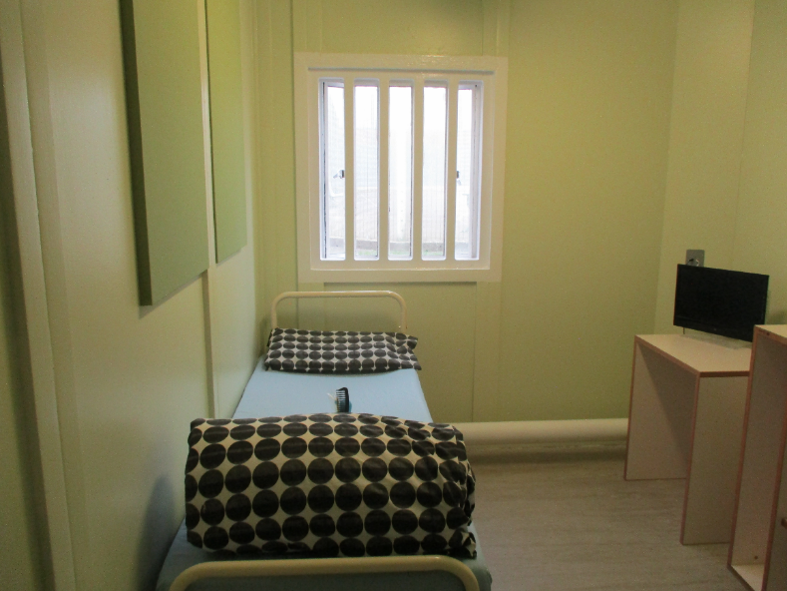
First night cells were clean and generally well equipped, but some lacked curtains and not all in-cell televisions worked. Sensibly, to help them avoid getting into debt, women were not charged for their television for the first two weeks.
Women arriving at the first night centre in the evening had a poorer experience as they had little or no time to settle in before being locked up. Officers completed regular welfare checks on them for the first 72 hours.
| HMIP prisoner survey | Yes | Compared with similar prisons |
| Have you had an induction at this prison? | 89% | No difference |
| For those who have had an induction: Did your induction cover everything you needed to know about this prison? | 58% | No difference |
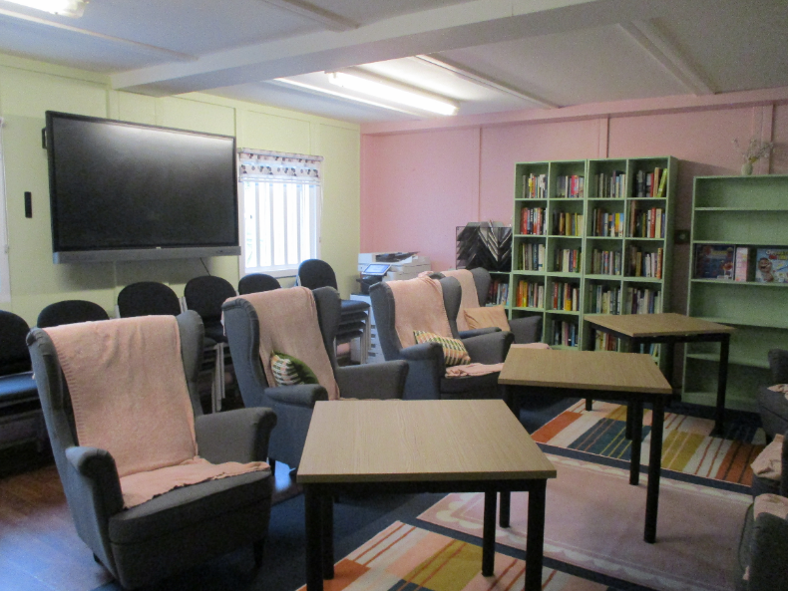
Women who had not yet completed their induction programme had very little time out of cell. Peer mentors remained visible and provided very good support, including the delivery of an initial information session in a comfortable space. However, this was not delivered on a Friday which meant women arriving on a Thursday or Friday were left without key information over the weekend. Our survey showed that too few women thought the induction programme covered everything they needed to know.
The Hope programme, a psychologically informed intervention to help women cope in custody, was fully embedded. Those we spoke to who had completed it said it was very helpful.
Promoting positive relationships and support within the prison
Expected outcomes: Safe and healthy working relationships within the prison community foster positive behaviour and women are free from violence, bullying and victimisation. Women are safeguarded, are treated with care and respect and are encouraged to develop skills and strengths which aim to enhance their self-belief and well-being.
Safe and healthy relationships
| HMIP prisoner survey | Yes | Compared with similar prisons |
| Do most staff here treat you with respect? | 78% | No difference |
In our survey, most women said that they were treated with respect and 81% said they had a member of staff to turn to if they had a problem.
During our inspection, we observed caring and compassionate interactions between staff and prisoners. Staff in specialist functions were particularly impressive, demonstrating an excellent level of knowledge about those in their care. However, some women we spoke to said that officers did not always challenge poor behaviour, such as bullying, and that a few spoke to them rudely.
Leaders were about to roll out a training package, designed and delivered by Women’s Estate Psychology Service, to all staff, known as ‘Behind the Behaviour’, to help them gain a better understanding about the factors that influence attitudes and the reactions of women in their care.
| HMIP prisoner survey | Yes | Compared with similar prisons |
| Do you have a named officer (e.g. key worker or personal officer)? | 82% | No difference |
| For those who have a named officer: Is your named officer very/quite helpful? | 84% | Higher |
Key work sessions were far more structured and meaningful than we usually see. Sessions often focused on helping women address offending-related issues or developing better ways of coping in prison (see How staff were supporting women and managing risk).
Reducing harm and preventing suicide
| Data provided by the prison | |
| Self-harm rate per 1,000 prisoners in the 12 months prior to this inspection | 861 |
The rate of self-harm had shown a slight upward trend over the last year but was the lowest of all women’s reception prisons. A small number of women self-harmed repeatedly; in the last year, more than two-thirds of incidents had involved 13 women.
There had been one self-inflicted death since the last inspection. The death in custody action plan was reviewed regularly and incidents of serious or life-threatening self-harm were investigated promptly to identify learning.
Individualised support plans were developed at the multidisciplinary safety intervention meeting. The range of support available to help women cope was impressive, including the Women’s Estate Psychology Service team, Together Women (a commissioned rehabilitative service which supports women and girls who are involved in, or at risk of entering, the criminal justice system), excellent quality key work and several peer support roles. It was good that most women at risk of self-harm were actively engaged in purposeful activity which helped to keep them busy and gave them a sense of purpose and achievement.
Women support by ACCTs (see Glossary) were generally cared for well, although inconsistent case management was a source of frustration for many and care plans often failed to include detailed targets setting out the full range of support needed. It was good that women could call the safer custody telephone line at any time to raise concerns about their own safety or well-being and calls were responded to promptly.
Leaders maintained good control over the use of restrictive measures such as anti-rip clothing (designed to be stronger, making it difficult to tear and make into ligatures), constant supervision, use of force and segregation. This ensured they were only used in exceptional circumstances as a response to self-harm.
Protecting women, including those at risk of abuse or neglect
We were concerned that due to the lack of services in the community, including places in secure mental health hospitals, some acutely mentally unwell women had been sent to New Hall. Leaders were collating evidence contained in court paperwork to evidence the scale of this problem over time.
Links with the local safeguarding adults board remained good and prison officers we spoke to understood the principles of safeguarding.
Promoting positive behaviour
Expected outcomes: Women live in a safe, well-ordered and supportive community where their positive behaviour is promoted and rewarded. Antisocial behaviour is dealt with fairly.
Supporting women’s positive behaviour
The prison felt safe and calm. In our survey, 23% of women said they currently felt unsafe, which was in line with responses at similar prisons.
| Data provided by the prison | |
| Rate of all assaults per 1,000 prisoners in the 12 months prior to this inspection | 737 |
| Number of serious assaults against staff in the 12 months prior to this inspection | 6 |
| Number of serious assaults against prisoners in the 12 months prior to the inspection | 17 |
The rate of violent incidents had increased since our previous inspection, but it had been reducing over the last 12 months. A small number of women were involved in a large proportion of the incidents, and most were not classified as serious. They were often in response to simple disagreements, the breakdown of relationships or bullying.
Investigations undertaken following incidents were comprehensive and challenge, support and intervention plans (see Glossary) for perpetrators were tailored to address the causes of behaviour with good input from a range of staff. However, not all victims felt supported.
Only 23% of women responding to our survey said there were opportunities and rewards to motivate people to behave well. However, we saw clear incentives for women such as moving to better accommodation and the chance to participate in, and benefit from, the many therapeutic opportunities.
Adjudications
Oversight of adjudications was effective and leaders had reduced the backlog of hearings from over 200 to 52. In the sample we viewed, hearings were thorough and referrals were made to substance misuse services for those found to have used drugs.
Segregation
The use of segregation had reduced since the last inspection and stays were generally short at around four days. The unit was clean and staff treated women well through good day-to-day care and positive interactions. Women had an in-cell telephone and their laptop, and those not on the basic level of the incentives scheme also had a television.
Women risk assessed as suitable could attend their allocated activity, such as work or education classes, within the main population. A good focus on reintegration helped to make sure that women returned to the main residential units following their time in segregation.
Use of force
There had been 407 uses of force in the last 12 months, and the rate per 1,000 prisoners was the lowest among similar prisons. It was rarely used to respond to incidents of self-harm and very few incidents involved full or prolonged restraint.
Oversight was robust. A full-time coordinator triaged all incidents, and these were reviewed at a weekly multidisciplinary meeting, including psychology and use of force instructors. Leaders challenged poor practice robustly and supported staff to improve their approach.
Body-worn camera footage was available for 86% of incidents over the last 12 months, which was good, but some staff failed to activate their camera soon enough which limited leaders’ ability to review the whole incident including the lead up to it.
Security
Expected outcomes: Security measures are proportionate to risk and are underpinned by positive relationships between staff and women. Effective measures are in place to reduce drug supply and demand.
| Data provided by the prison | |
| Positive random mandatary drug test rate (MDT) in the 12 months before this inspection | 13% |
The positive random MDT (see Glossary) rate over the last 12 months was the highest of all women’s prisons, but this had reduced in recent months. There was no enhanced gate security and leaders were not allowed to use the X-ray body scanner, which undermined their efforts to reduce the supply of drugs and other illicit items. Staff shortages also meant that some intelligence-led cell searches had not been completed, which further limited leaders’ efforts to reduce availability.
The ISFL unit and drug recovery wing had been introduced since our last inspection. They provided excellent support and, in our survey, 73% of women on those units said their well-being had got better since being at New Hall.
Physical security arrangements were now proportionate. For example, handcuffs were only used during external escorts and when intelligence suggested it was necessary.
Restricted status prisoners (those considered to require specific management arrangements due to their risk of harm to others if they were to escape) lived on Rivendell Unit, which was separate to the main house units, and their risks were managed sensibly. Most were in purposeful activity and could access most of the facilities within the prison. One prisoner had been downgraded in the last year and was now able to take part in the full regime.
Management of women who had been convicted of, or were accused of committing, terrorist acts was good and underpinned by effective joint working with other agencies.
Section 3: Respect (Back to top)
Women’s relationships with children, family and support networks are central to their care in custody. A positive community ethos is evident, and all needs are met.
Relationships with children, families and other people significant to women
Expected outcomes: Women are able to develop and maintain relationships with people significant to them, including children and other family members. The prison has a well-developed strategy to promote relationships and make sure women can fulfil any caring responsibilities.
| HMIP prisoner survey | Yes | Compared with similar prisons |
| Have staff here encouraged you to keep in touch with your family/friends? | 64% | Higher |
Help for women to keep in contact with their family and friends had improved since the last inspection and, in our survey, more women than in similar prisons said staff encouraged them to keep in touch. The family support provider, PACT, was well known across the prison. Women described receiving valuable support, particularly from the family engagement worker, with tasks such as getting regular updates on their child’s progress at school and helping them to liaise with community-based social workers.
Family days for children, and some for adults, were available alongside parenting courses and a nurturing programme for mothers. Prisoners who did not receive visits could access quarterly support meetings and craft groups with others who did not get visits.
| HMIP prisoner survey | Yes | Compared with similar prisons |
| Do visits usually start and finish on time? | 26% | Lower |
| Have you been able to see your family and friends more than once in the last month using video calling? | 7% | Lower |
Face-to-face social visits often started late due to the length of time it took staff to process visitors, and the use of video calling was unusually low.
The mother and baby unit was clean and comfortable, although the outside areas needed improving. Mothers on the unit received good support, particularly from pregnancy, mother and baby liaison officers, and women we spoke to were positive about the parenting courses. Recent efforts by staff to make sure assessments were completed without delay had helped to reduce the long separation periods some mothers experienced before they and their baby could live together. When we asked women what the most positive thing for them at the prison was, one said:
“‘Being on the mother and baby unit and learning to be a good parent.”
It was good that the local GP would visit the unit to assess and treat unwell babies. This enabled a better assessment of issues and needs within the prison setting and is something we rarely see in other prisons.
Living in the prison community
Expected outcomes: Women live in a prison which promotes a community ethos. They can access all the necessary support to address day-to-day needs and understand their legal rights. Consultation with women is paramount to the prison community and a good range of peer support is used effectively.
Consultation and support within the prison community
The prison council brought together leaders with prisoner representatives from most of the residential units but, in recent months, it had not met as often as intended. When it did take place, issues raised were followed up and had led to some meaningful changes, such as widening the range of cosmetics available to buy.
There were also forums about specific topics, such as food and the shop, as well as comprehensive consultation about protected characteristics (see also Fair treatment and inclusion) and other needs, such as the menopause.
A good range of peer work provided useful support in many areas of prison life. The problem support mentors, who provided help and guidance on a wide range of issues, were of particular note and were valued by those prisoners we spoke to.
Applications
| HMIP prisoner survey | Yes | Compared with similar prisons |
| For those who have made an application, are they usually dealt with: Within 7 days? | 61% | Higher |
Staff, in particular key workers, helped prisoners get basic things done which reduced the need for formal applications. When needed, women were able to make applications using their laptop and told us this worked well. However, better oversight was needed to make sure all departments replied without delay.
Complaints
The rate of complaints was low. Most were answered on time and the responses we reviewed were polite and fair. However, women were not always spoken to in person about the issues and some responses did not address the complaint in full.
Legal rights
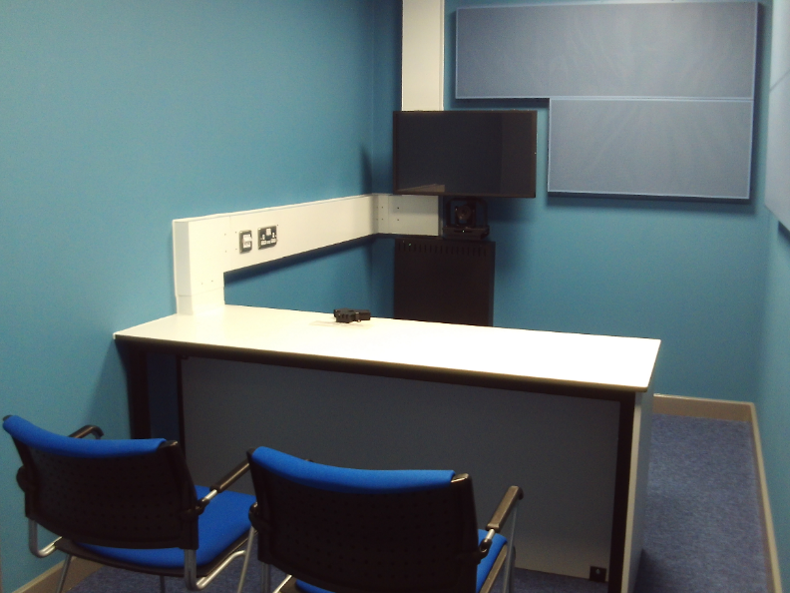
A drop-in service was available to help women access legal advice. A bail information officer met with remanded prisoners on arrival to help them secure bail, whenever possible, and there was sufficient capacity for legal visits, including a well-equipped video conferencing suite.
Living conditions
Women live in a clean, decent and comfortable environment. They are provided with all the essential basic items.
Some units were old and worn and needed considerable investment to bring them up to standard. However, communal areas and facilities on the units were clean and the grounds were well maintained.
Most cells were in good condition and furnished adequately but many on Oak unit lacked curtains. In many cells, particularly those holding two prisoners, there was insufficient screening around the toilet.
Our survey showed that prisoners were more positive about the quality of food than in similar prisons, and menus offered a reasonable choice. However, there was little self-catering equipment and many women told us that they did not get enough to eat. The cold meals were particularly small and serveries were not always supervised well by officers, which led to differences in the portion sizes being given out by the servery workers.
Canteen orders were often incomplete when delivered and women were frustrated by the fact they were only told about this on the day their order was due, which meant they could not order replacements.
Health and social care
Expected outcomes: Women are cared for by services that assess and meet their health, social care and substance misuse needs and promote continuity of health and social care on release. The standard of health service provided is equivalent to that which women could expect to receive elsewhere in the community.
The inspection of health services was jointly undertaken by the Care Quality Commission (CQC) and HM Inspectorate of Prisons under a memorandum of understanding agreement between the agencies. The CQC found there were no breaches of the relevant regulations.
Strategy, clinical governance and partnerships
NHS England had undertaken a period of close monitoring after concerns were raised about inconsistent clinical leadership and oversight, ineffective management for patients with long-term conditions and poor record keeping. All areas had been addressed.
Strategic partners had worked well together to open the women’s health hub which was highly valued by patients.
The interim head of health care had provided highly effective leadership and clinical oversight. Clinical governance and assurance meetings had been reinvigorated and provided the necessary mechanisms to monitor patient safety.
We noted the strength of teamwork across all health care providers and this, in combination with clear leadership, had focused on achieving good outcomes for patients.
Incident reporting had improved in all areas, which enabled leaders to address concerns. Serious incidents were investigated promptly and lessons learned were shared. When asked, staff referenced their learning and the positive impact on patient care.
Staffing was at a safe level. Clinical and safeguarding supervision were in place, mandatory training was up to date and staff consistently reported that they felt supported by leaders. Patient feedback was not used to inform service development, which was a gap. Confidential patient complaints were well managed. However, written responses lacked oversight of quality and were not written in plain English.
Nurses attended emergencies without delay and had easy access to life saving equipment. However, very few officers had up to date first aid or resuscitation training, which was a risk as they were usually the first people to attend an incident.
Promoting health and well-being
Health promotion followed a calendar of events based on NHS campaigns. There were a few health promotion displays in languages other than English.
Blood-borne virus testing was offered with onward referral when necessary. NHS age-related health checks and preventative screening programmes, including breast cancer, were offered. Immunisations and vaccinations were available and there were good links with the UK Health Security Agency (UKHSA) for any communicable disease outbreaks or advice. There was no smoking or vaping cessation support available.
Over the last 12 months, the social prescriber had delivered excellent work as a bridge between health care, well-being and resettlement. Data provided to us showed women were reporting positive well-being outcomes following support.
Sexual and reproductive health (including mother and baby units)
Women received sexual health screening and were offered pregnancy testing on arrival, with prompt referrals to appropriate services. There were four pregnant women in the prison as well as three mums and babies in the mother and baby unit. The midwives had established effective partnerships within the multi-agency team and women told us they valued the personalised care for them and their babies.
A perinatal pathway was supporting 25 women, including those who had experienced loss through termination, miscarriage or separation.
Women had very good access to a specialist sexual health nurse. In the last year, 38 cases of syphilis had been identified, which reflected an increase in the community transmission of the disease. Nine women had received prompt treatment for late latent syphilis (detected two years after infection) which had prevented further deterioration in their condition. Women were given clear information about the importance of cervical screening and supported to reduce anxiety about the procedure.
Primary care and enhanced units (inpatients and well-being units)
Primary care services were available seven days a week with emergency nursing care available overnight. Access to appointments was equivalent to the community.
Concerns were raised at daily handovers and there were regular meetings with a multi- disciplinary team to discuss needs and desired outcomes for patients with complex needs. The early days in custody team provided an excellent service and ensured that patients received regular contact to address any health concerns.
A nurse specialising in long-term conditions provided a comprehensive service. Care plans were detailed and patients’ needs were largely met, although there was a long wait for those who required spirometry testing (a specialist breathing test).
A range of visiting practitioners and allied health care professionals provided additional services such as physiotherapy, sonography, X-ray, podiatry and opticians.
We identified a lack of oversight over external hospital appointments, although we found no examples where this had impacted on patients. The interim head of health care responded positively and took prompt action to address this.
Release and transfer planning meant that any concerns about patients were addressed before the day of departure. Patients were provided with medication to take home.
Mental health
The mental health service was fully staffed, with a rich skill mix of disciplines, and it was managed effectively. Leadership was strong and well regarded, and staff spoke consistently about high levels of team cohesion and mutual support.
The service managed a high level of demand receiving, on average, 105 referrals a month. Clinical triaging took place each morning and referrals were responded to appropriately.
Waiting times for assessment and intervention were reasonable, with women typically waiting around one week for psychiatric input, eight weeks for group interventions and eight to ten weeks for Practice Plus-led psychology. A wide range of group and one‑to‑one therapeutic interventions was available and clinicians’ caseloads were manageable. Care plans and risk assessments were up to date and regularly audited.
The team attended key prison meetings, including ACCT and safety intervention meeting reviews, and worked effectively with health partners. Support for women with learning disabilities and neurodiverse needs was very good, with close collaboration between the learning disability nurse, the prison lead and regional speech and language therapists. Mental health support on Holly House was valued and therapeutic activity was regularly delivered. However, the team did not provide mental health training for prison officers, which was a gap.
In the last 12 months, there had been 15 transfers to hospital under the Mental Health Act. Only three patients had been transferred within 28 days and the longest transfer had taken 112 days. These continued poor outcomes were resulting in very unwell women being unable to receive the specialist treatment they desperately required.
Social care
There was a memorandum of understanding between the health care provider, local authority and the prison for the provision of social care and equipment needs, although this had not been reviewed for some time. Communications between the three parties had broken down but partners were working to improve this.
Social care need was low with only two patients in receipt of support. Whilst there was a lack of oversight of referrals and equipment needs, we did not identify unmet care needs.
Substance misuse and dependency
| Data provided by the prison | |
| Percentage of population being supported by substance misuse team at the time of inspection | 48% |
| Percentage of population receiving opiate substitution therapy at the time of inspection | 46% |
Substance misuse services were well organised, effective and met patient needs. A total of 151 women were receiving opiate substitution treatment, including 38 on long-acting buprenorphine injection, which was positive. Prescribing practice was evidence based and in line with expected clinical standards. Clinical substance misuse treatment was delivered by Practice Plus Group (PPG), with psychosocial interventions provided by Inclusion (Midlands Partnership Foundation Trust). Services were responsive to patient feedback.
The psychosocial team received over 100 referrals a month and managed an active caseload of 159 patients. The team was fully staffed, with skilled and experienced workers who had manageable caseloads. Joint clinical and psychosocial reviews were taking place at appropriate intervals and recovery plans were in place. Women had good access to services, and monitoring arrangements for new arrivals were robust, including a recovery worker based in reception.
The ISFL and drug recovery wing units provided a very good standard of support. The drug recovery wing was the only unit of its kind in the women’s estate and was supported by dedicated recovery workers and substance misuse officers. Women spoke positively about the support received.
Release planning was strengthened through effective continuity-of-care arrangements, including ‘reconnect’ workers embedded within the team, and regular regional and resettlement partnership meetings.
Medicines and pharmacy services
Pharmacy services were well delivered by a skilled team who attended appropriate meetings. Medicine errors were suitably managed and action was taken to prevent a recurrence. Drug safety alerts were responded to correctly.
It was positive that the service ran a clinic which specialised in the care of patients on long-acting injectables as it enabled them to have good oversight and engagement with patients who had long-term substance misuse needs.
Medicines were suitably transported around the prison, appropriately labelled and stored correctly. Medicines supply was generally timely, and reviews undertaken when delays occurred.
Medicines administration was supported by pharmacy technicians, and identification and the patient’s date of birth were checked. Prison officers supervised the queues and were positioned at the hatch which enabled observation of any attempted diversion. Suitable records were kept of medicines’ administration including when patients refused their medication, which was closely monitored.
Few patients were in possession (IP) of their medicines which did not help them develop self-management skills. IP risk assessments were reviewed regularly. Storage facilities were available in cells and random checks were undertaken; non-compliance resulted in a review of their IP status.
Medicines were available when the pharmacy was closed and they were managed appropriately. Patients could receive over-the-counter medication such as paracetamol.
Dental and oral health
Time for Teeth provided an appropriate range of services but only delivered 13 sessions a month, which did not meet the high level of need and meant that patients waited too long to receive care. However, when this was raised with leaders, more sessions were added.
Patients were triaged clinically and urgent referrals were seen at the next session. Pain relief and antibiotics were available as required. Patients were given oral health advice during their appointment. Dental records were thorough.
Equipment was sent away for decontamination and sterile equipment returned, which worked well. Large equipment was properly maintained and met required infection control standards.
Fair treatment and inclusion
Expected outcomes: There is a clear approach to promoting equality of opportunity, eliminating discrimination and fostering good relationships. The distinct needs of prisoners with protected characteristics, or those who may be at risk of discrimination or unequal treatment, are addressed. Women are able to practise their religion and the chaplaincy plays a full part in prison life, contributing to women’s overall care, support and rehabilitation.
Strong staff-prisoner relationships, including very effective key work, meant that women could voice their views and raise issues quite easily. Since our last inspection, an equalities manager and an officer had been recruited to provide oversight of the department and a new policy had been implemented.
Each member of the senior leadership team led on a protected characteristic and their work was more meaningful than we often see, with a good level of ownership. Quarterly strategic meetings were well attended by staff but did not yet involve prisoners.
Regular consultation forums with prisoners provided a solid foundation for leaders to understand specific needs. They were well attended and had been used to complete a needs analysis. However, outcome data were not analysed over time to evidence trends, despite some evidence of disproportionate outcomes such as black prisoners being over-represented in use of force incidents and adjudications.
There had been 50 complaints about discrimination submitted in the previous year. They were well managed and external scrutiny of the quality of replies was now in place. However, during the inspection several prisoners from ethnic minority groups said that many staff lacked cultural awareness and this impacted on their interactions with them. They also said that some staff failed to challenge discriminatory comments from other prisoners.
Provision for younger women had improved considerably since our last inspection. Key workers received awareness training and a range of sports and cultural activities had been developed in close consultation with prisoners. Older women also had some dedicated support, such as a tailored gym session and a walking club.
Provision for prisoners with physical disabilities was reasonable with necessary adjustments being made and equipment being provided. However, personal emergency evacuation plans were not always easily available to officers on the residential units and not all knew which prisoners needed assistance.
There was good, individualised support provided to the seven trans prisoners held at the time of our inspection, including the provision of chest binders, and the opportunity to shower at different times to the rest of the population.
In our survey, 42% of women considered themselves to be neurodivergent. The neurodiversity manager coordinated appropriate support, particularly for prisoners with complex needs. However, our survey showed that only 29% of neurodivergent women felt they were getting the support they needed.
Faith and religion
In our survey, 66% of women who had a religion said their religious beliefs were respected. Staff shortages in the chaplaincy team had persisted since 2024 and the team was unable to deliver all its functions. On some occasions the team could not complete all the statutory duties, such as daily visits to prisoners in the segregation unit.
Whilst there were religious services for Catholics and other Christian prisoners, formal Friday prayers were not offered. Muslim women could attend a study group, but this was not a replacement for Friday prayers.
Section 4: Purposeful activity (Back to top)
Women are able and expected to engage in activity that is likely to benefit them, including a positive range of recreational and social activities.
Time out of cell, recreational and social activities
Expected outcomes: All women have sufficient time out of cell and are encouraged to engage in recreational and social activities which support their well-being and promote effective rehabilitation.
Women engaged in purposeful activity had a reasonably good regime. In our roll checks this applied to about half (53%) of the population, with 39% of those being employed away from their residential unit. The proportion of women locked in their cell during the core working day was now 19%, which was better than at the last inspection (31%).
During the week, those in full-time employment had about seven and a half hours out of their cell each day which was extended to nine and a half hours if they chose to take outdoor exercise at lunchtime and attend enrichment activities in the early evening. Most other employed women were out of their cells for at least five hours a day. At weekends, most women were out of their cells for around five hours a day.
Leaders were trying to develop their delivery of social and recreational activities. However, there were considerable challenges in delivery which were due, in a large part, to the lack of officers available to facilitate and supervise the sessions. The range of activities was still at an early stage of development and some staff and women thought that some, such as board games, were too basic and mundane. On some wings women were locked in their cell if they did not want to participate and this caused enormous frustration.
In our survey, 83% of women said they could visit the gym or play sports once a week or more and the gym facilities remained excellent. However, some said they would welcome classes more tailored towards the specific needs of women.
Library provision had improved and was well used. There was a varied range of books on offer including quick reads, dyslexic friendly, large print, women’s wellness (including menopause) and self-help books. A good range of clubs and reading activities were delivered. There was a plan to publish a book and audiobook catalogue on women’s laptops, which was a good idea.
Education, skills and work activities
Expected outcomes: All women are expected and enabled to engage in education, skills or work activities that increase their employability on release. There are sufficient, suitable education, skills and work places to meet the needs of the population and provision is of a good standard.

Ofsted inspects the provision of education, skills and work in custodial establishments in England. The following summary has been provided by Ofsted inspectors who attended this inspection. Their full report is published under ‘Survey materials and Ofsted full report‘.
Ofsted made the following assessments about the education, skills and work provision:
- Overall effectiveness: Requires improvement
- Quality of education: Requires improvement
- Behaviour and attitudes: Good
- Personal development: Requires improvement
- Leadership and management: Requires improvement
Leaders had rectified most of the concerns from the previous inspection. They had an appropriate intent for the curriculum to equip women with the foundation skills they need to function in society and to start on a journey towards employment. However, there were insufficient training and job opportunities in non-traditional roles such as construction.
Staff absences and difficulties in recruiting specialist instructors had impacted on the breadth and availability of workshops and accredited courses for women in industries.
Financial constraints had impacted on the number of days Novus provided education, the range of courses they could offer and their flexibility to cover for staff absence.
The allocations process was effective in moving women into education, training and work quickly once they had completed their induction. Staff prioritised those who needed to develop their English and mathematics skills and had shorter sentences over those with longer ones for places in education. Almost all places were allocated to, and very few women were unemployed. Attendance at education and work was high and women were mostly punctual.
There were appropriate arrangements to provide prisoners with a planned induction. Women received helpful initial advice and guidance to prepare them for their chosen pathway, and all were provided with a personal learning plan. However, careers staff did not consistently review the plans and there was a backlog that staff were working to reduce. Staff provided helpful careers guidance and support to help women prepare for release. They were able to attend employer events and receive support in developing CVs. However, too many did not receive a pre-release review.
The PES provider Novus delivered effective teaching in English, mathematics, digital skills and on vocational courses such as hairdressing, mentoring, cleaning and food hygiene. Leaders had implemented a suitable reading strategy. They promoted reading effectively in education and on the residential units. However, reading was less well promoted across industries.
Work in industries was purposeful. Women learned and applied their skills effectively in textiles, gardens and kitchens. Wing workers were productive, applied their skills well and were appropriately trained. Leaders had still not ensured that staff in workshops and in the workplace supported women to improve their English and maths skills.
Women who had special educational needs and/or disabilities received a tailored support plan that identified appropriate strategies to help them overcome barriers to learning and succeed. They received helpful support in education and in work and industries.
Women in education mostly completed their courses and gained a qualification. They benefited from a wide range of enrichment opportunities to develop their interests and support their well-being.
Section 5: Preparation for release (Back to top)
Preparation for release is understood as a core function of the prison. Women are helped to reduce their likelihood of reoffending and their risk of harm is managed effectively. Women are prepared for their release back into the community.
Reducing reoffending
Expected outcomes: Women are helped to change behaviours that contribute to offending. Staff help them to demonstrate their progress.
| Data provided by the prison | |
| Percentage of the population on remand at the time of the inspection | 27% |
| Average number of releases each month | 99 |
At the time of inspection, almost two-thirds of women had been at the prison for less than six months. The proportion remanded into custody and the number of releases each month had increased, which placed enormous pressure on resettlement services.
Leaders had adapted their services well to meet the needs of this changed population. For example, newly recalled and remanded women were supported quickly on arrival with issues such as substance misuse or housing. Remanded prisoners were allocated a prison offender manager (POM) to respond to basic queries. In our survey, more remanded women than in similar prisons who said they had a named officer described them as very or quite helpful.
How staff were supporting women and managing risk
The offender management unit was well led and the size of POM caseloads was reasonable. Their contact and engagement with prisoners were better than we often see and there was a good focus on progression and tackling the range of offending-related problems.
Key work was well integrated with offender management. We observed many examples of key workers going above and beyond to provide individual support; in one case, an officer helped a woman draft a letter to a judge to explain her circumstances.
Risk of harm to others was managed well and we saw evidence of good joint working between departments. Public protection screening was completed promptly and women were informed about any restrictions on their communications. Monitoring of telephone calls and letters was used proportionately.
Opportunities for women to progress
Opportunities for rehabilitation and progression were good. For example, around 66% of the population had a drug or alcohol problem and leaders had expanded the support available to them, including the introduction of a drug recovery wing and an ISFL unit.
In our survey, 73% of women living on those two units said their well-being had got better, compared to 31% of other women. When we asked those in our survey what was the most positive thing for them at the prison, one said:
“Drug recovery wing and [member of staff] from inclusion, they gave me hope.”
Due to staff shortages, Building Choices (see Glossary) had been unavailable for a long time. As a result, very few prisoners had completed it. However, there was a wide range of other interventions available to help women address their offending-related behaviours. For example, Together Women provided several very relevant interventions to help women deal with previous or current trauma, such as being a victim of violence or involved in sex work.
The offender personality disorder programme on the Rivendell unit was impressive and delivered bespoke psychological interventions for women with very complex needs. The Women’s Estate Psychology Service delivered one-to-one risk reduction work, including with women who had committed, or been charged with, sexual offences.
Around 23% of the population were serving long sentences of more than four years but they had few opportunities to develop their independent living skills. However, they and other women deemed suitable for open conditions were transferred without delay, often to Askham Grange, where they could access this support.
Returning to the community
Expected outcomes: Women’s specific reintegration needs are met through good multi-agency working to maximise the likelihood of successful resettlement on release.
The coordination of services between the pre-release team, POMs and resettlement providers was now effective. Leaders had recently introduced a fortnightly discharge board which provided additional oversight of women’s resettlement needs before release.
Around 42% of sentenced women were assessed as presenting a high or very high risk of harm to others. Risk management planning for these women was reasonably good and the inter-departmental risk management meeting was now effective in providing oversight.
Together Women services (see Reducing harm and preventing suicide) provided good support for both sentenced and remanded women across many of the resettlement areas such as accommodation, finance, benefit and debt and social inclusion. Women also received support to get personal identification, open bank accounts and a small number had been helped to activate their benefits claims before release.
A monthly resettlement fair was attended by several community services, including local authorities, accommodation providers and drug services. This mainly benefited women being released to the local region. Some women preparing for release were able to complete an employability programme aimed at developing confidence, communication, digital capability and job interview skills.
There was good engagement with employers. In the last 12 months, 87 job interviews had taken place and 60 job offers had been made to women being released. However, according to prison data, only 14 prisoner leavers had successfully started their employment.
Despite considerable effort by staff, 9% of women had been released homeless in the last 12 months. For many others, temporary accommodation was only confirmed a few days before release, which made resettlement planning difficult. We were concerned to find examples of women who posed a high or very high risk of harm to others being released homeless as they had been refused a place in an approved probation hostel.
Too many women were released after their home detention curfew (see Glossary) eligibility date. This was often due to reasons beyond the control of staff in the prison, including delays confirming addresses and unconfirmed MAPPA (see Glossary) levels.
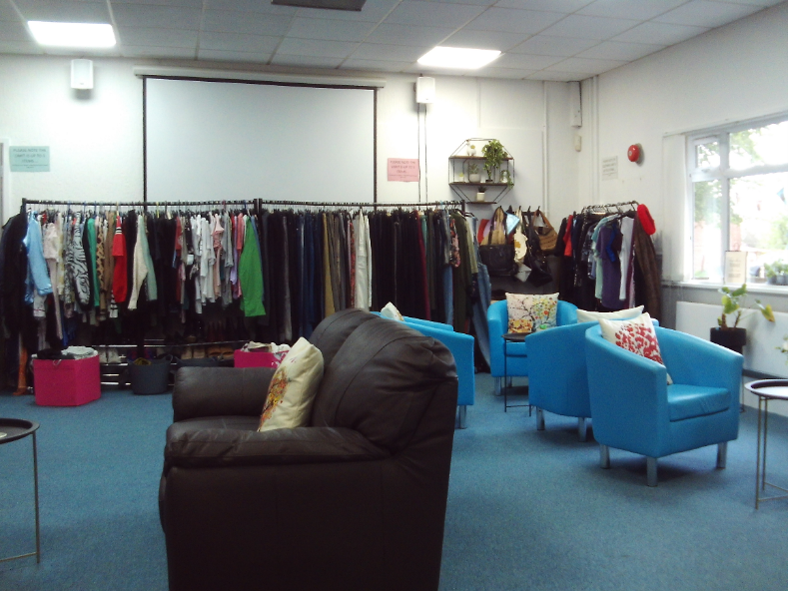
Women could attend the visitors centre as they left the prison to access additional help. They could get clothing and toiletries if needed, were offered a hot drink, could charge their mobile phone and wait for their family or friends to collect them. Those travelling to the railway station were provided with a taxi.
Section 6: About HMP & YOI New Hall (Back to top)
Please note, much of the following information was supplied by the prison at the time of the inspection.
Brief history
New Hall is a closed prison and young offender institution in Flockton, West Yorkshire, for women aged 18 and over.
Population
317 women were held at the time of the inspection. There was operational capacity for 376 women (figures provided by the prison.)
- 1,213 new prisoners (not including transfers) had been admitted in the previous 12 months.
- On average about 99 prisoners were released into the community each month.
- 23 women were foreign nationals.
- 17% of prisoners were from black and minority ethnic backgrounds.
- 167 prisoners were receiving support for substance misuse.
- On average, over the last year, 105 prisoners had been referred for mental health assessment each month.
- Seven prisoners were transgender.
- 25 prisoners were on the perinatal pathway with four pregnant prisoners.
- Three mothers and three babies lived on the mother and baby unit.
Short description of residential units
Holly House – For 12 prisoners with complex issues
Rivendell House – 30 ensuite rooms for women with personality disorders, restricted status women and selected prisoners on the enhanced regime
Maple House – Mother and baby unit for up to nine women and 10 babies
Oak House – Mainstream residential unit (Oak 1) and incentivised substance free living (ISFL) and drug recovery wing (Oak 2)
Poplar House – First night centre (Poplar 1) and mainstream
residential unit (Poplar 2)
Willow House – A and B wings provided mainstream residential accommodation. C wing held prisoners serving life and long-term sentences.
Prison status (public/private)
Public
Key providers
Physical health provider: Practice Plus Group
Mental health provider: Practice Plus Group
Substance misuse treatment provider: Inclusion (Midlands Partnership Foundation Trust)
Dental health provider: Time for Teeth
Prison education framework provider: NOVUS Escort contractor: Geo Amey
Prison group director
Zoe Short (Acting director)
Name of governor/director and date in post
Jennifer Willis, July 2025
Changes of governor/director since the last inspection
Julia Spence, August 2019 to February 2025
Scot Whitehead (Acting governor), February to July 2025
Independent Monitoring Board Chair
Michael Smith
Date of last inspection
14 November – 1 December 2022
Progress on concerns from the last inspection (Back to top)
At our last inspection in 2022 we raised 13 concerns, six of which were about areas of priority concern.
At this inspection we found the following progress:
The following is a list of all the concerns raised, organised under the four tests of a healthy prison.
Safety
Priority concern
Too many security measures were disproportionate and affected outcomes for prisoners needlessly.
Addressed
Key concern
Use of body-worn video cameras was too limited, hampering assurance processes for the use of force.
Partially addressed
Respect
Priority concern
There was too little support to help women maintain or rebuild relationships with their children and families.
Addressed
Key concern
Leaders had limited insight into the experiences of prisoners with protected characteristics. There was no strategy or needs analysis, consultation was limited and only a narrow set of data was reviewed.
Addressed
Purposeful activity
Priority concerns
The daily regime was inconsistent, unpredictable and a source of frustration among prisoners. The regime often ran late and too many prisoners were locked up in the core day. Time out of cell was far too limited for those in the induction unit.
Addressed
Leaders and managers did not carry out a needs analysis and as a result did not have a coherent approach to planning the education skills and work curriculum.
Addressed
The curriculum provided by Novus across education and vocational training was too narrow in most subject areas. Apart from in English and mathematics, there were insufficient progression routes.
Partially addressed
Attendance was too low because other activities, such as medication administration, showers, gym and health care appointments often clashed with classes.
Addressed
Key concerns
Most prisoners were unable to access the inadequate library. Unless they attended education, women did not have ready access to reading materials.
Addressed
Women’s mathematics and English skills were not being developed sufficiently at work or on some vocational courses.
Not addressed
There was insufficient support for those with a learning difficulty or disability when at work.
Addressed
Preparation for release
Priority concerns
None
Key concerns
There were not enough opportunities for women to address their offending behaviour and progress through their sentence plans.
Addressed
Public protection arrangements had a number of weaknesses, and some risks were not managed well.
Addressed
More about this report (Back to top)
This report outlines the priority and key concerns from the inspection and our judgements against the four healthy prison tests. Each of the following four sections contains a detailed account of our findings against our Expectations for women’s prisons.
Find out more about our Expectations and how we inspect
Find out more about priority and key concerns
Find out about notable positive practice
Findings from the survey of prisoners and a detailed description of the survey methodology are published alongside this report. Please note that we only refer to comparisons with other comparable establishments or previous inspections when these are statistically significant. The significance level is set at 0.01, which means that there is only a 1% chance that the difference in results is due to chance.
The tables in this report which provide data from HMI Prisons prisoner surveys also include comparisons with similar prisons.
| Description | What it means |
| Lower | the prison’s percentage is statistically significantly lower than the comparator: prisons with the same function type, or at the last inspection |
| Higher | the prison’s percentage is statistically significantly higher than the comparator: prisons with the same function type, or at the last inspection |
| No difference | the prison’s percentage is not statistically significantly different to the comparator: prisons with the same function type, or at the last inspection |
Inspection team
This inspection was carried out by:
| Ian Dickens Sandra Fieldhouse Natalie Heeks Rebecca Stanbury Kellie Reeve Jessie Wilson Chris Rush Alicia Grassom Samantha Moses Jasjeet Sohal Sana Zahid Sarah Goodwin Shaun Thomson Helen Jackson Bev Gray | Standing in for Chief Inspector Team leader Inspector Inspector Inspector Inspector Inspector Researcher Researcher Researcher Researcher Lead health and social care inspector Health and social care inspector General Pharmaceutical Council Care Quality Commission inspector |
Find out more about the terms and abbreviations used in this report in our glossary.
Easy read summary and press notice (Back to top)
Survey materials and Ofsted full report (Back to top)
The following files may not be suitable for users of assistive technology.
Request an accessible format
If you use assistive technology (such as a screen reader) and need a version of any of these documents in a more accessible format, please email media@hmiprisons.gov.uk. Please tell us what format you need. It will help us if you say what assistive technology you use.