
HMP Five Wells
Report on an unannounced inspection of HMP Five Wells by HM Chief Inspector of Prisons 11–21 May 2026.

Introduction (Back to top)
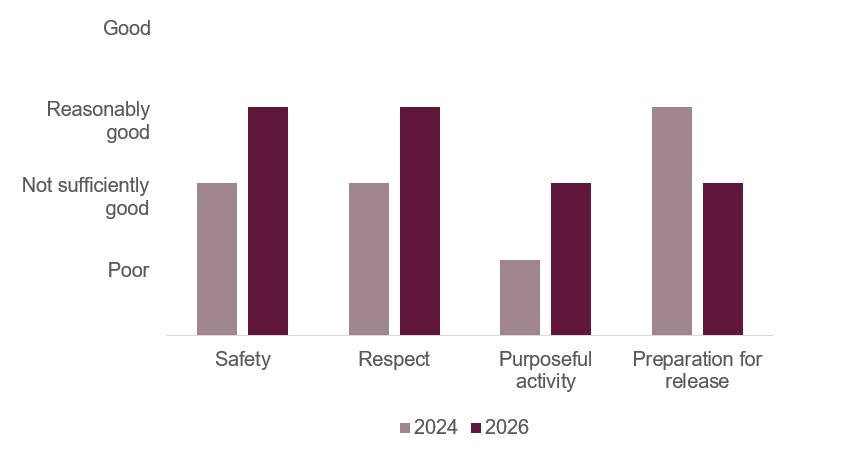
HMP Five Wells is a relatively new prison which had faced significant challenges since opening in 2022. When we last inspected in 2024, repeated changes in leadership, high staff attrition and a largely inexperienced workforce had resulted in weak governance, poor use of data and an underdeveloped regime. Outcomes were concerning, with purposeful activity judged poor and both safety and respect not sufficiently good.
At this inspection we found a prison that had stabilised and made real progress, with better outcomes in three of our healthy prison tests. The director had provided a clear sense of direction and more visible leadership, and his focus on building constructive staff-prisoner relationships was progressing well. The prison was calm, there were excellent interactions between officers and prisoners, and a range of imaginative initiatives had helped to reduce violence, particularly among younger men.
More prisoners were now engaged in purposeful activity, and leaders had taken steps to improve the oversight of education, skills and work. However, there still were not enough activity spaces for the population. There were plenty of enrichment opportunities to help men develop new skills.
Other serious concerns from 2024 persisted. Self-harm rates remained high and too little was being done to understand the causes and reduce the number of incidents. The absence of psychological support or counselling meant that too many prisoners continued to struggle with fragile mental health. Despite some improvements in leadership and staffing, prisoners still faced unacceptable waits to see a GP or dentist, or to access external hospital appointments.
While day-to-day stability had improved, the prison was not delivering sufficiently well on its core purpose of reducing reoffending. Prisoners found it too difficult to complete sentence plan targets, there were not enough places on key offending behaviour programmes, and offender management was hindered by high caseloads which limited meaningful contact. Weaknesses in public protection arrangements and serious errors in sentence calculations underlined the extent of these shortcomings in a prison holding a large number of high-risk men.
There were, nevertheless, clear strengths on which leaders could build. Prisoners lived in a modern, decent environment, there was good early days provision and excellent support for family contact. The extensive, effective use of peer workers was contributing to the supportive culture of the jail. The delivery of an integrated regime where men convicted of sexual offences live alongside others was not without its challenges but was being maintained well by leaders.
Five Wells has come some way since its turbulent early period. The experienced director and his team have succeeded in stabilising the prison and creating a more positive and ordered environment. They now need a sharper focus on reducing self-harm, improving access to health care, and, crucially, strengthening the systems that support progression and resettlement.
Charlie Taylor, HM Chief Inspector of Prisons, June 2026
Outcomes for prisoners (Back to top)
We assess outcomes for prisoners against four healthy prison tests: safety, respect, purposeful activity, and preparation for release (see More about this report for more information about the tests). We also include a commentary on leadership in the prison (see Section 1).
At this inspection of HMP Five Wells, we found that outcomes for prisoners were:
- reasonably good for safety
- reasonably good for respect
- not sufficiently good for purposeful activity
- not sufficiently good for preparation for release.
We last inspected Five Wells in 2024. Figure 1 shows how outcomes for prisoners have changed since the last inspection.
Figure 1: Five Wells healthy prison outcomes 2024 and 2026
What needs to improve (Back to top)
During this inspection we identified 13 key concerns, of which six should be treated as priorities. Priority concerns are those that are most important to improving outcomes for prisoners. They require immediate attention by leaders and managers.
| Priority concerns | |
| 1. | The rate of self-harm was high. Leaders did not use data well enough to identify ways to address this, and there was no psychology support or counselling for those experiencing emotional distress or struggling to cope. |
| 2. | Patients waited too long to see a GP or dentist. |
| 3. | There were insufficient education, skills and work spaces for the population. |
| 4. | Prisoners struggled to achieve their sentence plan targets and progress. |
| 5. | Despite a large population who posed a high risk of harm to others, some public protection arrangements were weak. |
| 6. | Resettlement support was too limited for the increase in prisoners being released. |
| Key concerns | |
| 7. | Too many prisoners said they felt bullied or victimised by their peers. |
| 8. | Support for foreign national prisoners was poor. |
| 9. | Patients waited too long for transfer to secure hospital beds under the Mental Health Act. |
| 10. | There was insufficient provision of talking therapies or low intensity psychological support to help patients experiencing emotional distress or struggling to cope. |
| 11. | Some patients experienced delays in accessing their hospital appointments in the community. |
| 12. | The reading strategy was not fully embedded. |
| 13. | Not all prisoners received prompt careers information, advice and guidance before release. |
Notable positive practice (Back to top)
We define notable positive practice as evidence of our expectations being met to deliver particularly good outcomes for prisoners, and/or particularly original or creative approaches to problem solving. Inspectors found four examples of notable positive practice during this inspection, which other prisons may be able to learn from or replicate.
| 1. | The rate of assaults by prisoners under 25 had been halved over the last 12 months by using a targeted strategy, including active consultation and focused work to address gang-related issues. (See Encouraging positive behaviour) |
| 2. | AIM (alert, intervene, monitor) electronic software was used effectively to alert staff to prisoners at risk of social isolation or increased self-harm. (See Suicide and self-harm prevention) |
| 3. | Peer working was integral to the ethos of the prison. Not only did this support prisoners but it also helped peer workers develop new skills that they could apply when they left prison. (See Staff-prisoner relationships and Opportunities for prisoners to progress) |
| 4. | There was a wide and imaginative range of enrichment activities and it was notable that staff participated in many of these, including sports, competitions and celebratory events. (See Staff-prisoner relationships) |
Unless otherwise specified, these examples are not formally evaluated, are a snapshot in time and may not be suitable for other establishments. They show some of the ways our expectations might be met, but are by no means the only way.
Section 1: Leadership (Back to top)
Leaders provide the direction, encouragement and resources to enable good outcomes for prisoners.
The prison was well led and there had been improvements in outcomes in three of our four healthy prison tests since our last inspection. The director had brought much-needed stability to leadership, and had prioritised improving order and control across the site.
He had also introduced and maintained a fully integrated living model where prisoners convicted of sexual offences lived alongside other prisoners, rather than in specific house units. He had planned this integration carefully, consulting widely with prisoners. However, many operational staff were inexperienced and there was little training to develop their skills in working with prisoners, including those convicted of sexual offences.
The importance of constructive and meaningful staff-prisoner relationships was at the heart of the director’s vision. To support this, leaders had developed the ‘Bridges’ programme, involving regular forums and events with staff and prisoners, as well as ‘Truce’, which rewarded violence-free house blocks to encourage positive behaviour and strengthen relationships. Leaders also used peer workers and a creative range of recreational events to develop this further.
A quarter of officers were not available for operational duties and long delays in His Majesty’s Prison and Probation Service (HMMPS) vetting prolonged this shortage. Despite the depleted numbers, leaders made sure that the regime was delivered reliably.
Leaders had not created enough places in education, skills and work, and not all prisoners received impartial careers advice and guidance to prepare effectively for their next steps.
Long-standing problems in the delivery of health care persisted. For example, leaders had not addressed significant delays in patient access to some services.
Prison leaders had failed to give sufficient priority to improving the resettlement and offender management functions, despite a huge increase in prisoners convicted of sexual offences and a doubling of releases since our last inspection.
Senior leaders had worked together to set the key priorities, which had been communicated well across the prison, and most staff agreed with them. There was a focus on decency and leaders were now more visible to staff and prisoners. For example, they visited each house block to enforce standards and held a weekly meeting with new arrivals.
Section 2: Safety (Back to top)
Prisoners, particularly the most vulnerable, are held safely.
Early days in custody
Expected outcomes: Prisoners transferring to and from the prison are safe and treated decently. On arrival prisoners are safe and treated with respect. Risks are identified and addressed at reception. Prisoners are supported on their first night. Induction is comprehensive.
Early days support for new receptions remained good, despite a considerable increase in their number. In our survey, 79% of prisoners said they had felt safe on their first night.
New arrivals were not locked in holding rooms while in reception. They could buy items from the shop and received a first night pack, which helped them avoid getting into debt in their first few days. Peer workers provided very good support, and staff interviewed arrivals in private to address any immediate concerns. As our survey results showed, prisoners were treated with decency on their arrival and in their first few days.
| HMIP prisoner survey | Yes | Compared with similar prisons |
| Before you were locked up on your first night here, were you offered a shower? | 86% | Higher |
| Before you were locked up on your first night here, were you offered a free phone call? | 70% | Higher |
| Before you were locked up on your first night here, were you offered something to eat? | 91% | Higher |
| In your first few days here, did you get items from the prison shop/canteen? | 79% | Higher |
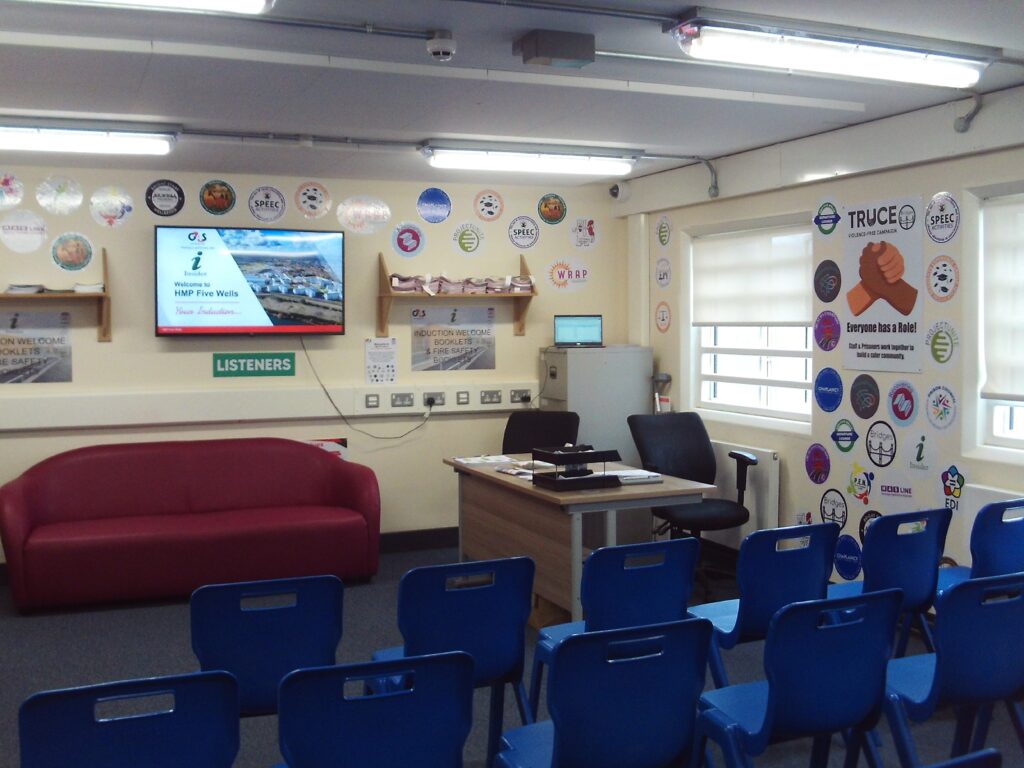
Induction started the next working day after arrival, delivered jointly by peer workers and staff from several departments. Most prisoners said it covered everything they needed to know. Senior leaders offered new arrivals a chance to meet with them to get to know each other and provide further information.
Promoting positive behaviour
Expected outcomes: Prisoners live in a safe, well ordered and motivational environment where their positive behaviour is promoted and rewarded. Unacceptable conduct is dealt with in an objective, fair, proportionate and consistent manner.
Encouraging positive behaviour
| Data provided by the prison | |
| Rate of violence per 1,000 prisoners, 12 months to March 2026 | 173 |
The prison felt calm and well ordered. The rate of violence between prisoners in the last year had halved compared to the year before. However, almost half of all assaults on staff were classified as serious, and poor-quality investigations left leaders with little understanding of the causes.
| HMIP prisoner survey | Yes | Compared with similar prisons |
| Have you been bullied/victimised in this prison by other prisoners? | 39% | Higher |
In our survey, far more prisoners than in similar prisons said they had been bullied or victimised by other prisoners, particularly through verbal abuse, threats or intimidation. Leaders had identified that a high proportion of violent incidents involved prisoners under 25. They had been proactive in seeking to understand their issues and had delivered very effective support to address gang-related conflict. This had included active consultation and the delivery of communal activities, often undertaken alongside staff, such as sporting events, celebrations and award ceremonies (see Staff-prisoner relationships). The rate of violence involving this age group had reduced significantly.
The use of the challenge, support and intervention plans case management approach (CSIP, see Glossary) to change behaviour and support victims was ineffective as too few staff and prisoners were aware of the plans or the targets.
There were insufficient oversight and care for the small number of prisoners who were self-isolating.
| HMIP prisoner survey | Yes | Compared with similar prisons |
| Are there opportunities to motivate people in this prison? | 54% | Higher |
| Do you think the culture within this prison encourages prisoners to behave well? | 39% | Higher |
Leaders had launched several good initiatives, including ‘Truce’ and ‘Bridges’ (see Staff-prisoner relationships) to promote engagement, build mutual respect and develop a culture that incentivised good behaviour.
A majority of prisoners (72%) were on the enhanced level of the incentives scheme and a quarter of those had progressed to the ‘super enhanced’ level. Leaders had increased the number of super enhanced landings and had made sure that they provided clear rewards, such as more time unlocked. Wing-based incentives for other prisoners, such as rewards for being violence-free were used well.
The adjudication system had been poorly managed, with too many charges not dealt with, including some for serious criminal activity in prison; as a result, these prisoners faced no formal consequences for their behaviour.
Use of force
The number of times that force had been used against prisoners had reduced since the last inspection, and the rate was now lower than similar prisons. However, the number of planned uses was high and justification for these was not always clear.
Staff recorded around 80% of incidents on body-worn cameras, but too many were not turned on soon enough and in some incidents their camera was obscured by clothing.
The use of force coordinator reviewed footage for all incidents, but too few were analysed at the weekly meeting involving other staff. We found that some use of force could have been avoided through better de-escalation by staff.
Segregation
| HMIP prisoner survey | Yes | Compared with similar prisons |
| Have you spent one or more nights in the segregation unit in this prison in the last six months? | 10% | Lower |
The use of segregation was relatively low and most stays in the unit were short. Each prisoner was discussed at a weekly complex case meeting and the safety interventions meeting (SIM) to make sure they had appropriate care. Reintegration work was effective with most prisoners returned to the main population.
Relationships between staff and prisoners in the segregation unit had improved and prisoners we spoke to felt well cared for. The unit was clean and well maintained and the regime was better than we often see. Some prisoners continued to attend work, education or training away from the unit or went to their own residential wing for association. They had an electronic tablet and a telephone in their cell to retain contact with their family and friends.
Security
Expected outcomes: Security and good order are maintained through an attention to physical and procedural matters, including effective security intelligence and positive staff-prisoner relationships. Prisoners are safe from exposure to substance misuse and effective drug supply reduction measures are in place.
| Data provided by the prison | |
| Average random positive mandatory drug testing (MDT) rate over the last year | 17% |
In our survey, 54% of prisoners said it was easy to get hold of drugs and there had been one drug-related death since the last inspection. The mandatory drug testing (MDT, see Glossary) positive rate had reduced from an average of 30% at our last inspection and was now lower than in many similar prisons.
The focus on recovery was reasonably good (see Health, well-being and social care). However, the monthly meeting to provide oversight of delivery of the drug strategy was poorly attended and generated few actions.
Physical security had improved with more gates between wings, and prisoner movement around the site was now much better supervised and well ordered. However, searching of prisoners was not always thorough and there was far too little searching of staff, which undermined efforts to stem the supply of illicit items.
Leaders had addressed the backlog of intelligence reports and this had helped give a clearer picture of threats. Although no prisoners convicted of terrorism were held at the time of this inspection, we were confident that the necessary processes and joint working between agencies would be managed appropriately.
Safeguarding
Expected outcomes: The prison provides a safe environment which reduces the risk of self-harm and suicide. Prisoners at risk of self-harm or suicide are identified and given appropriate care and support. All vulnerable adults are identified, protected from harm and neglect and receive effective care and support.
Suicide and self-harm prevention
| Data provided by the prison | |
| Rate of self-harm per 1,000 prisoners in the 12 months to March 2026. | 931 |
There had been no self-inflicted deaths since the prison opened four years ago. The rate of self-harm was reducing but remained high compared to similar prisons. A small number of prisoners self-harmed regularly; one had accounted for 22% of incidents in a three-month period last year.
Most prisoners at risk of self-harm we spoke to said they felt cared for. There was a reasonable range of support, including access to various peer workers, but there was no psychology help or counselling. Too few prisoners supported by assessment, care in custody and teamwork (ACCT) case management for risk of suicide or self-harm were engaged in purposeful activity, with little to occupy and engage them.
The safety team used the AIM software package (alert, intervene, monitor) to analyse prisoners’ behaviour. This used data such as visits attended, phone use, shop purchases and attendance at activities to identify any changes, such as increased isolation, that might warrant intervention.
There were enough Listeners (prisoners trained by the Samaritans to provide confidential emotional support to fellow prisoners) in post, but they had no dedicated meeting space, so prisoners could not always access their support at night. We found that some night staff were not carrying an anti-ligature knife, but this was rectified immediately.
The quality of completed ACCT documentation had improved, but there were inconsistencies in case management and a lack of health staff attendance at reviews.
The prison collected a wide range of data about self-harm, but they were not analysed well enough to identify learning and set actions to reduce the rate. Investigations into serious incidents of self-harm were of an insufficient quality, which limited learning further.
Protection of adults at risk
There were links with the local safeguarding adults board where needed. A twice weekly ‘Keep safe’ meeting explored concerns about individual prisoners. However, most officers we spoke to still lacked awareness of safeguarding risks to look out for.
Section 3: Respect (Back to top)
Prisoners are treated with respect for their human dignity.
Staff/prisoner relationships
Expected outcomes: Prisoners are treated with respect by staff throughout their time in custody and are encouraged to take responsibility for their own actions and decisions.
Staff-prisoner relationships were excellent; in our survey, 80% of prisoners said that most staff treated them with respect. The culture within the prison was developing well and had a healthy focus on living together in a community and rewarding positive behaviour (see Promoting positive behaviour).
Most interactions between staff and prisoners that we saw were polite and caring, but a few prisoners told us that some officers were dismissive and minimised prisoners’ problems, such as mental health issues or self-harm.
Peer workers were central to the running of the prison and their governance had improved since the last inspection. The ‘Bridges’ project was very effective in providing ongoing consultation and opportunities for prisoners to get to know officers and other staff through regular wing forums.
The range of activities involving staff and prisoners working together was impressive. These included a debating forum, sporting competitions, and reward and recognition events.
| HMIP prisoner survey | Yes | Compared with last inspection |
| Do you have a named officer (key worker)? | 84% | Higher |
Key work (see Glossary) now took place regularly, but its quality remained variable. Key workers made good use of electronic tablets to record and provide a transcript of the sessions for case notes.
Daily life
Expected outcomes: Prisoners live in a clean and decent environment and are aware of the rules and routines of the prison. They are provided with essential basic services, are consulted regularly and can apply for additional services and assistance. The complaints and redress processes are efficient and fair.
Living conditions
| HMIP prisoner survey | Yes | Compared with similar prisons |
| Normally, are these communal areas of your wing or houseblock very/quite clean: landings and stairs? | 91% | Higher |
| Normally, are these communal areas of your wing or houseblock very/quite clean: servery? | 93% | Higher |
| Normally, are these communal areas of your wing or houseblock very/quite clean: showers? | 96% | Higher |
| Normally, are these communal areas of your wing or houseblock very/quite clean: exercise yard ? | 95% | Higher |
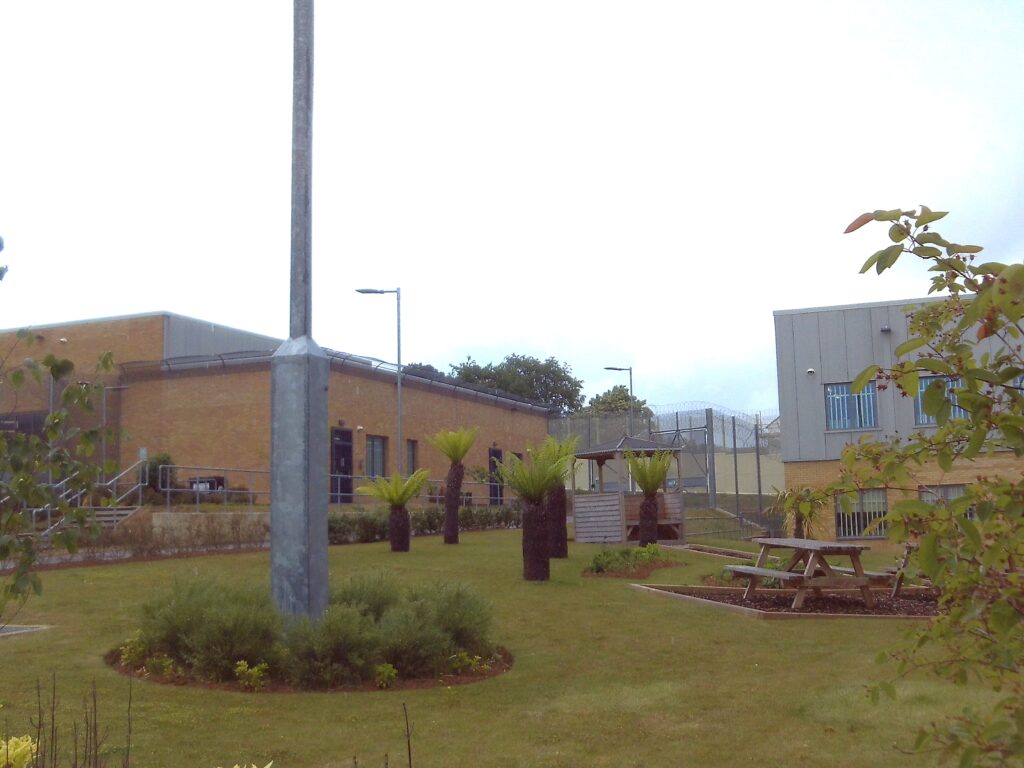
The prison was modern and the environment was bright and decent.
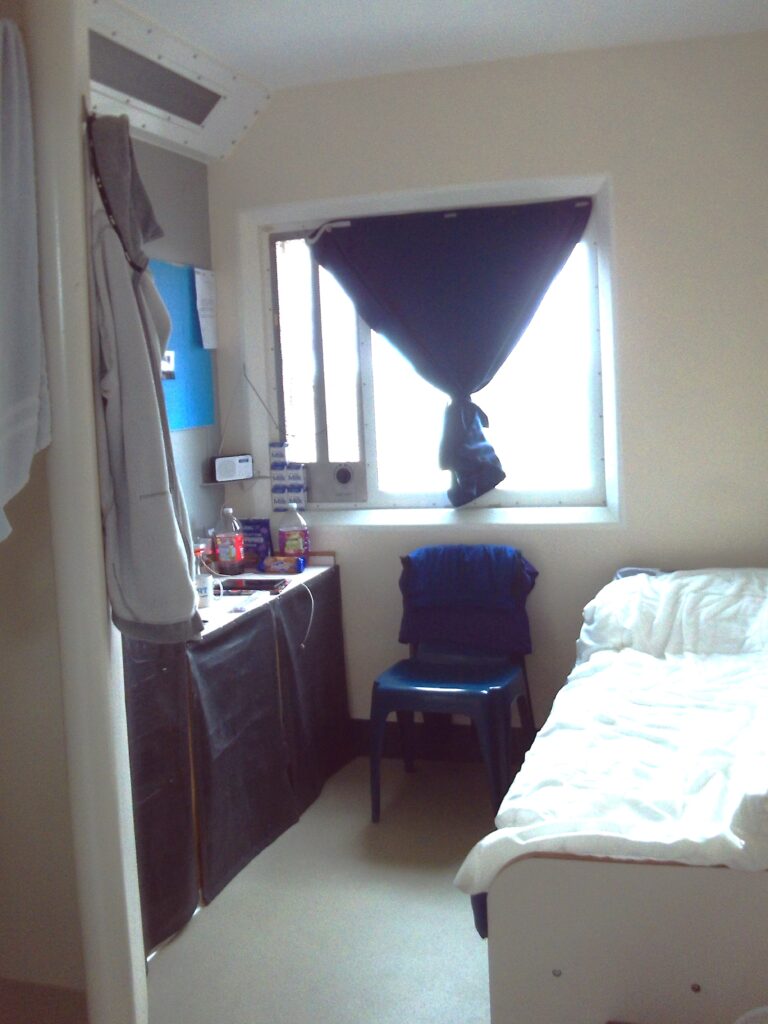
Most prisoners had single cells with a shower, and a window without bars, but they lacked storage space for personal items, such as clothing. It was concerning that HMPPS had begun to overcrowd the prison and some cells designed for one prisoner now held two and were very cramped.
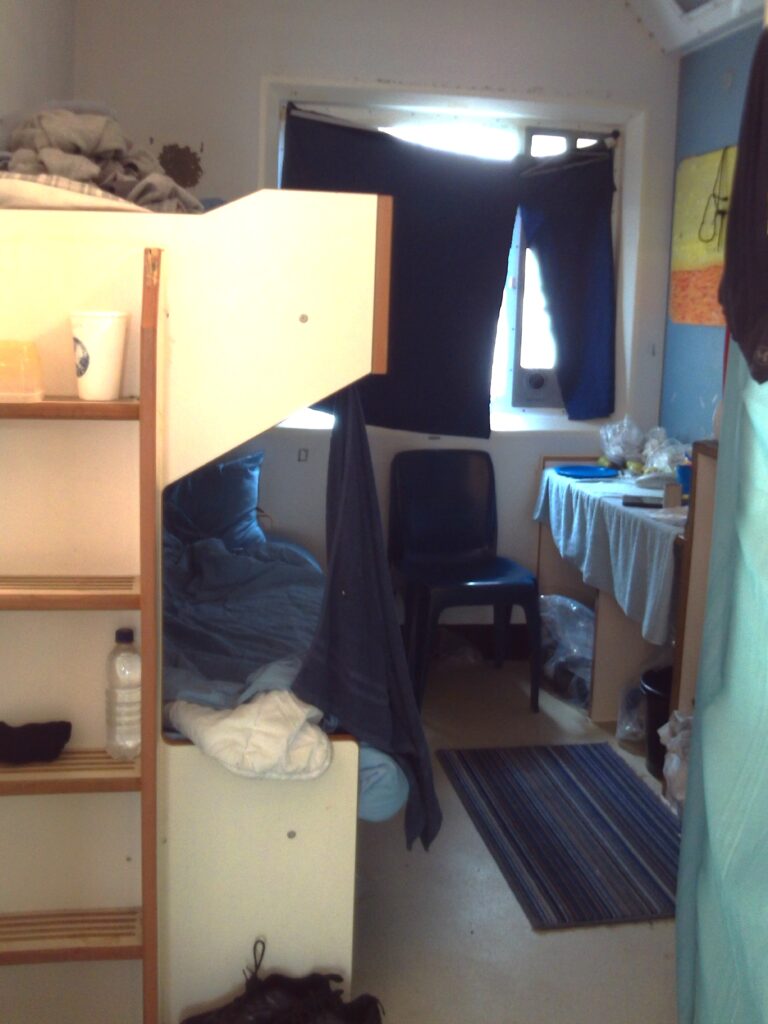
In our survey, more prisoners than in similar prisons were positive about cleanliness, and many told us that the environment and high standards of decency had a positive impact on their well-being.
They had good access to wing washing machines to launder their clothes, and could request packs containing essential toiletries. However, they often waited too long to access their stored property due to the redeployment of reception staff to other duties.
In our survey, 52% of prisoners said cell call bells were answered within five minutes, which was better than other prisons and at the last inspection.
Residential services
| HMIP prisoner survey | Yes | Compared with similar prisons |
| Is the quality of the food in this prison very/quite good? | 62% | Higher |
| Do you get enough to eat at mealtimes always/most of the time? | 45% | Higher |
Food was of a good quality, and portion sizes were adequate. Prisoners had access to some basic self-catering facilities, and self-cook areas on super enhanced wings were being upgraded.

More prisoners than the comparator (72% against 59%) said the shop sold the things they needed. Enhanced prisoners could also buy fresh fruit and vegetables. Prisoners could shop from a range of catalogues, as well as buying items from the on-site printing shop for themselves or as gifts for family.
Prisoner consultation, applications and redress
| HMIP prisoner survey | Yes | Compared with similar prisons |
| Are prisoners here consulted about things like food, canteen or wing issues? | 62% | Higher |
| If so, do things sometimes change? | 50% | Higher |
Consultation with prisoners was thorough, covering many aspects of prison life. The prison council was well organised and well attended. Wing forums (see Staff-prisoner relationships) were used extensively to widen consultation. The prison also used digital media well to communicate with prisoners, including daily vlogs by the director and videos that covered a range of topics.
Prisoners could make applications using their in-cell tablet or kiosks on the wings, and most were dealt with without delay.
The rate of complaints had decreased since the last inspection. Oversight was reasonably good and, in our survey, more prisoners than in similar prisons said they received a response within seven days. The quality of responses we reviewed was generally polite and clear. However, prisoners were not always spoken to directly about their complaint.
Fair treatment and inclusion
Expected outcomes: There is a clear approach to promoting equality of opportunity, eliminating unlawful discrimination and fostering good relationships. The distinct needs of prisoners with particular protected characteristics (see Glossary) or those who may be at risk of discrimination or unequal treatment, are recognised and addressed. Prisoners are able to practise their religion. The chaplaincy plays a full part in prison life and contributes to prisoners’ overall care, support and rehabilitation.
Leaders’ analysis of data about fair treatment and inclusion had improved since the previous inspection, and they had a better understanding of the needs of different groups of prisoners. Consultation with different groups of prisoners took place regularly and was positive.
Most minority ethnic prisoners we spoke to were positive about prison life. However, our survey highlighted more negative perceptions about food and the choice of items from the prison shop. Leaders had yet to explore some issues affecting Muslim prisoners. For example, data showed that they were overrepresented in the use of segregation, and there were concerns about the lack of separation of halal food from other items on the serveries.
Support for foreign national prisoners was poor. The electronic kiosks on the wings held little information in languages other than English, and professional interpreting services were rarely used.
Prisoners with physical disabilities were cared for well. There was good oversight of prisoner assisted living orderlies (PALs, see Social care) and personal emergency evacuation plans (PEEPs) for those who needed them. Leaders also catered for the needs of neurodiverse prisoners, and were building the confidence and competence of staff to improve outcomes. However, in our survey far more prisoners with disabilities than those without said they had experienced bullying or victimisation from others, which needed further exploration.
A good range of activities for younger prisoners included sessions aimed at developing their life skills, such as budgeting and cooking. Provision for older prisoners had improved considerably since our last inspection, including a dedicated wing offering a range of activities, with many developed or led by peer workers.
Transgender prisoners received adequate and individualised support, including gender-specific clothing.
Faith and religion
| HMIP prisoner survey | Yes | Compared with similar prisons |
| For those who have a religion, are your religious beliefs respected here? | 83% | Higher |
The chaplaincy was integrated well across the prison and faith facilities were good. Prisoners had good access to corporate worship and could meet chaplains of their faith. Peer workers from ‘Project unite’ were very active in supporting and promoting faith provision across the prison.
Health, well-being and social care
Expected outcomes: Patients are cared for by services that assess and meet their health, social care and substance use needs and promote continuity of care on release. The standard of provision is similar to that which patients could expect to receive elsewhere in the community.
The inspection of health services was jointly undertaken by the Care Quality Commission (CQC) and HM Inspectorate of Prisons under a memorandum of understanding agreement between the agencies. The CQC found breaches of regulations and issued a request for an action plan following the inspection (see Appendix II).
Strategy, clinical governance and partnerships
Practice Plus Group (PPG) led health provision, supported by a small number of subcontracted services. Governance arrangements were clear, with effective reporting and escalation processes.
Staffing levels, resource allocation and service delivery were not sufficiently good in some key areas, which affected timely patient care. Health leaders had recognised significant risks, such as extensive dental and GP waiting times, but had not made sufficient progress in addressing these.
Health leaders, including those from substance misuse and mental health pathways, were co-located, which promoted good communication and shared care. There was a positive clinical incident reporting culture, and learning was disseminated effectively.
Patients were treated with respect and kindness. There were regular consultation events, supported by impressive peer health champions. Patient concerns were usually dealt with face-to-face. Most formal health complaints received courteous and relevant responses, but patients were rarely spoken to directly.
Although there had been health staff shortages, most vacancies were now filled. However, prisoners faced long delays to see a GP and occasional delays in obtaining medicines.
Staff development was a strength, and several staff were developing new skills to enhance patient care, particularly in the management of long-term conditions. Core competencies were supported through mandatory training, clinical supervision, reflective practice and managerial support. Staff consistently reported feeling well supported and new recruits were positive about their induction.
Clinic and house block treatment rooms were clean, well maintained and largely complied with infection control. Systems for rapid response in medical emergencies were effective; onsite paramedics were part of the established response team and had access to appropriate, regularly checked resuscitation equipment.
Promoting health and well-being
| HMIP prisoner survey | Yes | Compared with similar prisons |
| Are you able to lead a healthy lifestyle here (in relation to your physical, mental, dietary needs, emotional and social well-being) always/most of the time? | 55% | Higher |
A proactive prison-wide approach promoted health and well-being through team sports and a weekly perimeter walk. There were monthly themed events supported by peer health champions to encourage take-up of immunisation, health screening and blood pressure monitoring.
Prisoners had access to NHS health screening campaigns and age-related checks. Sexual health screening and referrals to secondary care services were triggered when needed. Telephone interpreting services were generally used appropriately, although one instance of a prisoner acting as an interpreter was identified and promptly addressed.
Primary care and inpatient services
Effective initial health screening and multidisciplinary scrutiny of new arrivals identified any immediate clinical needs.
While there were timely nurse-led clinics, waits for routine GP appointments were around 12 weeks, which was excessive and delayed treatment. However, ring-fenced slots for urgent care had mitigated some risks. There were also insufficient prescribing practitioners and long waits to see the optician.
Although prisoners had access to a digital system, they had to make paper-based applications for health care appointments, which in such a large establishment could delay the processing of requests.
Unplanned and emergency responses was very well handled, supported by onsite paramedics. No patients were receiving palliative care at the time of inspection, but the prison had sound policy arrangements and hospice links.
There were too few planned escorts to external hospital appointments, which meant some patients faced repeated delays in accessing specialist care.
Social care
The memorandum of understanding between North Northamptonshire Council, G4S and PPG for social care provision was under review, with monthly meetings addressing operational issues. Health care staff identified potential needs of new arrivals at reception screening and made prompt referrals to the council, and prisoners could also self-refer. Three prisoners were receiving social care packages and were very positive about this support.
Daily living equipment, including mobility aids, was supplied, and some delays in this were being addressed. Prisoner assisted living peer supporters (PALs, see Fair treatment) helped prisoners with daily domestic tasks, received training and support from the safer custody team, and provided a valued and effective service.
Mental health
The well-led mental health team had clear roles and responsibilities, including an early days in custody lead and learning disability nurse, and were available every day. Staff reported feeling well supported.
The team triaged all patients with current or previous mental health needs promptly. One hundred patients were on the caseload supported by a named worker. Care planning and joint working with the community were of a high standard.
A mental health practitioner supported patients with a terminal diagnosis and low-level needs. However, there was currently no psychology or counselling provision, although a part-time psychologist was due to start.
Psychiatry provision was good. Weekly multidisciplinary meetings provided strong oversight, including robust physical health monitoring and responsive care for those with severe and enduring mental illness. Clinical staff attended segregation and all initial ACCT reviews where possible, or contributed in writing, reviewing the patient the same day if necessary.
Seven patients had been transferred to secure hospital beds under the Mental Health Act in the past year. Only two transfers had taken place within the required 28 days, with the longest wait being 91 days, which was unacceptable.
Support and treatment for prisoners with addictions and those who misuse substances
The team supported the prison in delivering its drug strategy, including the closure of an incentivised substance free living (ISFL) wing due to an increase in substance misuse on the unit and rise in ‘under-the-influence’ reports across the prison. Patients involved in such incidents received harm-minimisation advice and welfare checks. However, the prison needed to update its well-being incident support plan process.
A multidisciplinary team of nurses, prescribers and recovery workers supported around 200 patients, despite two vacant posts. All new arrivals with substance misuse issues were assessed, and patients were screened for their suitability for naloxone (a drug to manage substance misuse overdose), with training provided where indicated.
Assessments were prompt and waiting lists for group therapy were not excessive. All patients receiving opioid substitution treatment had up-to-date treatment reviews and care plans. There were 120 patients receiving clinical treatment, with around one-third prescribed Buvidal (a synthetic opioid), reflecting positive practice. Joint reviews between recovery workers and prescribers strengthened care coordination.
Patients could access a range of interventions, including in-cell workbooks, relapse prevention groups and longer-term therapies. Self-management and recovery training (SMART) groups provided mutual aid support and were well attended. The prison facilitated Narcotics Anonymous (NA) and Alcoholics Anonymous (AA) meetings, and Breaking Free Online (a recovery programme for substance misusers) was accessible via in-cell technology.
The team managed a high number of releases with recruitment under way for a discharge coordinator to enhance capacity. Although an increase in prisoners with short sentences had limited some treatment options, release planning was good, ensuring that patients prescribed opioid substitution treatment were referred to community services to continue this.
Medicines optimisation and pharmacy services
A skilled and resilient team delivered an effective service, but the prompt supply of medicines had been affected by delays in the issue of prescriptions and prescribers responding to queries. Prescriptions were frequently issued in large batches, increasing workloads and occasionally delaying supplies to patients. The full-time pharmacist was a prescriber but not used in this capacity. Several initiatives supported the safe supply of medicines, including systems to make sure that patients prescribed complex medicines received their doses on time.
Around 84% patients received their medicines in possession, supporting self-management. In-possession risk assessments were completed and reviewed regularly, but cell storage was unavailable. There were random cell checks, with non-compliance prompting review.
Pharmacist-led clinics were restricted to a weekly Buvidal clinic; other Buvidal doses required collection from the pharmacy, which was disruptive when this could have been relocated to a clinic room. Pharmacy technicians led medicines administration efficiently, but prison officer supervision of queues was inconsistent. Patient non-attendance was monitored closely.
Access to out-of-hours medicines was suitably managed. Prior notice of court attendance or prisoner moves enabled advance preparation. Medicines were appropriately transported, labelled and correctly stored, though fridge temperature records in one clinic room included out-of-range without repeat checks. Medicine errors were correctly managed, safety alerts addressed, confidential waste suitably handled and medicines waste disposed safely.
Dental services and oral health
Time for Teeth provided dental care and oral health advice. Well-led and trained dentists, nurses and a therapist delivered community-equivalent treatment and services. Appointments were prioritised on clinical need, with swift access for urgent and emergency cases. Pain relief and antibiotics were available if needed.
However, demand exceeded capacity. At the time of inspection, 412 patients were on the routine appointment waiting list with over half waiting longer than eight weeks and some up to 24 weeks. Treatment delays were also excessive, with 71 patients waiting up to 24 weeks. A business case for two additional dental sessions had been submitted to NHSE.
Section 4: Purposeful activity (Back to top)
Prisoners are able and expected to engage in activity that is likely to benefit them.
Time out of cell
Expected outcomes: All prisoners have sufficient time out of cell (see Glossary) and are encouraged to engage in recreational and social activities which support their well-being and promote effective rehabilitation.
Most prisoners had a reasonable amount of time unlocked. Those living on the super enhanced landings could be out for over 11 hours a day while others in full-time activities were unlocked for nine and a half hours. However, unemployed prisoners were only unlocked for two and a half hours a day.
In our roll check, we found an average of 23% of prisoners locked in their cells during the core working day, which was more than at our last inspection (18%). However, 61% were engaged in education, training or work compared with 43% last time.
Prisoners were now able to exercise outside for at least an hour each day, with sessions for most split between morning and late afternoon.
Most prisoners could access the library once a week, including quiet sessions for neurodiverse prisoners. The selection of items for loan was small, and, in our survey, fewer respondents than the comparator said the library had a wide enough range of materials. Activities to promote reading involving the library remained limited.
Gym access was good for most prisoners with a busy programme of activities. In our survey, 54% said that they were able to use the gym or play sports at least three times a week, which was more than at similar prisons.
Indoor gym facilities were small for the size of the population, but there were two multi-use pitches outside and cardiovascular equipment on the house blocks. Positively, 51 prisoners had passed the level two gym instructors’ course in the previous year, and all gym orderlies had also achieved this qualification.
Education, skills and work activities

Ofsted inspects the provision of education, skills and work in custodial establishments in England. The following summary has been provided by Ofsted inspectors who attended this inspection. Their full report is published under ‘Survey materials and Ofsted full report‘.
Ofsted made the following assessments about the education, skills and work provision:
- Overall effectiveness: requires improvement
- Quality of education: requires improvement
- Behaviour and attitudes: good
- Personal development: requires improvement
- Leadership and management: requires improvement
Leaders had made clear, measurable improvements across education, skills and work (ESW) and had strengthened their oversight. Despite this, they had not yet fully addressed all the recommendations from the previous inspection.
Leaders had not provided enough activity spaces for the population. A small minority of prisoners could not access ESW activities. This limited their opportunity to develop valuable work-related skills, achieve relevant qualifications, and improve their readiness for release.
The curriculum mostly met the needs of the population well. However, leaders had not developed the curriculum sufficiently to meet the needs of prisoners serving longer sentences. Prisoners in industries and work did not have enough opportunities to gain valuable accredited qualifications.
Novus provided the education courses and vocational training at the prison. Teachers were well qualified. They mostly planned and taught lessons well. However, vocational training was not sequenced effectively where it linked to a work role or industrial workshop. Teachers generally checked prisoners’ understanding well during lessons. In a minority of subjects, teachers did not revisit or reinforce key knowledge frequently enough.
The reading strategy had not been fully established. Leaders had not ensured that appropriate reading materials were available for prisoners with low-level reading skills. Leaders did not ensure that there was enough targeted support for non-readers. Leaders had established a wide range of initiatives that supported prisoners with higher reading levels and increased reading for well-being and enjoyment.
Industries trainers mostly taught lessons well. In most workshops, trainers set appropriate work projects. However, in a small number of workshops, instructors did not ensure tasks were sufficiently demanding.
Most work activities provided clear vocational development using commercial-standard equipment. Ceramics, textiles, furniture restoration, the media hub and waste management operated as professional environments.
Just under a third of prisoners were wing workers, and their daily tasks were not sufficiently demanding. Wing-based roles did not replicate realistic full-time working environments, and prisoners in these positions were frequently left unoccupied.
Most prisoners with neurodiverse needs were supported effectively. Managers screened prisoners swiftly to identify specific needs and develop useful support plans. Staff had received appropriate training and had a strong understanding of neurodiversity.
Almost all prisoners achieved their English and mathematics qualifications. Achievement rates for vocational qualifications were also high. Prisoners mostly produced work to the expected standard.
Induction to education, skills and work was informative, and initial careers information, advice and guidance (CIAG) interviews were appropriate. However, leaders had not ensured that Novus provided sufficient ongoing CIAG, meaning too many prisoners were released without access to impartial guidance. Leaders had taken targeted action to strengthen this and were beginning to ensure prisoners received sustained support throughout their sentence. However, at the time of inspection too many prisoners could not recall having received guidance that helped them to prepare for their next steps.
Attendance and punctuality at ESW were high.
Leaders had developed a comprehensive enrichment programme that supported prisoners’ mental health and broadened their interests beyond vocational or academic study. A very high number of prisoners took part in these activities.
Section 5: Preparation for release (Back to top)
Preparation for release is understood as a core function of the prison. Prisoners are supported to maintain and develop relationships with their family and friends. Prisoners are helped to reduce their likelihood of reoffending and their risk of harm is managed effectively. Prisoners are prepared for their release back into the community.
Children and families and contact with the outside world
Expected outcomes: The prison understands the importance of family ties to resettlement and reducing the risk of reoffending. The prison promotes and supports prisoners’ contact with their families and friends. Programmes aimed at developing parenting and relationship skills are facilitated by the prison. Prisoners not receiving visits are supported in other ways to establish or maintain family support.
| HMIP prisoner survey | Yes | Compared with similar prisons |
| Have staff here encouraged you to keep in touch with your family/friends? | 48% | Higher |
| Are your visitors usually treated respectfully by staff all/ most of the time? | 89% | Higher |
Prisoners received excellent help to keep in contact with family and friends. Prisoners had in-cell laptops and social visits were available six days a week, including evenings. Visitors were treated respectfully and facilities were very good. Prisoners and their family members could buy photos taken during the visit. Quiet areas were available for children who found the visits experience difficult and there was a large outside space, but this could have been used more creatively.
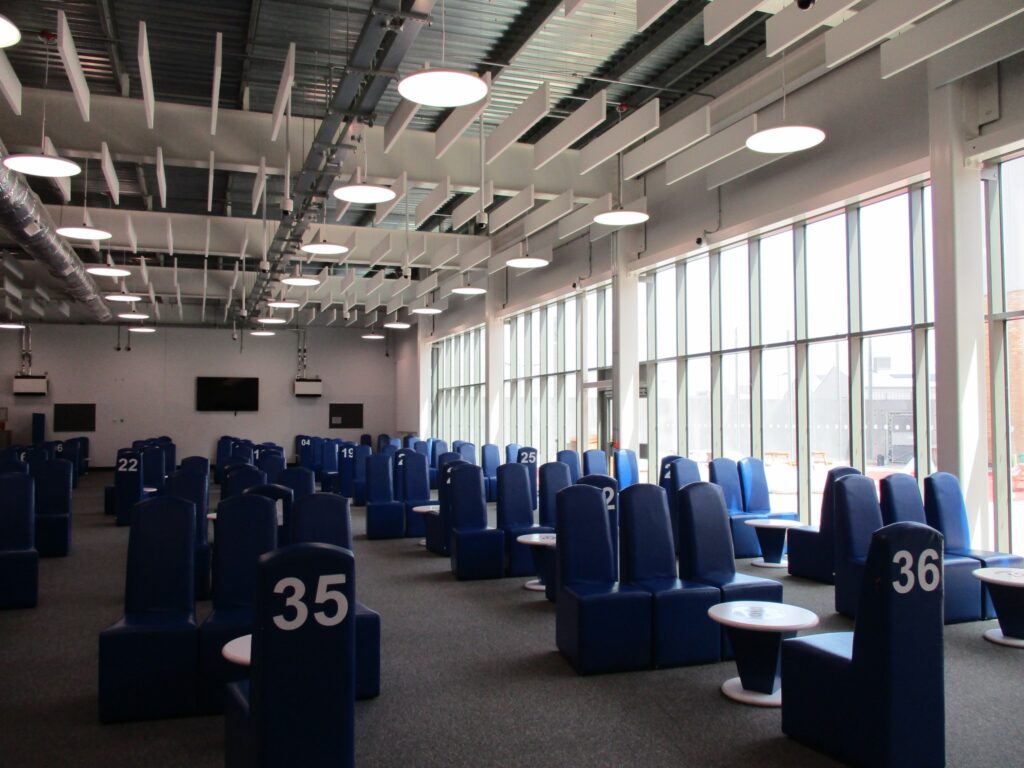

Regular family days had been held throughout the last year, and social video-calling (see Glossary), alongside the ‘email-a-prisoner’ service were both well used. Invisible Walls, the family provider, also offered ‘Little Wells’, a weekly play session that helped fathers interact with their children, and the family support worker provided short parenting courses.
Prisoners not receiving visits were supported well through regular events in the visits hall so that they could socialise away from the wings.
Leaders were improving awareness among staff from local schools and social work teams through quarterly events in the prison to learn about the potential impact on children who had a dad in prison.
Reducing reoffending
Expected outcomes: Prisoners are helped to change behaviours that contribute to offending. Staff help prisoners to demonstrate their progress.
The number of prisoners convicted of sexual offences had increased and now represented 57% of the population. Almost 70% of prisoners presented a high-risk of harm to others. In addition, more prisoners were being released and there were more short stays. However, the provision had not fully adapted to meet the needs of this new population.
| HMIP prisoner survey | Yes | Compared with similar prisons |
| Do you think your experiences in this prison have made you less likely to offend in the future? | 63% | Higher |
It was good that in our survey more prisoners than in similar prisons said they were less likely to offend in the future. However, there were some key weaknesses in the delivery of core offender management and resettlement help.
How staff were supporting prisoners and managing risk
A critical lack of offender management case administrators made it almost impossible to keep pace with the amount of work required. There had been some serious mistakes in calculating release dates. Since April 2025, six prisoners had been released early and 14 had been detained much longer than they should have been; one was three months over tariff and another had served an additional 232 days.
In addition, some prisoners had been held beyond their earliest eligibility date for release on a tag (home detention curfew). In some instances, the offender management unit (OMU) could have done more to progress these cases, and in others there were delays in securing suitable accommodation.
Prison offender manager (POM, see Glossary) caseloads were high and as a result their contact with prisoners was often far too limited, mainly driven by the need to complete tasks like sentence plans or parole reports. They were not delivering regular offence-focused work, and some prisoners went many months without seeing them. Key work (see Glossary) was rarely linked to sentence progression (see Staff-prisoner relationships), which limited support even more.
Half of all categorisation reviews had not been completed on time and far fewer prisoners than at our last inspection had progressed to an open prison. Even when approved, some prisoners waited too long to move.
The application of some public protection measures was weak. For example, the monthly interdepartmental risk management meeting did not systematically review high-risk prisoners approaching release to check for any gaps in planning.
The monitoring of telephone calls was not up to date, and in many cases, text messages sent by prisoners using their in-cell technology were not being checked.
There was good support to prisoners moving in from the children’s estate. Staff often visited or video-called young people before they moved, to explain how Five Wells worked and answer any questions.
Opportunities for prisoners to progress
It was far too hard for prisoners to achieve their sentence plan targets. Given the high-risk population, many needed to complete the accredited programme, Building Choices (see Glossary), but far too few places were provided. When we asked prisoners what they would most like to see changed at the prison, better access to this programme was mentioned frequently.
In the absence of programmes and regular offence-focused sessions, prisoners were given workbooks to complete on topics such as thinking skills, victim awareness or drug use. However, it was not clear what they had learnt from this, with some viewing it as a tick-box exercise.
Opportunities for prisoners to develop some new skills included peer work roles, debating events and an eight-day course on managing emotions, stress and anger. Help with tackling substance misuse was reasonably good, and many prisoners took the ‘Breaking free’ online course (see Substance misuse). However, there was not enough psychological support or counselling to address previous trauma.
Returning to the community
Expected outcomes: Prisoners’ specific reintegration needs are met through good multi-agency working to maximise the likelihood of successful resettlement on release.
| Data provided by the prison | |
| The number of releases to the community in the 12 months before this inspection | 1,756 |
The number of releases had more than doubled since the last inspection to an average of about 150 a month. Resettlement work was organised better than at our last inspection but, despite the large increase in releases, it was no better resourced.
In addition, more prisoners arrived at Five Wells with only weeks left to serve and often returned to areas outside the East of England, which made resettlement planning more difficult.
Housing workers were now employed directly by HMPPS, allowing better information sharing and closer joint working, but currently there were only two of them and they still only worked with prisoners from the local area.
The pre-release team was now managed by OMU leaders and better integrated into overall resettlement work, but there were only two case workers and they did not complete resettlement plans for most of the population.
In the last 12 months, about a third of prisoners had been released to settled housing and a quarter had gone to approved premises, but about 10% had left homeless. Many of the latter had not been referred to their local authority, which severely limited their chances of help with housing on the day of release. Some prisoners had not received a housing referral of any kind while at Five Wells.
Very few prisoners were able to open a bank account. In the six months to April 2026, 140 prisoners had applied, but only 24 had been opened. However, support from Department for Work and Pensions (DWP) staff to claim benefits was good.
The education department delivered a useful employability course, which 170 prisoners had completed since September 2025. In the last 12 months, 120 prisoners had found employment after their release. Reconnect, an NHS resettlement intervention, provided support before and after release to help prisoners access their local health services.
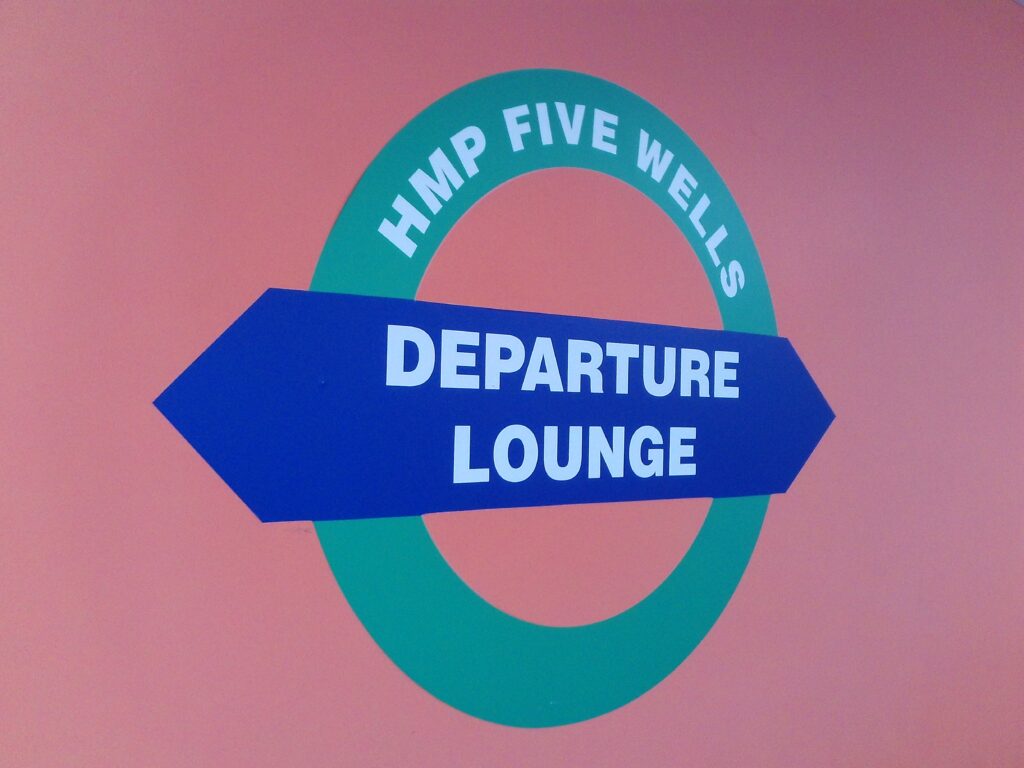
The prison had an excellent departure lounge to support prisoners on their day of release, including activating benefit claims before release.
Section 6: About HMP Five Wells (Back to top)
Category of the prison
Category C adult male resettlement prison.
Brief history
HMP Five Wells opened in February 2022 on the site of the former HMP Wellingborough. It holds a fully integrated population of prisoners with those convicted of sexual offences living and working alongside other types of prisoners.
Population
- 1,742 prisoners were held at the time of the inspection. There was operational capacity for 1,769.
- Around 193 new prisoners a month arrived and an average of 150 a month were released into the community.
- Approximately 57% of the population were serving a sentence for sexual offences.
- 70% of the population were assessed as high risk of serious harm to others.
- 120 were foreign national prisoners.
- 34% of prisoners were from black and minority ethnic backgrounds.
- 1,818 prisoners had been referred for a mental health assessment in the last 12 months.
Short description of residential units
Seven residential units, each holding approximately 252 prisoners across four levels, each having at least one super enhanced landing.
Red Well – one landing dedicated to retired prisoners
Buck Well
St Johns
Whitchurch – one landing for low mobility prisoners
Holly Well
Stan Well
Whyte Well – one landing for new arrivals
Prison status (public/private)
Private – G4S
Key providers
Physical health provider: Practice Plus Group
Mental health provider: Practice Plus Group
Substance misuse treatment provider: Practice Plus Group
Dental health provider: Time for Teeth
Prison education framework provider: Novus
Escort contractor: GEOAmey
Prison group director
Jamie Bennett
Name of director and date in post
Peter Small, June 2024
Changes of director since the last inspection
Will Styles, May 2023–June 2024
Independent Monitoring Board Chair
Helen Tile
Date of last inspection
2–12 January 2024
Progress on concerns from the last inspection (Back to top)
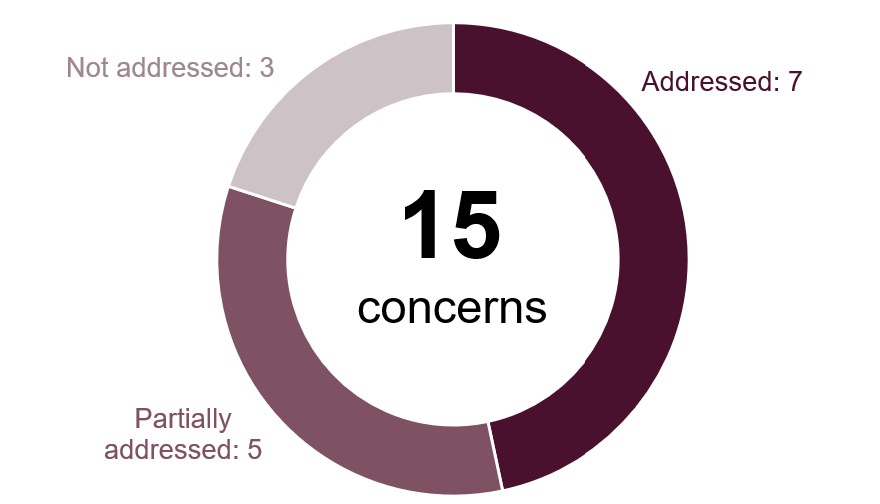
At our last inspection in January 2024 we raised 15 concerns, six of which were about areas of priority concern.
At this inspection we found the following progress:
The following is a list of all the concerns raised, organised under the four tests of a healthy prison.
Safety
Priority concerns
Weak governance, poor use of data and a lack of clear strategies and action plans in key areas across the prison impeded progress in improving outcomes for prisoners. This included the strategic management of safety, oversight of use of force, and work to reduce reoffending and promote fair treatment.
Partially addressed
Self-harm incidents were very high and not enough was being done to reduce them. The quality of ACCT management plans was poor and too many prisoners at risk of suicide or self-harm said that they did not feel cared for by staff.
Partially addressed
Key concerns
There was too little meaningful and regular support for prisoners involved in incidents of violence and antisocial behaviour.
Not addressed
The regime in the segregation unit was too limited, and some prisoners told us they did not feel cared for.
Addressed
The availability of illegal drugs had the potential to undermine the stability of the prison. The rate of positive drug tests was too high and there was too little support to reduce the demand for illegal substances.
Addressed
Respect
Priority concerns
Staff did not always enforce standards of good behaviour among prisoners and far too few key work sessions were taking place. Many staff were inexperienced and lacked confidence supervising prisoners, and their managers were not providing sufficient guidance and support.
Partially addressed
The prison’s approach towards ensuring fair treatment and inclusion was inadequate. Shortcomings in data analysis, consultation and responding to complaints of discrimination meant that the prison had a limited understanding of the needs of many of its prisoners, especially those with protected characteristics.
Addressed
Actions to resolve and mitigate identified risks to the health service had been too slow. This included deficits in the provision and oversight of clinical substance misuse services, staff and peer supervision, and the lack of confidentiality for those applying to and complaining about health.
Addressed
Key concern
The quality and quantity of food served by the kitchens were not good enough and prisoners did not have enough facilities for self-catering.
Addressed
Purposeful activity
Priority concern
Leaders had failed to provide sufficient full-time activity for the population or ensure high quality education and vocational training. Not enough suitable staff were in place for all teaching and management roles.
Partially addressed
Key concerns
Library services were inadequate. The library had a poor selection of books and provided too few activities to promote reading.
Not addressed
Leaders did not ensure that prisoners were promptly allocated to activities relevant to their education, training and employment needs. Positive attitudes to education and training had not been developed and attendance at activities was low.
Addressed
Leaders had not rigorously challenged low achievements or implemented effective strategies to improve prisoners’ attainment in education, skills and work.
Addressed
Leaders had not provided careers information, advice and guidance which helped prisoners to develop the knowledge, skills and behaviours they needed to be successful in their next steps.
Partially addressed
Preparation for release
Key concerns
Work to reduce reoffending was weak and not all prisoners were getting the support they needed.
Not addressed
Care Quality Commission Action Plan (Back to top)
Care Quality Commission (CQC) is the independent regulator of health and adult social care in England. It monitors, inspects and regulates services to make sure they meet fundamental standards of quality and safety. For information on CQC’s standards of care and the action it takes to improve services, please visit: http://www.cqc.org.uk
The inspection of health services at HMP Five Wells was jointly undertaken by the CQC and HMI Prisons under a memorandum of understanding agreement between the agencies (see Working with partners) for action plans following this inspection. The Care Quality Commission issued a request for an action plan following this inspection.
Action plan request (Back to top)
Provider
Practice Plus Group Health and Rehabilitation Services Limited
Location
HMP Five Wells
Location ID
1-12238089198
Regulated activities
Diagnostic and screening procedures, Personal care and Treatment of disease, disorder or injury
Action we have told the provider to take
This notice shows the regulations that were not being met. The provider must send CQC a report that says what action it is going to take to meet these regulations.
Regulation 12
Safe Care & Treatment
How the regulation was not being met:
- The waiting time to see a GP was 12 weeks which created a risk that patients may not receive the assessment or treatment they required in a timely manner.
- There were no structured treatment options for patients requiring a lower level of support for mental health issues. This was not in line with the provider’s mental health standard operating procedure. This meant that a high number of patients were discharged following mental health triage because the provider did not have treatment options available to meet their needs.
More about this report (Back to top)
This report outlines the priority and key concerns from the inspection and our judgements against the four healthy prison tests. Each of the following four sections contains a detailed account of our findings against our Expectations for men’s prisons.
Find out more about our Expectations and how we inspect
Find out more about priority and key concerns
Find out about notable positive practice
Findings from the survey of prisoners and a detailed description of the survey methodology are published alongside this report. Please note that we only refer to comparisons with other comparable establishments or previous inspections when these are statistically significant. The significance level is set at 0.01, which means that there is only a 1% chance that the difference in results is due to chance.
The tables in this report which provide data from HMI Prisons prisoner surveys also include comparisons with similar prisons.
| Description | What it means |
| Lower | the prison’s percentage is statistically significantly lower than the comparator: prisons with the same function type, or at the last inspection |
| Higher | the prison’s percentage is statistically significantly higher than the comparator: prisons with the same function type, or at the last inspection |
| No difference | the prison’s percentage is not statistically significantly different to the comparator: prisons with the same function type, or at the last inspection |
Inspection team
This inspection was carried out by:
Angus Jones, Representing Chief inspector
Sandra Fieldhouse, Team leader
Natalie Heeks, Inspector
Christopher Rush, Inspector
Esra Sari, Inspector
Rebecca Stanbury, Inspector
Jonathan Tickner, Inspector
Jessie Wilson, Inspector
Alicia Grassom, Researcher
Helen Ranns, Researcher
Sophie Riley, Researcher
Jasjeet Sohal, Researcher
Sana Zahid, Researcher
Stephen Eley, Health and social care inspector
Maureen Jamieson, Health and social care inspector
Dayni Johnson, Care Quality Commission inspector
Helen Jackson, General Pharmaceutical Council inspector
Nicola Brady, Ofsted inspector
Dianne Koppit, Ofsted inspector
Vicky Locke, Ofsted inspector
Allan Shaw, Ofsted inspector
Find out more about the terms and abbreviations used in this report in our glossary.
Easy read summary and press notice (Back to top)
Survey materials and Ofsted full report (Back to top)
The following files may not be suitable for users of assistive technology.
Request an accessible format
If you use assistive technology (such as a screen reader) and need a version of any of these documents in a more accessible format, please email media@hmiprisons.gov.uk. Please tell us what format you need. It will help us if you say what assistive technology you use.