
HMP Leeds
Report on an independent review of progress at HMP Leeds by HM Chief Inspector of Prisons 23–25 March 2026
Section 1: Chief Inspector’s summary (Back to top)
HMP Leeds is a busy category B reception and resettlement prison. It receives nearly 600 new arrivals a month and holds just over 1,000 adult men. Most of the population are remanded or recalled, so turnover is high.
This review visit followed up on 12 of the concerns we raised at our last inspection of HMP Leeds in 2025.
What we found at our last inspection
At our previous inspections of HMP Leeds in 2022 and 2025 we made the following judgements about outcomes for prisoners.
Figure 1: HMP Leeds healthy prison outcomes in 2022 and 2025
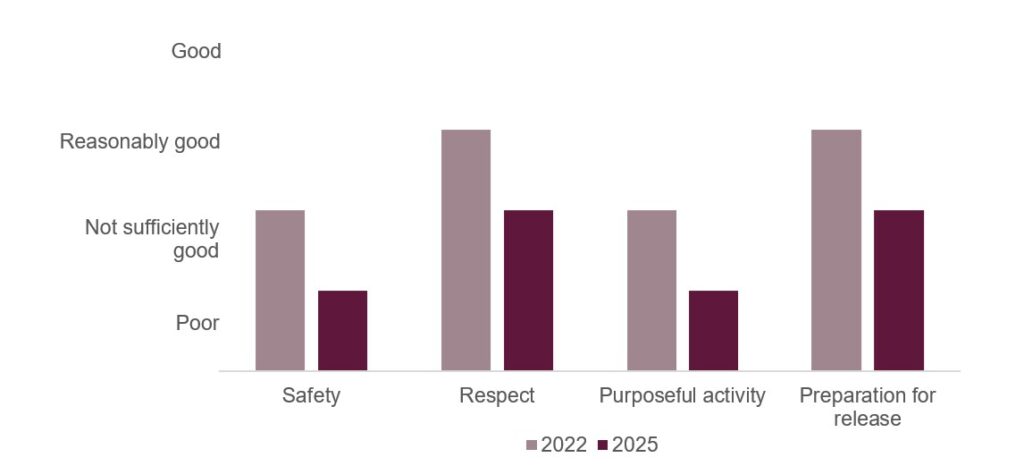
Only one of the 13 concerns we raised at our inspection in 2022 had been addressed in full. By 2025, safety had become a serious concern, with the highest number of self-inflicted deaths in all adult male prisons. Vulnerable prisoners continued to be put at risk by weaknesses in early days care, long delays in transfers to hospital under the Mental Health Act, and insufficient day-to-day support for those at risk of self-harm. In addition, illicit drugs were too readily available, and healthcare services were very stretched due to a severe shortage of staff.
Most men shared overcrowded and cramped cells designed for one. Many had little time out of cell, because the regime was frequently curtailed, and access to education, work and other activities was limited. There was insufficient support for prisoners with special educational needs and disabilities. The education curriculum failed to meet the needs of the large number of short-stay and remanded prisoners, and there was too little practical resettlement help for many prisoners.
Key work had stalled. Some prisoners said that many staff were unhelpful and uncaring, and that a small number were antagonistic.
What we found during this review visit
A new governor had taken up post six months before our review visit and had brought drive and determination through her proactive leadership style. She had sensibly prioritised improvements in early days support and resettlement help, given the exceptionally high turnover within the population.
New arrivals now received excellent support, in a better environment, with a focus on decency and care. Leaders were using offender management and resettlement resources more flexibly. This is something we rarely see but was an obvious step to take to meet the needs of the population.
We found good progress in improving the quality of staff-prisoner relationships, particularly on units with a specialist function, such as the first night centre and the incentivised substance free living (ISFL) unit. Key work was better, and consultation with prisoners was stronger. Leaders had made reasonable progress in improving staffing levels in the healthcare teams. Our Ofsted colleagues found significant or reasonable progress in their three themes.
HMPPS had failed to make any meaningful progress in addressing the chronic overcrowding. The reduction of 20 spaces in the operational capacity was far too small to have a positive impact on a population of over 1,000. There was little evidence that use of illicit drugs had reduced, and another three men had taken their own lives in the last eight months. Some small improvements had been made to the length of the core day, and there were now better efforts to engage men in meaningful activity. However, many men still did not receive enough time out of cell. Escalation of concerns between the prison, healthcare providers and the National Health Service about the needs of acutely mentally unwell men was much better. However, there were too few spaces in mental health hospitals, which meant that these men still faced long delays in being transferred and getting the right care.
Leaders had taken our concerns seriously and had focused on improving some very important aspects of prison life, particularly when faced with a population of men who were mainly staying for a very short length of time. However, the main risks to sustaining these improvements and making further progress were severe overcrowding, high rates of drug use, self-inflicted deaths and the lack of time out of cell for many men, including some of those with mental health problems or other vulnerabilities.
Charlie Taylor, HM Chief Inspector of Prisons, March 2026
Section 2: Key findings (Back to top)
At this visit, we followed up nine concerns from our most recent inspection in July 2025, and Ofsted followed up three themes from that inspection.
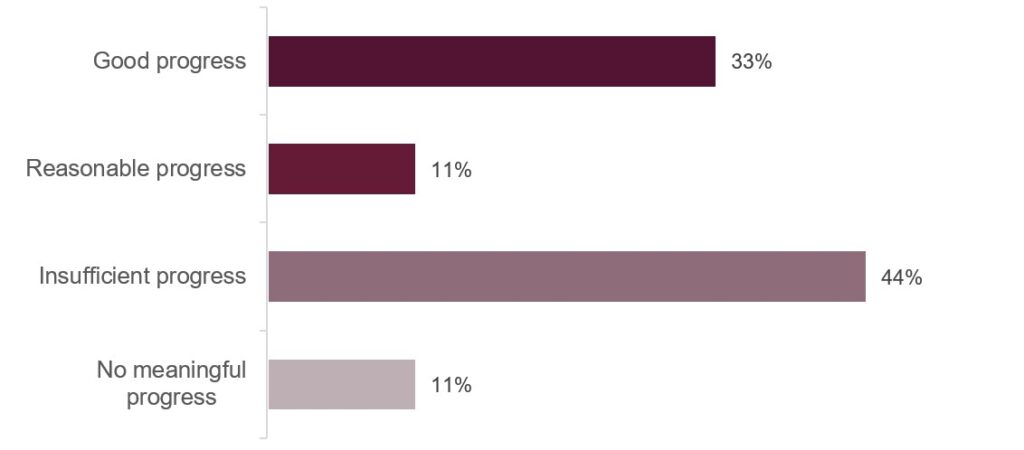
HMI Prisons judged that there was good progress in three concerns and reasonable progress in one. However, there had been insufficient progress in four concerns and no meaningful progress in one.
Figure 2: Progress on HMI Prisons concerns from 2025 inspection (n=9)
This bar chart excludes any concerns that were followed up as part of a theme within Ofsted’s concurrent prison monitoring visit.
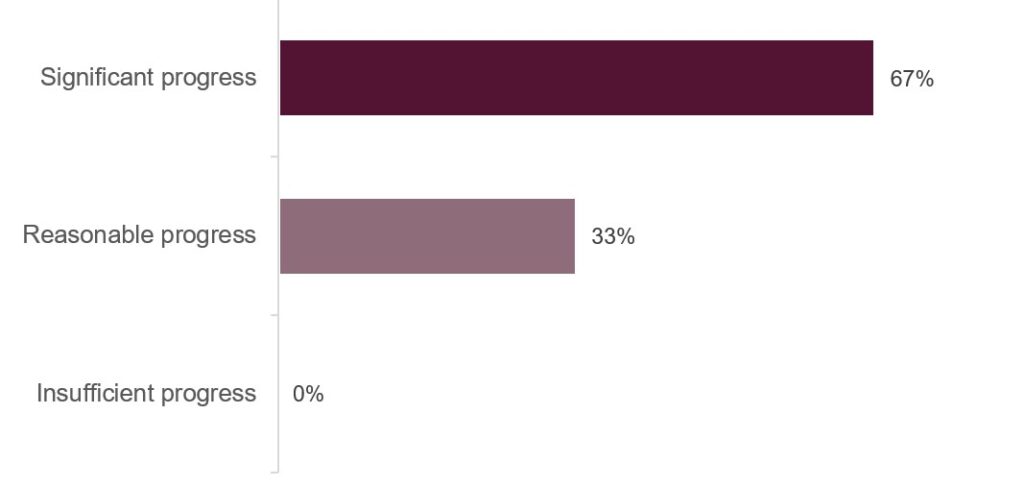
Ofsted judged that there was significant progress in two themes and reasonable progress in one.
Figure 3: Progress on Ofsted themes from inspection (n=3).
Notable positive practice
We define notable positive practice as:
Evidence of our expectations being met to deliver particularly good outcomes for prisoners, and/or particularly original or creative approaches to problem-solving.
Inspectors found four examples of notable positive practice during this IRP visit, which other prisons may be able to learn from or replicate. Unless otherwise specified, these examples are not formally evaluated, are a snapshot in time and may not be suitable for other establishments. They show some of the ways our expectations might be met, but are by no means the only way.
| 1. | A family support worker helped men to book their first visit and make telephone contact with their families and friends as soon as possible. A visits session each week for new arrivals had been introduced to improve their access. (See Early days) |
| 2. | New admissions were discussed at a multidisciplinary healthcare meeting the day after arrival to make sure that all appropriate referrals and assessments had been completed. (See Early days) |
| 3. | The ‘Work to Win’ scheme was an innovative incentive to reward the staff and prisoners on the wing with the highest monthly attendance at work, training and education off the wings. (See Time out of cell) |
| 4. | A dedicated group of five prison offender managers worked with nearly 200 recalled men every month to support them. (See Education, skills and work) |
Section 3: Progress against our concerns and Ofsted themes (Back to top)
The following provides a brief description of our findings in relation to each concern followed up from the full inspection in 2025.
Early days
Concern: Support for new arrivals was not good enough. Too many were unable to telephone their family and waited too long for their first visit. Prisoners were not informed of what to expect during their early days.
The prison remained among the busiest in the adult male estate, with nearly 600 new arrivals every month. The new governor had clearly understood the needs of her population and prioritised improving support for new arrivals. Emerging data for the first three months of 2026 showed a promising reduction in the rate of self-harm among new arrivals compared to the three months before that.
Healthcare support for new arrivals had improved considerably. An extra nurse was in reception to help with the volume of assessments. This ensured that recalled men who arrived early in the morning did not have to wait several hours for their screening.
New admissions were discussed at a daily multidisciplinary healthcare meeting to make sure that all appropriate referrals and assessments had been completed. Secondary health screenings were now timely.
New arrivals had much better access to prison offender managers (POMs) in reception and on the first night centre to resolve their frustrations and get help.
A new arrangement for men to buy basic items from the prison canteen list on arrival was known as the ‘Welcome Store’. Prisoners were given a £20 advance, and their order was delivered the next morning to help them avoid getting into debt.
The first night centre had been moved to a much more suitable location. The unit was pleasant and had good facilities, such as a larger induction room. The induction programme was much better, and included a particularly useful booklet in an ‘easy read’ format.

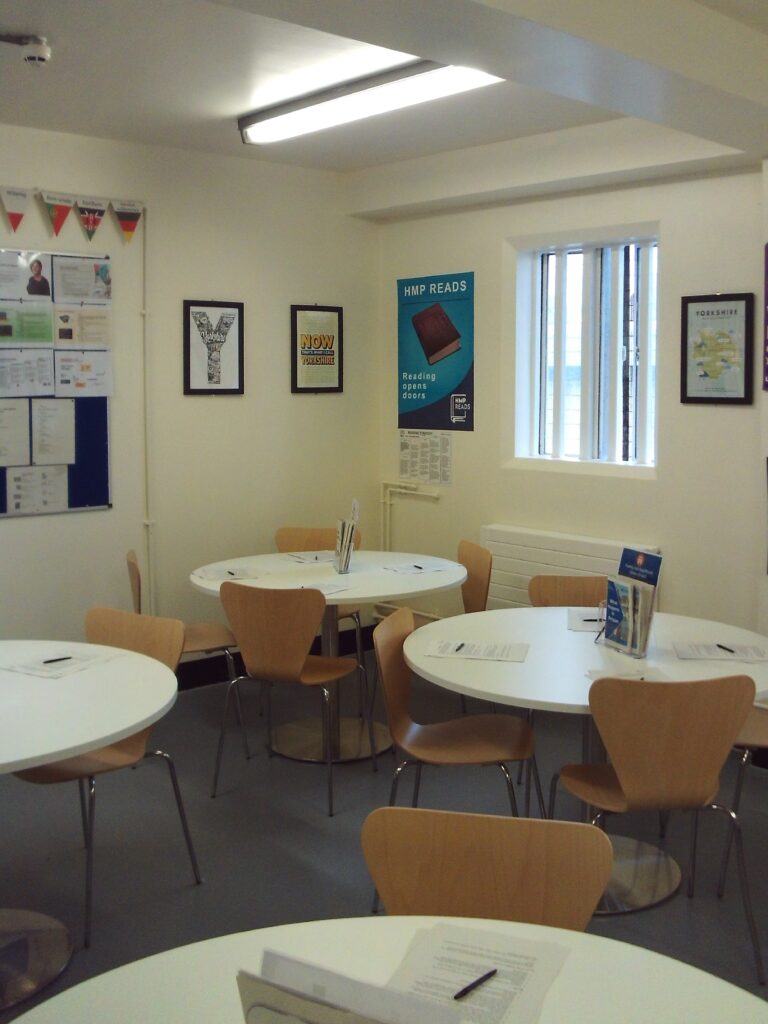
New arrivals generally stayed on the first night centre just for a couple of days. Once moved to another wing, they received a welfare check to make sure they had settled in. They also had a key work session within those first few days.
There was now an excellent focus on making sure new prisoners could contact their family or friends as soon as possible. The amount of phone credit given to new prisoners had been increased from £1 to £2 and a dedicated weekly visits session had been introduced. A family support worker now attended induction most days to make sure new prisoners had been able to make a phone call to their loved ones and to help them book their first visit.
We considered that the prison had made good progress against this concern.
Suicide and self-harm prevention
Concern: The number of self-inflicted deaths had continued to rise and was the highest in all adult male prisons.
There had been three more self-inflicted deaths since the inspection in July 2025, and three serious self-harm incidents where the prisoner had to be resuscitated. Preliminary investigations suggested some significant weaknesses in support persisted.
In the six months to February 2026, the overall rate of recorded self-harm was similar to the same period before the 2025 inspection but was higher than in other reception prisons. However, the number of individuals involved (157) was relatively low considering the huge number of admissions (3,413) and the high level of mental health problems within the population.
Leaders had taken our concerns very seriously. They had developed a good understanding of common themes in the self-inflicted deaths, which included a lack of purposeful activity and delays in contacting loved ones. They had a better focus on men who self-harmed frequently. The improvements they had made for example, in early days processes and the support for recalled men, were aimed at reducing risks.
We considered that the prison had made insufficient progress against this concern.
Security
Concern: Drugs were too readily available. Too many prisoners developed a substance misuse problem while at Leeds.
Illicit drugs remained easily available. Over the last six months, the positive mandatory drug testing (MDT) rate (see Glossary) remained high at 21.7%, which was very similar to the rate found at the 2025 inspection (20.3%). Leaders told us that some men were being paid to get recalled and bring drugs into the jail. Security at the main gate had weaknesses that needed addressing.
The security team was working well with other departments to develop intelligence and disrupt groups of prisoners from organising and distributing drugs. Around two-thirds of suspicion drug test results were positive, which showed that the quality of intelligence being submitted by staff remained reasonably good.
The ISFL unit had developed well. It offered a range of support, including talks from former prisoners and addiction support group meetings. However, some prisoners told us that illicit drug use continued to be a problem on the unit, which made it harder for them to maintain their abstinence.
We considered that the prison had made insufficient progress against this concern.
Staff-prisoner relationships
Concern: Staff-prisoner relationships were weak. There was hardly any key work and some staff were uncaring and unhelpful.
While there was evidence that staff-prisoner relationships remained mixed, many prisoners we spoke to described staff as reliable and decent, especially on units with a specific focus or purpose, such as the ISFL or first night centre. All of those we spoke to could identify a member of staff they could turn to if they needed help.
Leaders had made sure that middle managers spent more time on the wings to improve their visibility and provide better oversight of standards. For example, communal areas were much cleaner than at the inspection.
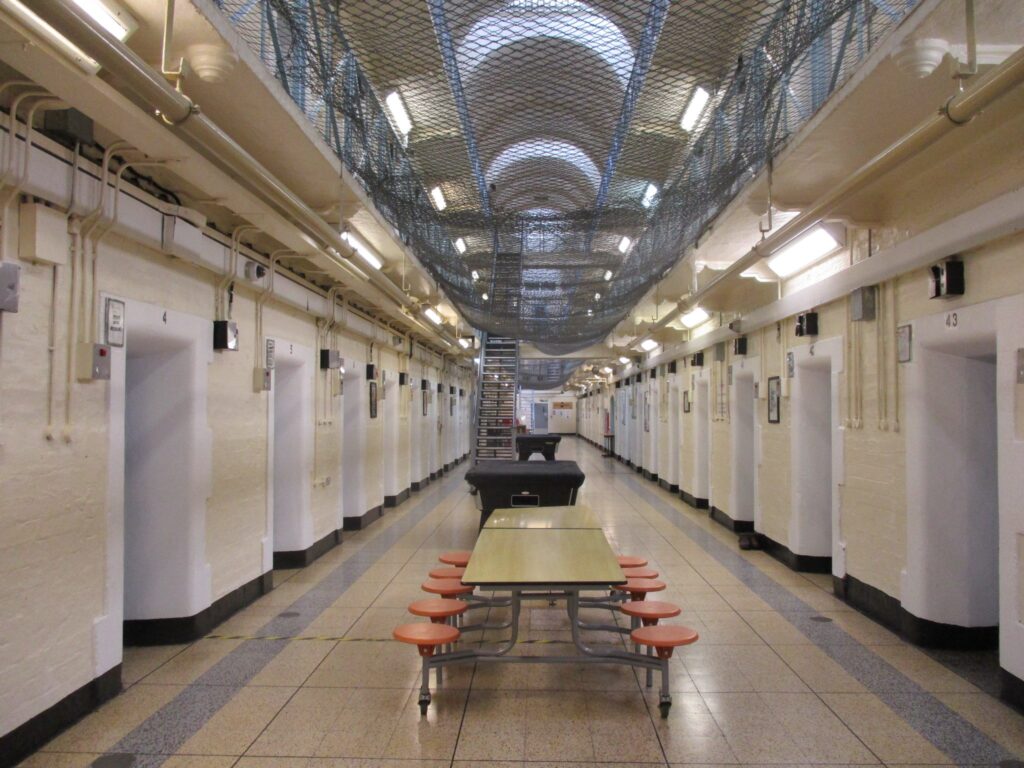
Leaders had made good progress with key work by prioritising contact with new arrivals and creating a consistent group of staff who were not moved to other duties. The number of sessions delivered had improved considerably. The time taken for men to receive their first session had reduced from an average of 37 days to a few days after arrival. Some prisoners we spoke to were very positive about how this had helped them.
Consultation with prisoners, driven by the governor through the monthly council meeting, was more effective. Attendance at the meeting was good, and there was evidence of changes being made in response to prisoners’ feedback.
We considered that the prison had made good progress against this concern.
Living conditions
Concern: Too many prisoners lived in overcrowded cells originally designed for one.
There had been no meaningful progress in reducing overcrowding. Around 76% of the population shared cramped cells originally designed for one, compared to 78% at the 2025 inspection.
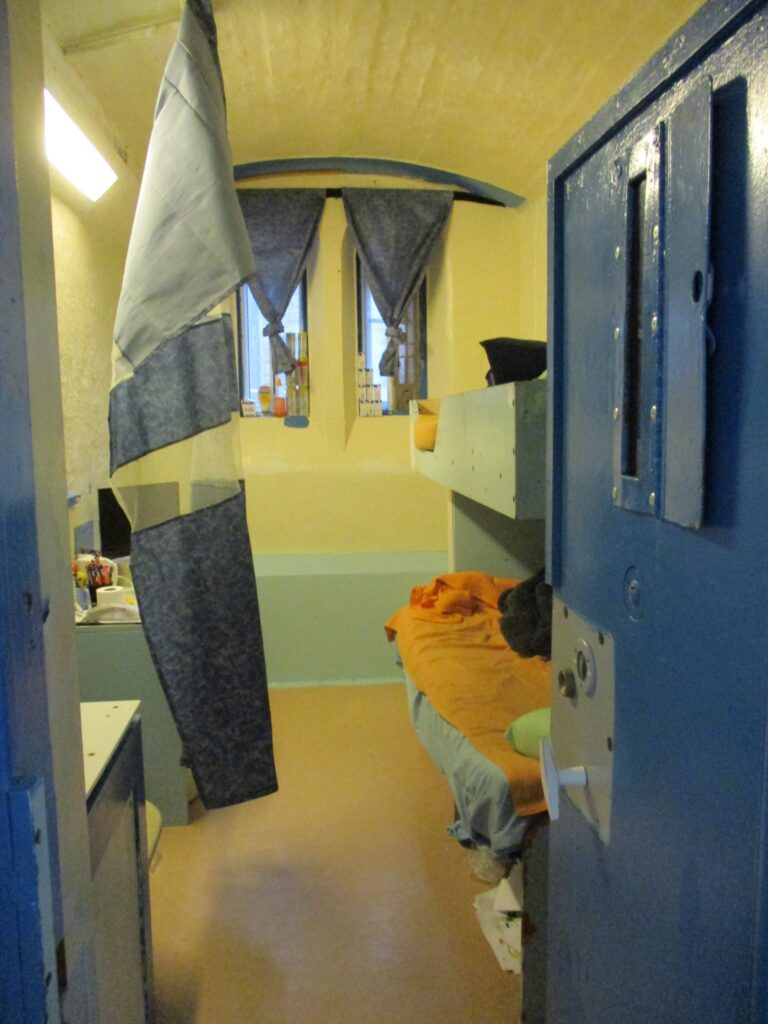
HMPPS leaders had reduced the operational capacity of the prison by only 20 places, which was not enough to have a meaningful impact on outcomes. It was unclear if this reduction was permanent, or if further reductions would be made.
Leaders had plans to put some other cells back into operational use, but this would not be possible without considerable investment from HMPPS.
We considered that the prison had made no meaningful progress against this concern.
Health, well-being and social care
Concern: Transfers to hospital for acutely mentally unwell patients took far too long. Escalation processes were inadequate, and patients suffered because they were unable to access the specialist care they required.
There continued to be lengthy waits for patients to transfer to hospital under the Mental Health Act. Since the inspection, 10 patients had transferred, but none within the 28-day guidance. The longest wait had been 113 days, which was poor. Four patients were currently awaiting transfer and one of those had, so far, waited 215 days, which was unacceptable. There was also evidence of some very unwell men being released, only to be recalled and face severe delays yet again in getting the right care.
Escalation processes had been strengthened through regular meetings with commissioners and other stakeholders. This had improved communication and resulted in the most urgent cases being prioritised for the limited number of beds available.
A review by the commissioners and mental health team was underway. This was looking at how to reduce waiting times and at why acutely unwell patients were being sent to the prison without having first been assessed for diversion to an appropriate treatment setting.
We considered that the prison had made insufficient progress against this concern.
Concern: Staffing across most health services was stretched. At times, workforce levels were unsafe in primary care and the lack of staff was also leading to poor outcomes in social care.
Staffing levels had generally improved across health services, and more staff were due to start shortly. The primary care team was functioning more effectively, and clinics were running more smoothly. Health care provision for new arrivals was much better (see Early days). The response to urgent prescribing needs had also improved, as had the management of blood and pathology results.
Health staff appropriately screened prisoners for social care needs in reception, began care on arrival when needed and referred prisoners promptly to the Local Authority. However, their assessments were still taking too long to complete.
There were still some shortfalls in staffing for the social care unit. Men were positive about their support and had care plans in place. However, there were occasional delays in the delivery of care. A new member of the team had been recruited to address this gap.
We considered that the prison had made reasonable progress against this concern.
Time out of cell
Concern: Time out of cell for most prisoners was poor.
At the time of this review visit, almost 40% of men were not actively engaged in planned, formal work, training or education and continued to get only two hours a day out of their cell. The published core day provided incremental increases in the time unlocked for some groups of prisoners, such as those completing their induction programme. However, many men told us that their time out of cell was often cut short on a day-to-day basis.
Prisoners living on the complex care unit and the social care unit got more time out of cell, but the regime across the prison from Friday to Sunday remained poor.
Our roll checks showed some marginal progress in time out of cell, with 23% of prisoners off the wing in work, training or education, an increase from 19% at the inspection, and 33% locked in their cells, compared to 36% at the inspection.
Leaders were working hard to increase the number of men actively involved in education, training or work away from their unit. The ‘Work to Win’ scheme was an innovative incentive that rewarded the staff and prisoners on the wing with the highest monthly attendance at purposeful activity off the wings.
Prisoners could sign up to personal development sessions, including a monthly ADHD workshop and substance misuse recovery meetings. The availability of recreational activities like board games and pool tournaments on the wings had started to improve in the last few weeks.
We considered that the prison had made insufficient progress against this concern.
Education, skills and work

This part of the report is written by Ofsted inspectors. Ofsted’s thematic approach reflects the monitoring visit methodology used for further education and skills providers. The themes set out the main areas for improvement in the prison’s previous inspection report or progress monitoring visit letter.
Theme 1: What progress have leaders and managers made to broaden the education, skills, and work (ESW) curriculum to ensure it meets the needs and aspirations of prisoners, including those with very short stays?
Leaders had made considerable progress in broadening the ESW curriculum. Over two thirds of prisoners were unsentenced or on remand and stayed only briefly. Leaders have taken well-considered and effective steps to redesign the curriculum to ensure it met the needs and aspirations of prisoners, including those only in the prison for a short time.
Leaders introduced a part time regime across most ESW activities. This ensured that prisoners on short stays had fair access to purposeful learning and work. Leaders had also increased the number of activity spaces available.
Leaders had successfully re-designed their curriculums into smaller components. This meant that prisoners could join at any point, make progress quickly and achieve meaningful outcomes in short timeframes.
Leaders had sensibly revised the curriculum to focus on developing prisoners’ core knowledge, skills and confidence. Prisoners were well prepared to continue learning and participate in education and work opportunities beyond their time at HMP Leeds.
Leaders had increased the range of accredited courses available. For example, they had introduced basic health and safety, manual handling, paediatric first aid and asbestos awareness qualifications. Prisoners could gain recognised and transferable qualifications that supported their future progression. Vulnerable prisoners had suitable access to the ESW curriculum.
Leaders had an unwavering commitment to improving prisoners’ reading. They recognised that low reading skills limited prisoners’ access to ESW and hindered their successful resettlement. They took swift, decisive action to introduce a purposeful range of courses that supported prisoners to develop their reading skills, including ‘reading for growth’ and ‘reading for pleasure’. This broadened opportunities for prisoners to build their reading confidence and removed a significant barrier to learning effectively.
Leaders strengthened outreach provision for those unable or reluctant to attend timetabled group ESW activities. They ensured meaningful learning opportunities were available on the wings. For the small number of longer stay prisoners, leaders continued to provide level 2 English and mathematics, peer mentoring qualifications and Open University courses.
Ofsted considered that significant progress had been made against this theme.
Theme 2: What progress have leaders and managers made to ensure that induction into ESW equips prisoners with the knowledge needed to make informed applications for education or work?
Leaders had redesigned the ESW induction so that information, advice and guidance were suitably structured and coherent. Prisoners gained a clear understanding of the opportunities available to them.
Leaders had strengthened collaboration between ESW and careers information advice and guidance (CIAG) teams. This made the induction consistent, informative and useful. The new, two-stage induction process improved clarity, helped prisoners understand the purpose of induction, and helped them to understand how to access ESW opportunities.
Leaders ensured that Novus provided comprehensive information on opportunities across the prison. This included vocational roles and enrichment activities. As a result, prisoners made informed decisions about their next steps.
Prisoners received clear information about the CIAG process. A useful prospectus helped prisoners prepare for CIAG discussions. Well-structured one-to-one CIAG activities allowed prisoners to reflect on their skills, explore options and set goals linked to their aspirations. This ensured that prisoners’ applications for ESW activities were purposeful and personalised.
Leaders took a thoughtful and responsive approach to evaluating the induction process. They gathered feedback routinely and used it to make sensible, evidence-based improvements. For example, they reduced the volume of information about long-term resettlement after recognising that it overwhelmed some prisoners and reduced their interest and participation.
Ofsted considered that reasonable progress had been made against this theme.
Theme 3: What progress have leaders and managers made to ensure prisoners with special educational needs and disabilities (SEND) receive effective support?
Leaders had a clear strategic focus on improving the identification of, and support for, prisoners with SEND. This had driven notable improvements in practice, staff knowledge and prisoner outcomes.
Leaders had successfully reduced the backlog of initial screening assessments. Screening was now timely and prisoners’ needs were identified quickly. Staff had an accurate and up-to-date understanding of prisoners’ additional support needs.
Leaders had strengthened the quality of information available to staff. The neurodiversity support manager had developed highly effective ‘About Me’ profiles. These concise, colour-coded summaries gave staff immediate insight into each prisoner’s needs, triggers, strengths and preferred support strategies. As a result, support was personalised and consistent across the prison.
Leaders provided targeted professional development to staff. This improved the confidence and knowledge of staff. Leaders ensured training on SEND and neurodiversity enabled staff to apply practical, evidence-based strategies. This strengthened the support available across ESW. Staff used a range of appropriate support strategies such as visual cues, timers and adaptive communication methods.
Leaders had introduced a useful monthly workshop for prisoners with attention deficit hyperactivity disorder. This gave these prisoners structured time to explore their triggers, build self-awareness and develop coping strategies. This improved prisoners’ emotional regulation and helped them to develop independent coping strategies.
Leaders ensured that prisoners with SEND received meaningful and highly effective support. The achievement gap between prisoners with SEND and their peers had reduced considerably. Prisoners with SEND achieved in line with their peers.
Ofsted considered that significant progress had been made against this theme.
Returning to the community
Concern: There was not enough practical support for remanded and recalled prisoners, who made up most of the population.
The prison continued to receive nearly 200 recalled men each month and two-thirds of the population were currently unsentenced. Leaders’ response to addressing the needs of this population was impressive and better than we usually see. The governor had recruited an effective head of reducing reoffending, who had been in post for about three months and was already driving improvement.
Offender management unit (OMU) resources were now deployed more effectively to provide support specifically to remanded and recalled men. About 60 of the most complex remanded men were allocated a POM, and five POMs had been allocated to support recalled men, which was very positive progress. A duty offender manager attended reception each day during the week to meet newly arrived recalled prisoners. The team also visited the first night centre every day and held weekly drop-in sessions on the other wings.
There were firm plans to create a designated residential unit for recalled prisoners to improve their access to agencies and support. This work was being led by the two residential managers and one of the senior probation officers, who planned to train officers to better understand and respond to the needs of these prisoners. A dedicated resettlement worker had also been recruited to deliver interventions for that population.
Housing outcomes were still poor and about 30% of prisoners were released homeless. However, it was very encouraging that housing workers would be provided by the probation service from 1 April. This would make service delivery more straightforward and better integrated into the wider resettlement work within the prison.
We considered that the prison had made good progress against this concern.
Section 4: Summary of judgements (Back to top)
A list of the HMI Prisons concerns and Ofsted themes followed up at this visit and the judgements made.
HMI Prisons concerns
Support for new arrivals was not good enough. Too many were unable to telephone their family and waited too long for their first visit. Prisoners were not informed of what to expect during their early days.
Good progress
The number of self-inflicted deaths had continued to rise and was the highest in all adult male prisons.
Insufficient progress
Drugs were too readily available. Too many prisoners developed a substance misuse problem while at Leeds.
Insufficient progress
Staff-prisoner relationships were weak. There was hardly any key work and some staff were uncaring and unhelpful.
Good progress
Too many prisoners lived in overcrowded cells originally designed for one.
No meaningful progress
Transfers to hospital for acutely mentally unwell patients took far too long. Escalation processes were inadequate, and patients suffered because they were unable to access the specialist care they required.
Insufficient progress
Staffing across most health services was stretched. At times, workforce levels were unsafe in primary care and the lack of staff was also leading to poor outcomes in social care.
Reasonable progress
Time out of cell for most prisoners was poor.
Insufficient progress
There was not enough practical support for remanded and recalled prisoners, who made up most of the population.
Good progress
Ofsted themes
What progress have leaders and managers made to broaden the education, skills, and work (ESW) curriculum to ensure it meets the needs and aspirations of prisoners, including those with very short stays?
Significant progress
What progress have leaders and managers made to ensure that induction into ESW equips prisoners with the knowledge needed to make informed applications for education or work?
Reasonable progress
What progress have leaders and managers made to ensure prisoners with special educational needs and disabilities (SEND) receive effective support?
Significant progress
More about this report (Back to top)
This report contains a summary from the Chief Inspector and a brief record of our findings in relation to each concern we have followed up. You may find it helpful to refer to the report of the full inspection for further detail on the original findings (available in Our reports).
Independent reviews of progress (IRPs) are designed to improve accountability to ministers about the progress prisons make in addressing HM Inspectorate of Prisons’ concerns in between inspections. IRPs take place at the discretion of the Chief Inspector when a full inspection suggests the prison would benefit from additional scrutiny and focus on a limited number of the concerns raised at the inspection. IRPs do not therefore result in assessments against our healthy prison tests.
The aims of IRPs are to:
- assess progress against selected priority and key concerns
- support improvement
- identify any emerging difficulties or lack of progress at an early stage
- assess the sufficiency of the leadership and management response to our concerns at the full inspection.
Find out more about priority and key concerns
Inspection team
This independent review of progress was carried out by:
Martin Lomas, Deputy Chief Inspector
Sandra Fieldhouse, Team leader
Jonathan Tickner, Inspector
Rebecca Stanbury, Inspector
Maureen Jamieson, Health and social care inspector
Nicola Brady, Ofsted inspector
Further resources (Back to top)
Find out more about the terms and abbreviations used in this report in our glossary.