
HMP Wormwood Scrubs
Report on an independent review of progress at HMP Wormwood Scrubs by HM Chief Inspector of Prisons 16–18 March 2026.
Section 1: Chief Inspector’s summary (Back to top)
HMP Wormwood Scrubs is a category B local prison holding adult men from the age of 18.
This review visit followed up on the concerns we raised at our last inspection of HMP Wormwood Scrubs, in 2025.
What we found at our last inspection
At our previous inspections of HMP Wormwood Scrubs in 2021 and 2025, we made the following judgements about outcomes for prisoners.
Figure 1: HMP Wormwood Scrubs healthy prison outcomes in 2021 and 2025
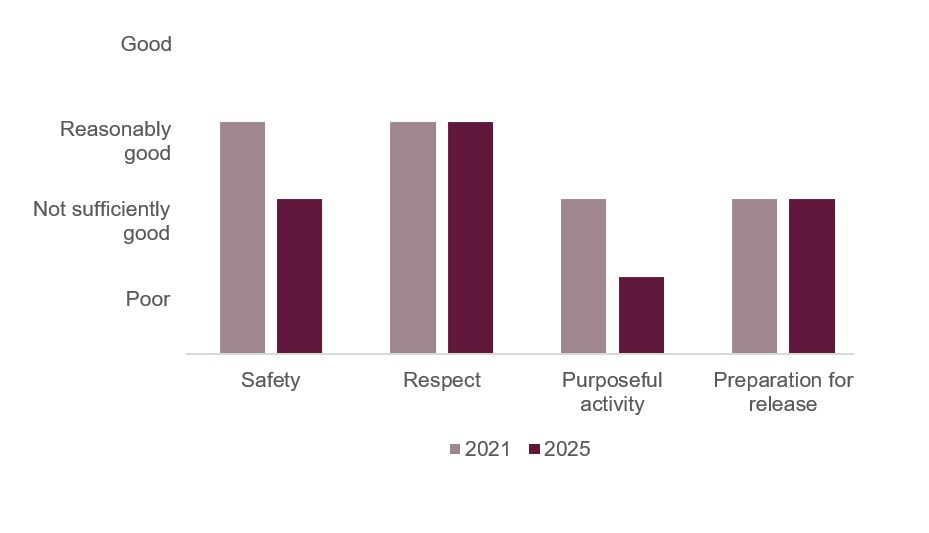
At the full inspection, we found a prison with many strengths, but safety and purposeful activity had deteriorated and there had been a lack of investment in the prison’s infrastructure. An inflexible policy of separating units and landings caused numerous problems, including restricted access to visits, education, work and the library. Time out of cell was poor and there were frequent regime curtailments. Ofsted identified concerns including insufficient activity spaces, a narrow curriculum and poor attendance.
A third of prisoners were testing positive for drugs, driving an illicit economy and associated criminality, and the measures taken to address the problem were not strong enough. There had been poor accountability regarding the use of force, with only a third of officers activating body-worn cameras during incidents, and weak leadership scrutiny.
What we found during this review visit
The prison had focused mainly on improving safety and had made considerable strides in this area. The random drug testing positive rate had fallen very substantially. There was a more rigorous approach to preventing drugs from entering the prison, alongside improved treatment and support options, notably from the well-regarded incentivised substance-free living (ISFL) unit. Body-worn video cameras were now drawn routinely and more incidents were being recorded, although still not enough. Governance of use of force remained inconsistent.
It was disappointing that the policy of not allowing mixing between the wings was unchanged and continued to have a negative effect on most prisoners. The regime remained poor and around 40% of prisoners were locked up during the working day, which was similar to the finding at the inspection. While there had been some improvement to the range of education and vocational courses, there were still too few places and attendance remained low.
Living conditions were improving and the heads of residence were developing robust processes to drive up standards. Some refurbishments had been completed and a large number of new cell fixtures and fittings were due to be installed in the coming months. However, conditions were still too variable and work to upgrade the emergency cell call bell system was proceeding too slowly. Key work (see Glossary) was still not being delivered to the vast majority of prisoners. There was much improved supervision of medicines administration.
Despite better support from housing providers, homelessness on release had continued to increase and plans to improve support to prisoners being released from court were in their very early stages.
Leaders had made impressive progress in reducing drug use and there was a positive trajectory across many other areas of concern. However, the poor time out of cell and rigid approach to managing the regime were serious issues that needed to be addressed as a matter of urgency.
Charlie Taylor, HM Chief Inspector of Prisons, March 2026
Section 2: Key findings (Back to top)
At this IRP visit, we followed up nine concerns from our most recent inspection in June 2025 and Ofsted followed up two themes based on their latest inspection
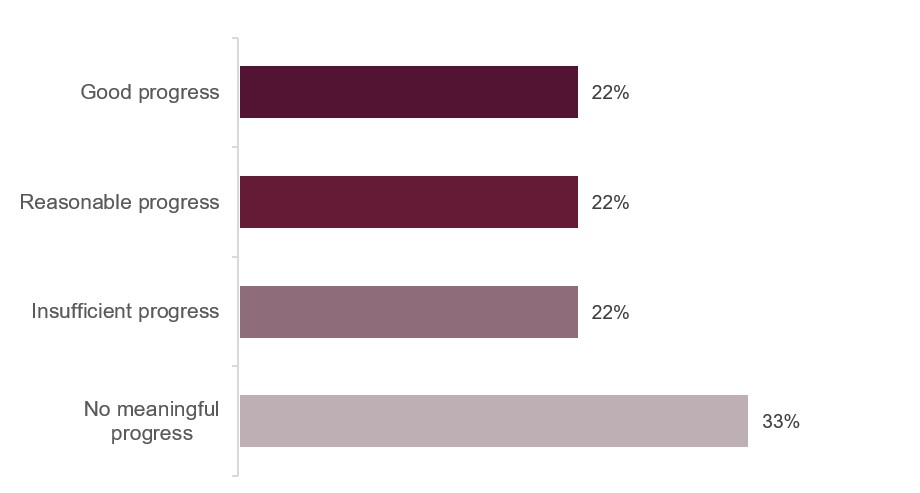
HMI Prisons judged that there was good progress in two concerns, reasonable progress in two concerns, insufficient progress in two concerns and no meaningful progress in three concerns.
Figure 2: Progress on HMI Prisons concerns from 2025 inspection (n=9)
This bar chart excludes any concerns that were followed up as part of a theme within Ofsted’s concurrent prison monitoring visit.
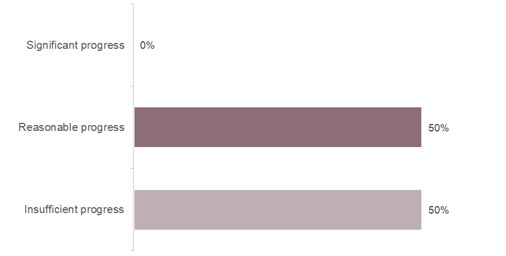
Ofsted judged that there was reasonable progress in one theme and insufficient progress in one theme.
Figure 3: Progress on Ofsted themes from 2025 inspection (n=2)
Notable positive practice
We define notable positive practice as:
Evidence of our expectations being met to deliver particularly good outcomes for prisoners, and/or particularly original or creative approaches to problem-solving.
Inspectors found two examples of notable positive practice during this IRP visit, which other prisons may be able to learn from or replicate. Unless otherwise specified, these examples are not formally evaluated, are a snapshot in time and may not be suitable for other establishments. They show some of the ways our expectations might be met, but are by no means the only way.
| 1. | The safety team had created useful leaflets and videos to encourage better use of body-worn video cameras and faster responses to cell call bells. (See Use of force and Living conditions) |
| 2. | A range of measures had contributed to a steep reduction in illicit drug use. These included better multidisciplinary support for drug users, an improved incentivised substance-free living unit, efficiently managed suspicion drug testing and more rigorous searching of prisoners and staff. (See Security) |
Section 3: Progress against our concerns and Ofsted themes (Back to top)
The following provides a brief description of our findings in relation to each concern followed up from the full inspection in 2025.
Security
Concern: Over a third of prisoners were testing positive for illicit drugs and searching of staff and prisoners was not sufficiently thorough.
The rate of positive results from random drug tests had reduced from around 35% at the time of the inspection to 20% in the six months to the end of January 2026. This large reduction had not been seen in other London prisons.
There was better multidisciplinary case working to support those involved in drug misuse, especially through ‘Drug CSIPs’ (challenge, support and intervention plans; see Glossary). Responses to incidents where prisoners were found under the influence had improved, with strong input from the Forward Trust, which provided substance misuse psychosocial services. Naloxone (see Glossary) had been used effectively by prison staff in cases of overdose.
At the time of the inspection, no suspicion tests were being carried out, but these had been reinstated and were managed well. In the previous six months, over 90% of those requested had been completed.
Searching had improved, with enhanced gate security in operation more regularly and with more confidence by staff, under increased supervision by managers. The body scanner was also used more often in response to known risks, but still not as often as was needed. Physical security had also been improved, with acrylic screens fitted to shower windows in a programme that would continue into summer 2026.
The ISFL unit had become more effective. Most prisoners were selected in accordance with the specific criteria laid down and could participate in a good programme of activities. They valued being on this unit and said that it provided resources and incentives to remain drug free, including through groups for care leavers, lifers and those serving an indeterminate sentence for public protection (IPP), and distinct provision for those with neurodiverse needs.
We considered that the prison had made good progress in this area.
Use of force
Concern: Staff were not routinely wearing or activating body-worn video cameras (BWVCs) and governance of use of force was not rigorous enough. The available footage showed inappropriate and offensive language directed towards prisoners, and we were concerned to find that in some cases BWVCs were deactivated mid-incident.
BWVCs were now routinely drawn and use was on an upward trajectory, although remained too low, with only 46% of incidents captured in the previous six months.
The safety team had worked hard to improve the situation. For example, they checked whether staff were drawing cameras at the start of their shift and had created a useful video and leaflet to raise staff awareness. Operational staff were also given dedicated time to undertake BWVC e-learning, which had so far been completed by 60% of them.
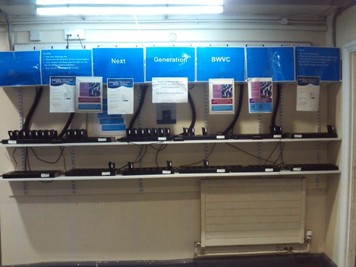
In our sample of footage, incidents had been generally well handled and there were examples of good de-escalation and communication by officers. However, we continued to find a small number of instances of use of inappropriate language and cameras were still sometimes switched off too early.
All footage of incidents was triaged by a member of the safety team and around 20% of incidents were reviewed in detail, with both positive and critical feedback given to staff when appropriate. However, some incidents involving injuries to staff or prisoners were not considered, and post-incident debriefs with prisoners were not conducted routinely.
Leaders did not have an accurate understanding of the number of incidents involving force. We found inconsistencies across recording systems, with some incidents not reported and others noted multiple times. Not all staff involved in incidents submitted statements and the accounts too often lacked detail.
We considered that the prison had made reasonable progress in this area.
Living conditions
Concern: Living conditions were too variable: not all units were cleaned well, many showers still lacked privacy, there was significant overcrowding and not all cells had toilet screening.
The recently appointed heads of residence had developed a plan to sustain cleanliness in the longer term through more robust processes and a shared leadership responsibility for standards on all wings.
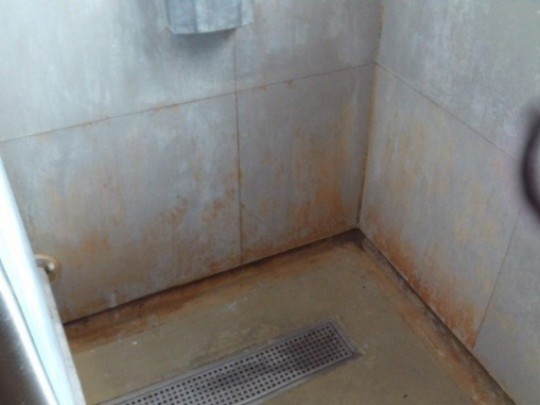
Cleanliness was good in outside areas, and the large amounts of litter seen at the inspection were no longer present. The ISFL and detoxification units offered a noticeably better environment for prisoners, but the first night centre was in poor condition and ingrained dirt persisted on several units. Jet washers were on order to deep-clean wings and address this issue.
During our visit, we found a wing storage room that had been infested with rats for several weeks. Once we raised this issue, the room was cleared and redecorated, and rodent entry routes were blocked.
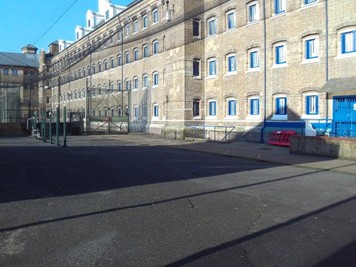
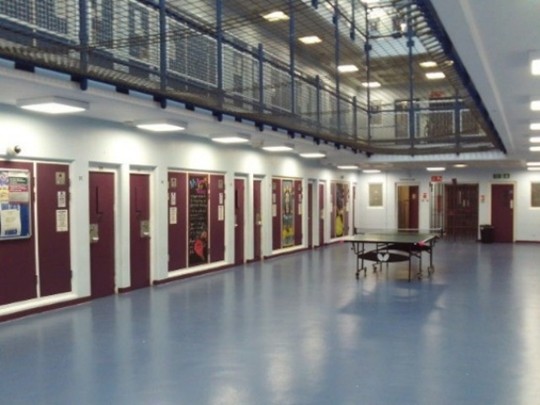
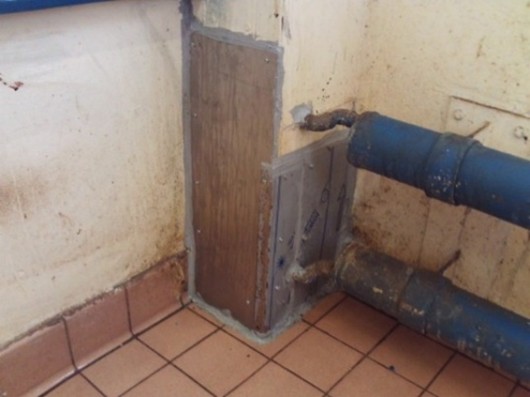
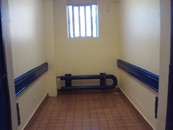
A new initiative, ‘Scrub Scrubs’, was being introduced, with the aim of incentivising prisoners to take greater ownership of cleanliness through the opportunity to earn additional PIN credit. Leaders planned to expand this approach through inter-wing and -landing cleanliness competitions.
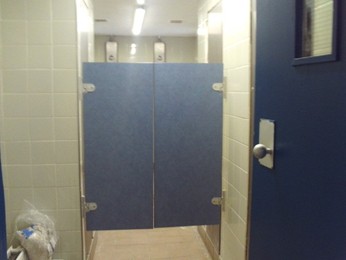
Refurbishment of showers was ongoing. In the meantime, improvements had been made to the older facilities, including replacement of shower heads, deep cleaning and the installation of saloon-style doors to provide more privacy.
Sixteen per cent of prisoners shared cells designed for one person, which was unchanged from the time of the inspection. Most of the cells we saw still did not have curtains and few had toilet screening. However, there had been good work to remove graffiti and mould in cells, and many new cell fixtures and fittings, including curtains and toilet privacy screens, were due to be installed in the coming months.
We considered that the prison had made reasonable progress in this area.
Concern: Staff were not responding promptly to emergency cell bells, and processes to monitor response times were not robust.
The emergency cell call bell system was being upgraded to allow better monitoring of response times, and work was under way on the landing of one wing. However, this was proceeding very slowly and was not due to be completed across the whole prison for at least eight years. The system was still only operating in the segregation unit.
Across the prison, assurance processes for cell bells lacked rigour and there had been no obvious impact on improving response times. Prisoners told us that these were largely dependent on the staff on duty and some gave accounts of waiting over 30 minutes for officers to respond. In the prison’s own recent safety survey, only 20% of respondents said that their bell had been answered within five minutes.
The safety team had created a useful short video and leaflet for staff, to reinforce the importance of responding promptly to bells, as well as a leaflet for prisoners describing appropriate use.

We considered that the prison had made insufficient progress in this area.
Residential services
Concern: The quality of food was a source of frustration for many prisoners. Meals were still served at the cell door and temperatures were not adequately checked.
The meals had improved, with the introduction of hot options at lunchtime and an increase in the number of dishes cooked from scratch. The food itself was reasonably varied and nourishing. A recent survey of prisoners had shown small increases in positive responses to most questions.
Nevertheless, the prison had the fourth highest number of food-related complaints among all reception prisons, and many prisoners complained to us about the meals they received. The system of serving these in takeaway containers at the cell door was continuing, and leaders had not taken account of the potential negative impact on prisoners of not being able to collect food served on a plate at the servery.
Temperature probes had been obtained and were due to be brought into use imminently, but there had been no temperature checking on the wings since the inspection.
We considered that the prison had made insufficient progress in this area.
Health, well-being and social care
Concern: Staff supervision of medicines administration was poor and some medicines were not provided at the correct intervals.
Supervision of medicines administration was now more rigorous and consistent. Health care data showed few instances of unsupervised administration hatches, and that diligent oversight by officers had identified some instances of diversion. Better organisation helped to make sure that prisoners received medicines at the correct intervals.
Improvements had been made following a meeting between senior health care and prison leaders to discuss concerns, including the death of a prisoner who had taken medications that had not been prescribed to him.
We saw nurses on most wings correctly insisting on prison staff being present before starting administration, although on one unit there was little or no supervision during our observations.
We considered that the prison had made good progress in this area.
Time out of cell
Concern: The strict separation of units meant that prisoners were too often not getting to activities, visits and appointments. This disrupted their daily lives in prison and prevented them from having important contact with family and friends.
The policy of not allowing mixing between units and, in most cases, landings, was largely unchanged. It continued to affect activities and attendance at appointments, and was one of the main concerns that prisoners raised with us.
Families continued to face barriers to maintaining contact because they could only book visit slots on certain days, according to a wing-based timetable. The same constraints applied to secure social video calling (see Glossary), where capacity was already limited. Visits were cancelled when prisoners moved wings, and capacity on weekends remained limited.
Some limited mixing benefited a small number of prisoners, including during legal visits, therapy sessions in the health care department, and religious services for smaller faith groups.
We considered that the prison had made no meaningful progress in this area.
Concern: Time out of cell was poor and the decision to deprioritise key work meant that prisoners could be locked in cells for long periods with limited staff oversight.
Leaders had not prioritised expanding the regime, and time out of cell remained very limited. Our checks showed that the number of prisoners locked up during the working day had not changed since the inspection, at around 40%.
Unemployed prisoners still received as little as one to one-and-a-half hours a day out of their cell and some told us that they were regularly behind their doors for 23 hours a day. Regime records showed frequent slippages in unlocking times across the wings.
Attendance at education and work remained low, limiting the number of prisoners accessing purposeful activity and further contributing to the large amount of time spent locked up (see Education, skills and work).
A few proactive wing leaders were attempting to increase time out of cell, notably on the ISFL unit, where evening groups were held for care leavers and for lifers and IPP prisoners. However, most of the prison had not followed this example.
Key work remained very weak, with fewer than 1% of prisoners having a key worker. There were no plans to improve this concern.
We considered that the prison had made no meaningful progress in this area.
Education, skills and work

This part of the report is written by Ofsted inspectors. Ofsted’s thematic approach reflects the monitoring visit methodology used for further education and skills providers. The themes set out the main areas for improvement in the prison’s previous inspection report or progress monitoring visit letter.
Theme 1: There were insufficient activity spaces in education, skills and work and attendance was low. Leaders had not planned an ambitious curriculum and prisoners were not allocated to meaningful activities specific to their educational needs and career aspirations.
There were insufficient activity spaces for all prisoners to participate in a purposeful activity. Too many were unemployed. Around one-fifth were not allocated to an education, skills or work activity space. However, leaders had taken action to increase the number of activity spaces available to prisoners through the introduction of a recycling workshop, a boots and plastics repair workshop and a painting and decorating course. Plans for a new media and communications course were at a very advanced stage.
Leaders had not ensured that all prisoners received timely advice about the education and work opportunities available to them. Too many prisoners experienced delays in being allocated to an appropriate activity space. Around one-sixth of them had not received a careers conversation as part of their induction into the prison and did not have the information they needed to make informed decisions about the most appropriate activity for them. However, leaders were making good progress in reducing the backlog of appointments.
Leaders had not allocated sufficient prisoners to industry workshops. For a few activities, there were high numbers of vacancies throughout the year and they were underutilised However, leaders had started to make good use of data, which they interrogated at weekly meetings to help them to identify and address those areas where spaces were unfilled. At the time of this visit, leaders’ actions had started to improve occupancy marginally.
Leaders’ actions had ensured that there was careful oversight when allocating prisoners with special educational needs and/or disabilities (SEND) to a purposeful activity. Prisoners with SEND received well-planned individualised support from a neurodiversity specialist and this ensured that they were integrated sensitively and effectively into activities which took account of their health care and emotional needs so that they could prosper.
Leaders’ actions had not improved prisoners’ attendance at education or work, which was low. Only around half of those scheduled to attend education did so. Attendance at vocational training courses was also low, at around two-thirds. Consequently, too many prisoners did not gain important knowledge and skills or develop positive workplace behaviour. Attendance at work and industries was more positive, with around three-quarters of prisoners attending their work roles.
Too many prisoners experienced practical barriers to attending education or work. Leaders’ actions had not been successful in resolving the root causes of these barriers. Many prisoners experienced restrictions on the choices they could make about purposeful activities because these were dependent on the residential wing to which they were assigned. Many prisoners had appointments which conflicted with their ability to commit to a purposeful activity, and this was compounded by irregular release from their cells, which disrupted the continuity of their attendance at work or studies.
Leaders had introduced a number of innovative projects to help improve prisoners’ attendance at purposeful activities; for example, the appointment of an engagement officer whose role was to visit those prisoners with poor attendance and support them to resolve barriers to their participation. This initiative was starting to have a positive impact on the attendance of a small number of prisoners. Leaders were piloting a project with staff on the residential wings to encourage them to engage more fully in promoting and supporting prisoners to attend education and work. However, it was too early to see the full and sustained impact of this initiative.
Since the inspection, leaders had acted quickly to put in place a more ambitious curriculum. They had increased the number of courses which contained qualifications, to recognise better the knowledge, skills and behaviour that prisoners gained.
Leaders had undertaken a comprehensive review of the curriculum. They had refreshed information and computing technology courses so that prisoners would learn more relevant and useful skills, such as keeping safe online, managing online services and searching for jobs. Leaders had introduced additional intermediate qualifications in mentoring, business and customer services to provide more challenging pathways for those prisoners who wanted to extend their knowledge and skills.
Leaders rightly recognised the importance of establishing a more appropriate curriculum for prisoners for whom English was their second language, who represented nearly half of the overall prison population. Leaders had introduced qualifications and developed progression pathways so that non-English speakers could gain qualifications to recognise their language skills formally.
Leaders had strengthened the recognition of prisoners’ work skills and knowledge by embedding more qualifications within workshops and as part of training for jobs. Prisoners training to become cleaners gained industry-recognised accreditations and those working in the textiles workshop gained qualifications to confirm mastery of their technical skills. A new painting and decorating qualification had been established as a popular vocational course.
Leaders were in the advanced stages of opening an ambitious and purpose-built communications hub, to teach prisoners how to create media products such as podcasts and develop other broadcasting skills. Leaders planned for prisoners to learn how to stream media content throughout the prison, to create and celebrate interests within the prison community and to raise awareness of important issues such as health care and physical and mental well-being.
Ofsted considered that the prison had made reasonable progress against this theme.
Theme 2: Prisoners did not receive a good-quality activities induction or information, advice and guidance that suitably prepared them for their next steps on release.
Leaders had been slow to ensure that all prisoners received effective careers information, advice and guidance (CIAG). Too many prisoners had not received planned careers discussions and many CIAG interviews were overdue. Leaders were working diligently to prioritise those prisoners who had not received an interview at the expected time. Leaders’ actions were starting to be successful in reducing the backlog of CIAG interviews; however, they rightly recognised that too many prisoners had still not received timely advice and guidance.
Leaders had not made provision for enough careers advisers to provide prisoners with CIAG, to enable them to make informed decisions about education and career pathways. Leaders had rightly recognised that careers services had been insufficient and were not meeting the needs of prisoners well. They had taken action to increase the number of specialist careers advisers; at the time of our visit, one adviser was in place, with two due to start.
Leaders had taken effective action to improve prisoners’ experience of CIAG. They had stopped providing CIAG to prisoners on the residential wings, and had replaced this with a calm and purposeful careers interview area so that prisoners had access to relevant resources and could receive support with interview preparation, interview skills and CV writing.
Careers advisers had stopped using paper-based career plans and were ensuring that information about prisoners’ aspirations, goals and progress was recorded digitally. As a result of this, prisoners’ career plans were of a good standard, their interests were recorded well and the advice they received was helpful.
Ofsted considered that the prison had made insufficient progress against this theme.
Returning to the community
Concern: Over a fifth of prisoners were released homeless and there was very little housing support for the large number on remand. Accommodation outcomes were unknown for those being released directly from court.
The most recent data available showed a further increase in homelessness, with 32% of those with a recorded outcome being released without accommodation in the six months to the end of January 2026. The prison remained one of the lowest performers in its comparator group for housing outcomes.
Demand for housing support had risen. There had been a 16% increase in releases in the previous six months, compared with the six months before the inspection. Over half of these releases were directly from court, compared with a third previously. The housing provider, St Mungo’s, was now able to complete the duty to refer (a council referral) for those who were on remand and homeless or likely to become homeless on release. There was no record to show how many of these referrals had been completed.
Accommodation outcomes for those released directly from court continued to be unknown, and there were still no plans to address this. As a result, the true scale of homelessness on release was likely to be higher than recorded.
A pilot project was due to start imminently, in which prisoners who were convicted but unsentenced would be transferred to HMP High Down shortly before their court date. The aim was to improve their access to resettlement services in a category C prison.
We considered that the prison had made no meaningful progress in this area.
Section 4: Summary of judgements (Back to top)
A list of the HMI Prisons concerns and Ofsted themes followed up at this visit and the judgements made.
HMI Prisons concerns
Over a third of prisoners were testing positive for illicit drugs and searching of staff and prisoners was not sufficiently thorough.
Good progress
Staff were not routinely wearing or activating body-worn video cameras (BWVCs) and governance of use of force was not rigorous enough. The available footage showed inappropriate and offensive language directed towards prisoners, and we were concerned to find that in some cases BWVCs were deactivated mid-incident.
Reasonable progress
Living conditions were too variable: not all units were cleaned well, many showers still lacked privacy, there was significant overcrowding and not all cells had toilet screening.
Reasonable progress
Staff were not responding promptly to emergency cell bells, and processes to monitor response times were not robust.
Insufficient progress
The quality of food was a source of frustration for many prisoners. Meals were still served at the cell door and temperatures were not adequately checked. Insufficient progress
Staff supervision of medicines administration was poor and some medicines were not provided at the correct intervals.
Good progress
The strict separation of units meant that prisoners were too often not getting to activities, visits and appointments. This disrupted their daily lives in prison and prevented them from having important contact with family and friends.
No meaningful progress
Time out of cell was poor and the decision to deprioritise key work meant that prisoners could be locked in cells for long periods with limited staff oversight.
No meaningful progress
Over a fifth of prisoners were released homeless and there was very little housing support for the large number on remand. Accommodation outcomes were unknown for those being released directly from court.
No meaningful progress
Ofsted themes
There were insufficient activity spaces in education, skills and work and attendance was low. Leaders had not planned an ambitious curriculum and prisoners were not allocated to meaningful activities specific to their educational needs and career aspirations.
Reasonable progress
Prisoners did not receive a good-quality activities induction or information, advice and guidance that suitably prepared them for their next steps on release.
Insufficient progress
More about this report (Back to top)
This report contains a summary from the Chief Inspector and a brief record of our findings in relation to each concern we have followed up. You may find it helpful to refer to the report of the full inspection for further detail on the original findings (available in Our reports).
Independent reviews of progress (IRPs) are designed to improve accountability to ministers about the progress prisons make in addressing HM Inspectorate of Prisons’ concerns in between inspections. IRPs take place at the discretion of the Chief Inspector when a full inspection suggests the prison would benefit from additional scrutiny and focus on a limited number of the concerns raised at the inspection. IRPs do not therefore result in assessments against our healthy prison tests.
The aims of IRPs are to:
- assess progress against selected priority and key concerns
- support improvement
- identify any emerging difficulties or lack of progress at an early stage
- assess the sufficiency of the leadership and management response to our concerns at the full inspection.
Find out more about priority and key concerns
Inspection team
This independent review of progress was carried out by:
Hindpal Singh Bhui, Team leader
Rachel Badman, Inspector
Chelsey Pattison, Inspector
Martin Kettle, Inspector
Clifford Shaw, Ofsted inspector
Further resources (Back to top)
Find out more about the terms and abbreviations used in this report in our glossary.